

























































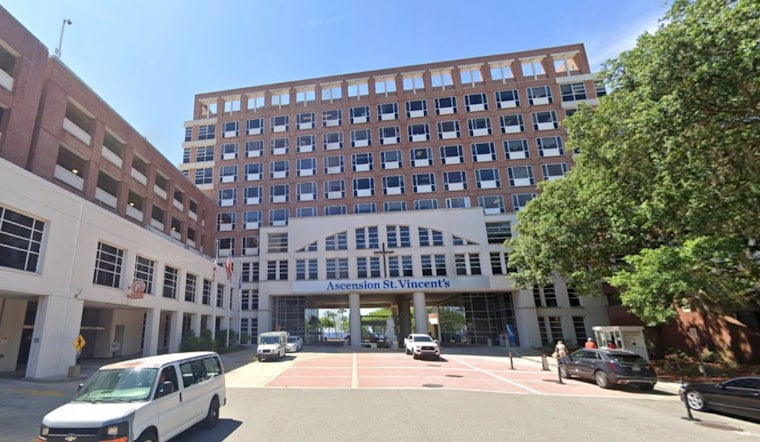
FEMA has approved $317 million in disaster recovery and hazard-mitigation funding for Florida, with nearly $53 million of it earmarked for St. Vincent's Medical Center Riverside in Jacksonville to armor the hospital's roof, walls and other building components against hurricane-force winds and flooding. The money spans projects from home elevations to canal debris removal, touching hospitals, utilities, parks and electrical systems across the state.
The federal agency officially announced the $317 million package on August 31, splitting it into nearly $167 million through the Hazard Mitigation Grant Program and nearly $150 million through the Public Assistance program, according to FEMA. As fingerlakes1.com reported, FEMA said the projects are part of broader federal recovery support intended to restore public facilities while reducing future disaster costs and damage. The two programs work differently: Public Assistance reimburses state and local entities for immediate cleanup and restoring damaged public infrastructure, while Hazard Mitigation grants fund forward-looking risk-reduction projects like property elevations and facility hardening, per FEMA.
Why St. Vincent's Riverside Needed the Money
St. Vincent's Riverside sits along the St. Johns River in a 100-year floodplain and previously suffered severe first-floor flooding during Hurricane Irma in 2017, according to FEMA records tied to the hospital's environmental review. That history helps explain why the facility's nearly $53 million award is aimed squarely at strengthening its roof, walls and other components against both wind and water, the same fingerlakes1.com report on the award noted.
Statewide, the Hazard Mitigation Grant Program included more than $73 million for residential projects, covering home elevations, acquisitions, demolitions and reconstruction of eligible properties. FEMA's mitigation program can also support building-code enforcement, safe rooms, drainage improvements, utility upgrades and the acquisition of hazard-prone homes and businesses, and the agency coordinates that mitigation work directly with the state of Florida.
Canals, Pumps and Wastewater Plants Across the State
Cape Coral, whose more than 400 miles of navigable waterways make up the largest canal network of any city in the world according to city officials, received nearly $4 million in Public Assistance funding for debris removal, including work in its canals. In Collier County, Public Assistance funding included more than $5 million for emergency pumping and temporary power that maintained wastewater operations, while wastewater infrastructure improvements in communities including Tampa and Lakeland received more than $11 million for backup power and flood- and wind-risk upgrades.
Levy County received more than $2.5 million for debris removal, and Flagler County received nearly $3 million for an emergency sand berm. In Lee County, park repairs at Lakes Regional Park and Royal Palm Park are covered by nearly $3.5 million to fix hurricane-damaged parks and recreation facilities. Charlotte County's Bayshore Live Oak Park received more than $1.3 million to repair piers, walkways, seawalls and other facilities.
Utilities and Fire Stations Get Storm Hardening
JEA, which was established in 1895 as Jacksonville Electric Authority and now operates as Florida's largest community-owned electric utility serving over 540,000 customers, will receive a similar amount to St. Vincent's Riverside's neighboring award for repairs to storm-damaged transmission and distribution systems. Fire stations in St. Petersburg, North Port and Tampa received more than $6 million combined for generators, emergency power, structural protections and wind safeguards.
That fire-station funding builds on money St. Petersburg received in July, when FEMA awarded the city $1.4 million for fire department emergency response tied to Hurricane Milton. The July round was part of a broader $47 million FEMA disbursement to Florida communities that month, which also included $11.2 million to Collier County for post-hurricane beach renourishment and erosion control.
A Pattern of Rolling Federal Awards
The $317 million announcement is the latest in a steady drumbeat of FEMA allocations to Florida throughout 2026, following $97 million in April, over $89 million in June and nearly $55 million in July — a July tranche Hoodline covered in an earlier FEMA funding report. Total federal disaster assistance from FEMA and the National Flood Insurance Program for Florida storm recoveries had already exceeded $11 billion by late 2025, including $1.8 billion obligated for Public Assistance reimbursements alone.
But the headline dollar figures don't tell the whole story for local budgets. Federal disaster grants under both the Public Assistance and Hazard Mitigation programs standardly require a 25 percent non-federal cost share in Florida, which local municipalities and state agencies must absorb, according to the Florida Division of Emergency Management. That cost-sharing burden has already strained some cities — Hoodline previously reported that Clearwater is still chasing $9.3 million in FEMA reimbursements more than two years after Hurricanes Helene and Milton, underscoring how far the gap can stretch between a funding announcement and money actually reaching local coffers.




