

























































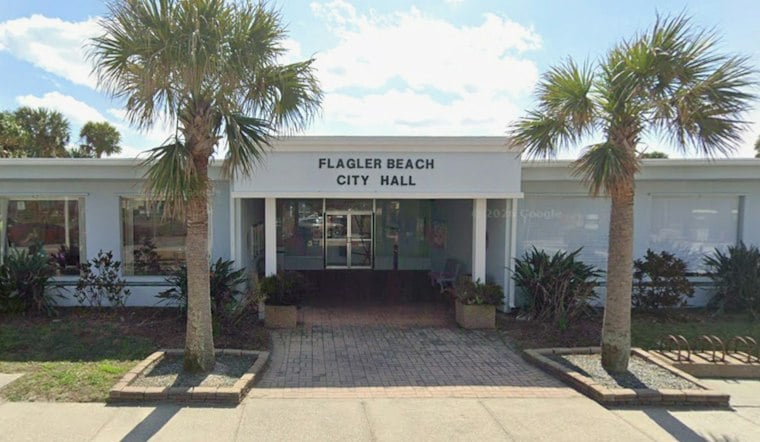
Flagler Beach's city commission has voted to select a vendor to operate a paid parking program along State Road A1A and in city lots, a move that will end free parking for out-of-town visitors for the first time in the coastal town's history. Property owners will still get at least one free parking pass, though the exact number has not been finalized.
The vote moves Flagler Beach toward contract negotiations, according to WKMG ClickOrlando, which reported that commissioners have not yet finalized the parking rate or the number of free passes residents will receive. Four vendors, including LAZ Parking, Peninsula Parking Partners, Passport Labs, and One Parking, presented to the commission in August 2026 after the city's request for qualifications drew eight interested companies in June. City Manager Dale Martin oversees the process for Flagler Beach, per the same outlet's reporting.
The debate over paid parking in Flagler Beach is not new. A city parking committee met 26 times between 2013 and 2015 and ultimately submitted a report recommending that hundreds of spaces convert to paid parking, but the idea stalled for years before commissioners revived the discussion and made it a top priority at an April 2026 goal-setting session, the station's report notes.
Why Visitors, Not Residents, Will Foot the Bill
The financial logic driving the push centers on who actually uses Flagler Beach's shoreline. Palm Coast residents make up the majority of Flagler Beach visitors, according to Flagler County Tourist Development Council data cited in the same article. Flagler Beach City Commission Chairman Eric Cooley has emphasized that these non-resident visitors, primarily from neighboring Palm Coast, strain the town's municipal infrastructure without contributing local tax dollars, making visitor parking fees a key fiscal tool to offset town costs, according to FlaglerLive.
Palm Coast, unlike Flagler Beach, lacks direct oceanfront access, which is part of why its residents rely so heavily on the neighboring town for beach days. The proposed program would cover roughly 400 downtown parking spaces along A1A and nearby city lots, and FlaglerLive reports the system would rely on vehicle-mounted license plate readers for enforcement rather than traditional meters or payment kiosks.
A Cautionary Tale From Fernandina Beach
Not everyone pitching to Flagler Beach was upbeat about the road ahead. One Parking representative Mark Pratt cautioned officials during the vendor presentations that transitioning an oceanfront town from free to paid parking is “fraught with drama” and typically sparks strong public pushback from residents and visitors alike, FlaglerLive reported.
That warning carries extra weight given what just happened in Fernandina Beach. In August 2026, Fernandina Beach city commissioners voted 4-1 to terminate their paid parking contract with vendor One Parking following widespread citizen anger and a recall campaign against the elected officials who had supported it, according to reporting cited by FlaglerLive. Flagler Beach's own city manager, Dale Martin, previously managed Fernandina Beach during its initial paid parking discussions, adding a layer of institutional memory to how Flagler Beach navigates its own rollout.
Local Business Owners Brace for Customer Pushback
Along A1A, the reaction from small business workers has been mixed with anxiety. Shey Gray, who works at the Rusty Pelican along A1A, said paid parking could affect the business, worried that added costs might discourage customers from stopping in.
Amelia Hurley described how parking costs can add up quickly, recounting that a parking ticket she received and paid late cost about $115. Her experience underscores a concern shared by other locals: that enforcement penalties, on top of new fees, could sour visitors on the experience of coming to Flagler Beach at all.
The parking crunch near downtown is already tight. Ongoing construction on the rebuilt Flagler Beach Pier has temporarily eliminated roughly 40 downtown parking spots along Second Street South and Fifth Street South, exacerbating a parking shortage for nearby small businesses this year, per a local business report. Commissioners have separately voted to eliminate general admission walking and fishing fees at the reconstructed pier because fee collection costs exceeded revenue, and Hoodline previously reported that Commissioner R.J. Santore suggested linking pier access to the new paid parking system instead.
Regional Trends and Legal Guardrails
Flagler Beach would not be the first Central Florida coastal community to charge for beach access. Neighboring Volusia County implemented off-beach parking fees for non-residents starting January 1, 2025, charging $20 per day or $100 annually across 60 county-managed coastal lots while keeping parking free for registered county residents, according to WFTV.
Whatever revenue Flagler Beach eventually collects will come with strings attached. Under Florida Statute Section 161.58, municipalities charging parking or vehicular access fees near beaches must restrict those revenues exclusively to beach maintenance, traffic management, law enforcement, sanitation, lifeguards, or parking operations, per the Florida Legislature. That statutory limit comes as Flagler County has separately voted to divert 40% of its annual tourist development tax revenue, which generated $4.4 million in fiscal year 2025, directly into beach protection projects, squeezing funding available for local sports facilities and park amenities.
What Comes Next
Commissioners still have plenty of decisions ahead before parking meters, or in this case license plate cameras, start generating revenue. They will establish hours of operation, define which parking zones will be enforced, finalize the resident permit process, and ultimately decide the parking rates themselves, according to WKMG ClickOrlando's reporting.
Property owners will not pay to park in their own city under the plan, though the exact structure of the free-pass system remains undetermined. The paid parking program has a targeted launch of mid-2027, giving city officials, vendors, and residents months to work out the details before visitors face a new parking cost along one of Central Florida's most popular stretches of coastline.


