

























































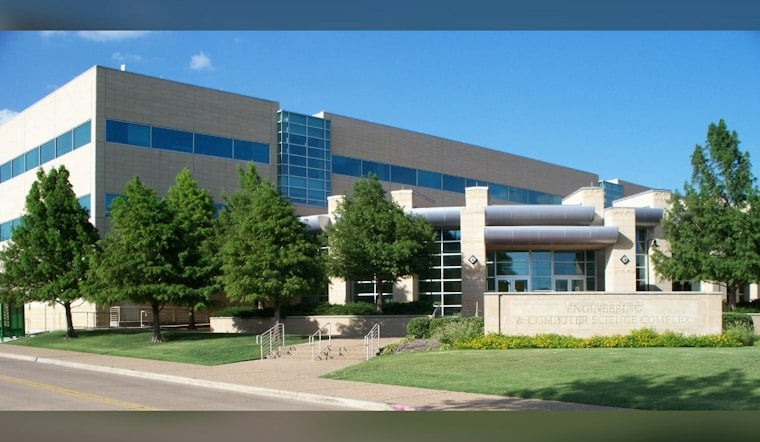
A former editor-in-chief of The Mercury at the University of Texas at Dallas has filed a federal lawsuit accusing the school of violating his First Amendment rights over how he handled a contentious letter to the editor back in 2024. Gregorio Olivares Gutierrez, who is completing his final semester at UTD, says administrators fired him from the paper, launched a discrimination investigation against him, and eventually slapped him with a two-year deferred suspension — all stemming from an editorial decision he made as a student journalist.
The Letter That Started It All
The dispute traces back to July 2024, when Olivares Gutierrez, then editor of The Mercury, accepted a letter to the editor from the president of UTD's Hillel chapter. He asked the writer to substantiate certain claims with proper sourcing, but the author reportedly declined to do so through multiple rounds of feedback. The Mercury ultimately published the piece on August 19, 2024, under the title “Campus Antisemitism,” but attached an editor's note stating the piece did not meet the publication's journalistic standards and should be read as the author's opinion rather than news, according to reporting from the Texas Tribune.
That same day, the letter's author filed a complaint with UT-Dallas' Office of Institutional Compliance, alleging discrimination based on Jewish faith. On October 15, 2024, Olivares Gutierrez received an email informing him he was under investigation for discrimination. He met with administration about the probe that same month, but by then the damage to his position at the paper had already been done — UT-Dallas administrators fired him from his editor role on September 13, 2024, as first detailed by the Dallas Observer.
A Newsroom Walks Out
The firing didn't just cost Olivares Gutierrez his job — it triggered a full staff walkout. The Mercury's entire staff went on strike, and UT Dallas responded by removing the student employees who participated, according to the Columbia Journalism Review. Rather than fold, the ousted staffers built something new: an independent, nonprofit paper called The Retrograde, which published its first issue on January 21, 2025, per the Foundation for Individual Rights and Expression.
The upstart outlet has grown into a genuine operation. The Retrograde now runs on a volunteer staff of 52 people, funded largely through GoFundMe and Patreon donations along with advertising sales, the same CJR report notes. Money remains tight, though — the paper's print run has shrunk from every two weeks down to roughly once a month because those print editions depend on ad revenue, Olivares Gutierrez told the Gateway Journalism Review.
Hearing, Findings, and an Appeal
UT Dallas ultimately concluded in June 2025 that Olivares Gutierrez had discriminated against the letter writer, with a university administrator informing him he would face a two-year deferred suspension along with an educational sanction rooted in media ethics. The university granted him a hearing rather than moving straight to suspension. That hearing took place in February 2026, and a panel of outside attorneys hired by UT-Dallas found that his editing had exceeded ordinary editorial suggestions, upholding the deferred suspension, according to the Texas Tribune report. The panel also ordered him to complete nondiscrimination and media ethics coursework and write a seven- to 10-page reflection. Olivares Gutierrez has appealed the university's findings.
His lawsuit, filed September 16 in the U.S. District Court for the Western District of Texas, claims UT Dallas violated his First and Fourteenth Amendment rights and sought to silence him. Dallas attorney Griffin S. Rubin, a partner at Sbaiti & Company PLLC and a member of the FIRE Legal Network, is representing Olivares Gutierrez pro bono and plans to seek a temporary restraining order and a preliminary injunction. UT Dallas did not respond to requests for comment on the lawsuit.
UT Dallas Pushes Back on Past Characterizations
The university has previously disputed how the situation has been portrayed publicly, telling CJR that “the former editor's characterization of past events is not accurate” and maintaining that it supports student journalists' editorial control. The Foundation for Individual Rights and Expression sent UT Dallas a letter over the matter as the dispute unfolded.
Olivares Gutierrez has said the legal fight is worth pursuing because of what it means for current and future journalism students, arguing that university administrators weaponized policy to restrict student free speech. He has also said student journalism should be free to cover university scandals truthfully, and warned that policies like the one used against him could push students to reconsider their degree plans or avoid college journalism altogether. He plans to apply to law school.
Part of a Bigger Pattern at UT Dallas — and Beyond
This case isn't an isolated flashpoint. FIRE has identified six separate instances of free speech suppression at UT Dallas over the past three years, according to the Dallas Observer. FIRE's rankings of the school's overall speech climate vary depending on the report cited — the Dallas Observer put UT Dallas at 240th out of 257 schools, while the Texas Tribune's more recent report card places it at No. 251 out of 261 with an F grade. Either way, the Tribune notes that seven Texas universities failed FIRE's free-speech report card entirely, with five more earning Ds, and that 42% of students surveyed across 12 Texas universities said they self-censor on campus at least once or twice a month.
UT Dallas is far from alone nationally. Indiana University fired Indiana Daily Student adviser Jim Rodenbush after he refused an order to keep news stories out of a homecoming edition, and the paper's print edition was later discontinued, per CJR. The University of Central Oklahoma stopped printing The Vista, prompting censorship claims and the launch of an independent paper called the Independent View, while Purdue announced in June it would no longer distribute copies of The Exponent on campus, arguing the paper's publishing foundation had no license to use the Purdue name commercially. Legislative pushes aimed at protecting student press rights, known as New Voices efforts, are underway this year in Kentucky, Michigan, Missouri, New York, Pennsylvania and Utah, according to the Christian Science Monitor.




