

























































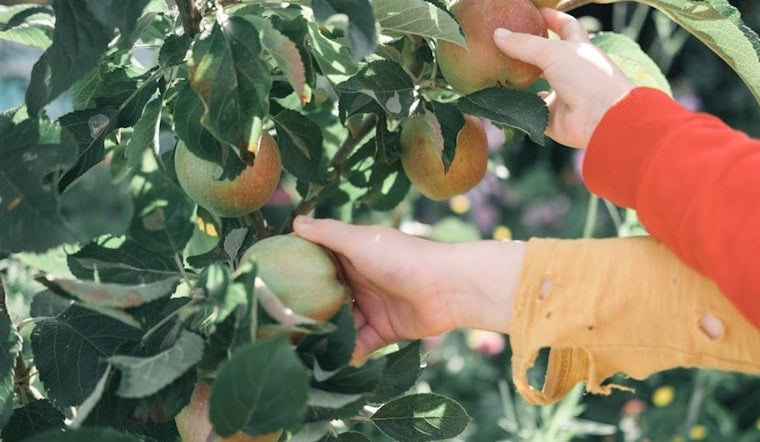
Wisconsin orchards are preparing to open their fields to apple pickers across the state this fall, even after a rough growing season marked by late frosts, drought and hail damage in some areas. At Maple Leaf Orchard in Spring Valley, owner Mark Christopher says his trees are in a reduced-crop situation this year, primarily because of spring frost that struck while blossoms were at their most vulnerable.
The damage traces back to spring frost, according to Urban Milwaukee, which reported that warmer temperatures caused trees in western Wisconsin to bloom earlier in March and April this year. That early bloom left apple trees in full bloom exposed to the worst damage when frost events hit, since spring frost occurs when temperatures drop below freezing after plants have already emerged from winter dormancy. Christopher told the outlet that warmer early springs are creating more risk of frost damage going forward, and spring frost at his orchard directly damaged this year's apple crop.
A Tale of Two Wisconsins
Not every orchard fared the same. Paul Schwabe, a horticulturist at Johnson's Nursery in Menomonee Falls, explained that eastern Wisconsin apple growers experience cooler springs than their western counterparts, largely because Lake Michigan provides spring protection from frost in southeastern Wisconsin. That proximity to the lake means southeastern Wisconsin apple trees tend to bloom later in the season, and the same report notes that cooler eastern Wisconsin springs make apple trees less susceptible to frost damage overall.
That geographic split lines up with broader patterns tracked by researchers this year. Wisconsin apple orchards experienced extreme local variance from the spring freeze, with little or no injury in some orchards and more than 90% damage in others, according to the University of Wisconsin Extension. The report describes wide variation in frost outcomes across Wisconsin orchards. Freezing conditions were reported in parts of Wisconsin during the freeze.
Light Crops Bring Their Own Problems
A smaller harvest doesn't mean easier work for growers. Amaya Atucha, a professor in the Department of Plant and Agroecosystem Sciences at the University of Wisconsin-Madison, said that measures growers take to reduce tree stress, like irrigation and hailnets, add to their costs even in a lighter year. Atucha noted that irrigation and hailnets increase apple-growing expenses overall, per Urban Milwaukee's report.
UW guidance discusses chemical thinning in a year of uneven frost damage. A lighter crop can bring its own financial strain. Honeycrisp, developed by the University of Minnesota and released in 1991, has achieved outstanding success and consumer appeal, as noted by PBS Wisconsin.
Warmer Falls Bring a New Kind of Rush
Weather headaches aren't limited to spring. A strong El Niño is expected to bring warmer temperatures to Wisconsin this fall and winter, and Urban Milwaukee reports that warmer fall temperatures keep apple trees active for a longer period after harvest, forcing growers to adapt to these conditions. Warmer fall weather can also cause fruit to ripen faster than normal, which means growers have to pick apples before they fall from the trees on their own.
Christopher has already seen the effect firsthand: faster ripening caused panic-picking in his pear trees this year, and he said it could affect other varieties as well, since apple varieties ripening simultaneously tend to cause the same scramble. University extension specialists have separately emphasized that the six to ten weeks immediately following harvest remain an active growth period, during which trees store the carbohydrates and nutrients needed for winter survival and next year's crop, according to Illinois Extension. Postharvest irrigation and maintaining healthy foliage remain important as trees prepare for winter and next year's crop.
Still Room to Pick This Fall
Despite the challenges, many Wisconsin farmers managed to produce a good yield this season, and growers statewide are described as resilient in the face of a difficult growing season. Wisconsin generates roughly 1.5 million bushels of apples annually, placing it among the top 10 secondary apple-producing states outside the seven major commercial states, according to an analysis of USDA data by USApple. Those figures describe the state's specialty-crop apple production.
Growers are also sharing strategies to adapt in real time. The Wisconsin Apple Growers Association's Summer Field Day included participation from Atucha. In Mukwonago, The Elegant Farmer is planning a 9,600-square-foot event venue. Atucha, for her part, encouraged people to visit local orchards this fall despite the tougher season behind them.





