

























































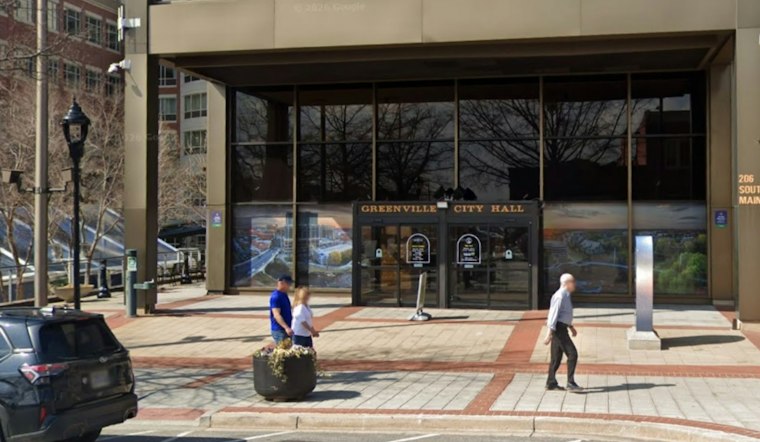
Greenville City Council has taken its first formal step toward bringing the historic Poe Mill site into the city, approving on first reading the annexation and rezoning of 12.85 acres along Buncombe Road. Council also approved on first reading the annexation and rezoning of an additional 2.43 acres of adjacent right-of-way. A second and final reading is scheduled for October 12, 2026.
If approved, the move would bring the long-idle industrial property fully into Greenville city limits, according to Greenville Business Magazine. The annexation would also place the Poe Mill property within Greenville City Council District 2 and make it eligible for municipal services, both contingent on final approval. City officials describe the effort as part of Greenville's broader growth and revitalization strategy, and say it would support new community and neighborhood uses on a site that has sat largely dormant for decades.
Planning Commission Gave Unanimous Nod
The path to council's vote ran through the City Planning Commission, which held a public hearing on the annexation on September 3 in Greenville. The commission voted unanimously to recommend approval of the annexation and rezoning, according to the same report. That recommendation set up council's first-reading vote, which frames the project as an effort to repurpose a once-industrial site for modern community needs while honoring the property's industrial legacy.
City officials also say the annexation ordinance aligns with goals laid out in the GVL2040 comprehensive plan, which includes objectives around increasing population, expanding affordable housing, improving transportation and mobility, adding open space, and spurring economic development, per Greenville Business Magazine's reporting.
A Textile Site With a Long, Rough History
The mill's own history is a study in the city's industrial roots and long decline. Greenville has a history closely tied to textile manufacturing, and Poe Mill was one of its landmarks. Sources differ on exactly when the mill opened: according to Wikipedia, the Poe Textile Mill was established in 1896 and began operations that March, while property developer Contour Companies states on its website that “Poe Mill first opened in 1897 and spun cotton that was woven into fabric for an 80 years.”
What isn’t in dispute is the mill’s eventual collapse. Burlington Industries closed the mill in 1977, and fires in 2002 and 2003 destroyed its main building, per Wikipedia. Contour Companies’ own account similarly notes that two fires in the early 2000s destroyed the mill and left the site largely abandoned, with the exception of a skate park that took root amid the ruins.
Contour's Vision for What Comes Next
Contour Company bought the Poe Mill site in 2021, according to Wikipedia, with plans to redevelop roughly 11 acres to include 428 residential units, 30,000 square feet of commercial space, and an extension of the Swamp Rabbit Trail. On its property page, Contour Companies says it saw an opportunity to revitalize the area and turn it into, in the company's words, “a valuable part of the community.”
The developer describes The Village at Poe Mill as including green spaces, sidewalks, water fountains and a social center, with access to the Swamp Rabbit Trail, which the company's site describes as a 22-mile cycling and walking trail. Plans call for three mixed-use buildings combining residential and commercial space, though Contour Companies has not announced a completion date, stating only that a timeline is “to be announced soon.”
Following a Pattern of Mill Redevelopment
Poe Mill would not be the first former Greenville textile site to get this treatment. Monaghan Mill, Brandon Mill and Mills Mill have each been annexed and redeveloped over the past two decades, and city officials point to those projects as having supported neighborhood revitalization, historic preservation and population growth, according to Greenville Business Magazine's reporting. Poe Mill's annexation is being framed in similar terms, as council weighs whether to make the designation final at its October 12 meeting.





