

























































Tito Rodriguez was among the first paramedics to reach the World Trade Center on September 11, 2001, and he survived both tower collapses before working nearly 30 straight hours in the response that followed. A quarter-century later, the Hackensack paramedic is cancer-free after being diagnosed with a rare malignancy recognized as a 9/11-related illness, and he is now telling his story to honor those who did not survive and to show how deeply that day still shapes first responders.
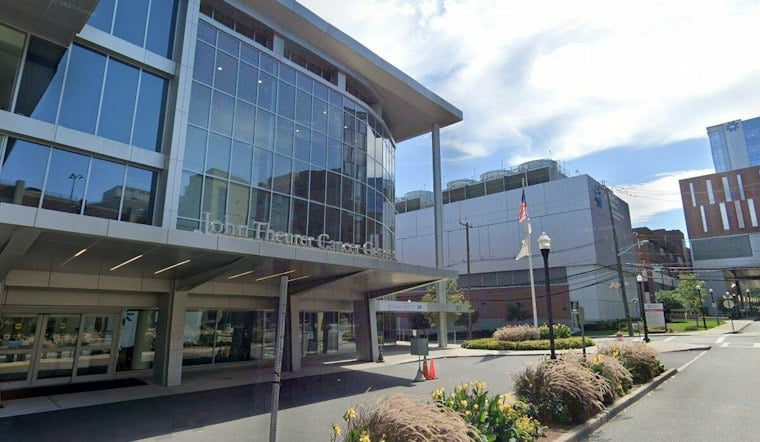
Rodriguez was treated at Hackensack University Medical Center, according to News12 | Long Island, which first reported his story. The hospital houses the John Theurer Cancer Center, an NCI-designated facility offering specialized thoracic, hematologic and advanced surgical oncology care, per Hackensack Meridian Health. Rodriguez is sharing his experience, the outlet's report notes, to remember those lost and to highlight 9/11's lasting impact on first responders like himself.
A Diagnosis Tied to Federal Rare-Cancer Criteria
Rodriguez's cancer falls under a specific federal classification. Under World Trade Center Health Program regulations, rare cancers are defined as malignancies with an incidence rate of fewer than 15 cases per 100,000 people per year, a threshold that qualifies them for federal healthcare coverage once clinically certified, according to the Centers for Disease Control and Prevention. The designation is part of the program's coverage for rare cancers.
The scale of illness among 9/11 responders has grown steadily since 2001. Cancer certifications in the World Trade Center Health Program rose from just over 3,200 in 2015 to more than 57,000, while nationwide enrollment reached 145,275 members as of this month, with 67% certified for at least one 9/11-related cancer, per Business News 97.5 FM. Research published in JAMA Network, cited by the same outlet, found that responders exposed to high-density dust clouds at Ground Zero experienced nearly three times the lung cancer incidence of those with lower exposure.
According to a National Institutes of Health report, members had 20,612 cancer certifications and 50,611 noncancer WTC-related certifications in 2020. A 2024 study indexed by the National Institutes of Health found that 24,148 enrolled survivors—64.6% of the study population—were certified for at least one WTC-related condition, including neoplasms in 36.0%.
The Toll on New York's First Responders
The FDNY's own accounting shows a similar pattern among firefighters, EMTs and paramedics. The report gives 10,562 members certified for at least one physical condition and 4,257 with cancer certification, according to the FDNY World Trade Center 25-Year Health Impact Report covered by Mirage News. The report mentions members and retirees, as well as ongoing participation.
The human cost extends well beyond the day itself. Exposure-related illnesses among 9/11 responders and survivors have claimed more than 4,000 lives in the decades since the attacks, a toll that has officially surpassed the 2,977 people killed on September 11, 2001, as Hoodline has previously reported. That secondary mortality crisis is associated with the long-term effects of exposure to toxic dust, debris and unsafe air.
A Local Link to 9/11's Sacrifice
Hackensack's own emergency medical service carries a direct connection to that day. Off-duty paramedic and Port Authority Police Lt. Robert D. Cirri Sr., a full-time PAPD officer who also worked weekends as a Hackensack paramedic, was killed on September 11, 2001, during a rescue mission on an upper level of the North Tower, according to the Port Authority Police Benevolent Association. His death links the same Hackensack emergency medical community that later treated Rodriguez to the earliest hours of the attacks.
Financial compensation for those affected has also continued to grow. The September 11th Victim Compensation Fund awarded nearly $2 billion to claimants in 2025 alone, bringing cumulative payouts to more than $16.8 billion across over 71,000 individuals since the fund reopened in October 2011, according to the September 11th Victim Compensation Fund. Many of those claims stem from delayed physical conditions, like Rodriguez's, that surfaced years after initial exposure.
Federal Funding Now Secured for Life
The medical monitoring and treatment that made Rodriguez's recovery possible depend on federal funding that was in jeopardy as recently as last year. Congress passed the 9/11 Responder and Survivor Health Funding Correction Act in 2026, updating federal funding formulas to guarantee lifetime financial support for the World Trade Center Health Program and prevent future budget shortfalls, per Mirage News' report. Hoodline has covered the years of legislative uncertainty that preceded that fix, including a 2024 funding fight that left 130K lives in limbo before the correction passed.
Rodriguez's illness also fits a broader pattern of co-occurring conditions documented among long-duration Ground Zero responders. Conditions such as chronic GERD and sinusitis, as well as mental health conditions, are among those documented among responders. Twenty-five years after the attacks, Rodriguez's cancer-free status stands as one outcome within a health crisis that continues to unfold for thousands of responders across the region.
According to a 2021 study indexed by the National Institutes of Health, WTC-exposed male firefighters had 13% higher all-cancer rates than the comparison group. At the same time, a 2022 study published in the Journal of the National Cancer Institute found that overall cancer incidence was lower than expected in the largest cohort of 9/11 rescue and recovery workers ever studied.





