

























































Keith Roma was 27 years old when he ran into the North Tower of the World Trade Center on September 11, 2001, and kept going back in. He carried at least a half a dozen people to safety, according to his commanding officer, and he never made it out the last time. Yet when the FDNY reads its official death toll aloud each anniversary, his name is not among the 343.
Roma worked out of Patrol 2, a firehouse near the World Trade Center, as a member of the New York Fire Patrol — a private fire salvage corps that operated alongside FDNY firefighters for nearly two centuries, according to KITV. FDNY firefighters wore black helmets that day; Roma and his fellow fire patrolmen wore red ones, a visual distinction rooted in the organization's insurance-industry origins rather than in the danger of the work they did side by side. Fire Patrol 2 Lt. John Sheehan said Roma carried at least six people out of the tower before he died, and Sheehan believes the official death toll should be 344, per the same report.
Roma's father, Arnold Roma — himself a nurse, volunteer firefighter and retired NYPD officer — arrived at the World Trade Center that day after a fire chief told him to set up a triage area in the South Tower. He has spent the years since appealing for recognition of his son's work as a firefighter, and he salutes Keith and the number 344 every day at 3:44 p.m., according to KITV's reporting.
A Rescue That Ended in the Rear Lobby
During four separate ascents into the North Tower, Roma personally escorted at least 200 civilians to safety before dying while assisting nine evacuees in the rear lobby. Rescuers found his body among civilians in the rubble 104 days after the attacks, on Christmas Eve 2001, according to KITV. Roma was the only fatality among the 16 fire patrolmen who responded that day, and one of 32 New York Fire Patrol members who died in the line of duty, per the same report.
The FDNY did not treat his death as an afterthought in the moment. When his body was recovered, the department transmitted an official Code 4-5 radio signal to all city stations, declaring his death, and granted him a full department funeral mass with honors, according to FireRescue1. He was awarded the FDNY Fireman's Medal of Supreme Sacrifice, per KITV.
Why the Official Count Stops at 343
FDNY spokesperson Amanda Farinacci has said the number 343 counts active FDNY members killed in the attacks — 340 firefighters, two emergency medical technicians and one department chaplain, per KITV's reporting, which also notes the FDNY declined a request from CNN for an interview or further explanation. Roma, as a member of the privately funded Fire Patrol rather than the FDNY, falls outside that internal roster — and was absent from the FDNY memorial at Ten House on Liberty Street, per KITV.
The attacks also killed emergency responders beyond the 343 FDNY personnel counted by the department. FDNY lost apparatus in the attacks that same day, per KITV, while Ground Zero itself became a 1.8-million-ton debris pile.
Federal and Civic Recognition Beyond FDNY's Roster
Outside the FDNY's internal accounting, other institutions have already settled the question the department has left open. In September 2005, President George W. Bush signed a certificate stating Roma died while serving a public safety agency as a firefighter and posthumously awarded him the 9/11 Heroes Medal of Valor, a recognition authorized by Congress for fallen public safety officers, according to We Got This Covered. Roma's name has also been honored outside the FDNY's roster.
Arnold Roma believes the FDNY's number should be 344, and he continues to appeal for that recognition, KITV reports. The Fire Patrol's legacy has continued to prompt discussion beyond the question of Roma's recognition.
A Force Born From Insurance Money, Ended by It
The New York Fire Patrol was created by the New York Board of Fire Underwriters and operated from 1839, according to Village Preservation. The city's fire insurance companies employed patrolmen who became New York's first paid fire-service members, earning a $250 annual salary at the time.
The New York Fire Patrol was credited with protecting property, according to KITV. Its history included long-serving patrolmen who worked fires alongside the city's official department for generations. KITV also mentions Craig Buccieri, a retired New York City firefighter. The organization outlasted its counterparts elsewhere, according to Wikipedia.
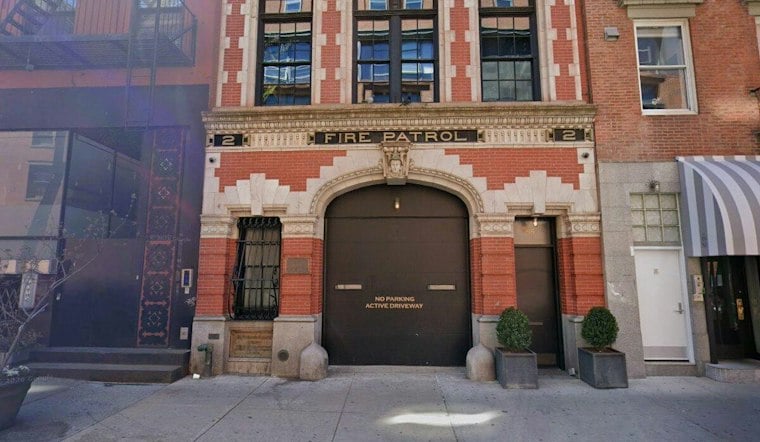
The New York Fire Patrol, which had operated for generations, closed for good on October 15, 2006, after the New York Board of Fire Underwriters ended its funding — 167 years after the Patrol began operating, and five years after Roma's death, per Wikipedia. Patrol House #2 at 84 West 3rd Street in Greenwich Village, where Roma had been based, was later sold and renovated into a private residence by journalist Anderson Cooper in 2010, with its historic Beaux-Arts architectural features preserved, according to a report from Gay Influence.
A Toll That Keeps Growing
The tension over Roma's status echoes a wider pattern in how 9/11's cost to first responders keeps expanding well past the day of the attacks. The post-9/11 toll from Ground Zero toxic-exposure illnesses continues to grow, even as 343 FDNY personnel were killed on the day of the attacks. Twenty-five years on, Arnold Roma's daily 3:44 p.m. salute remains a private ritual marking the distinction between Roma's recognition outside the FDNY's official tally and the department's count — even if the FDNY's official tally still reads 343.





