

























































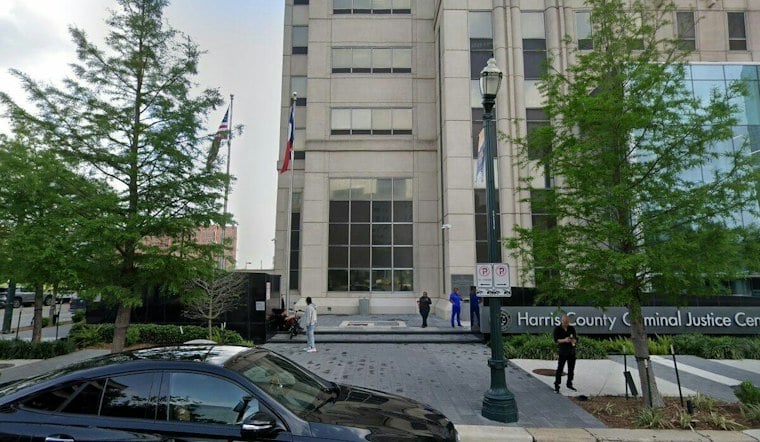
A Houston defense attorney accused of slipping drug-laced paper to a client locked inside Harris County Jail has struck a deal to avoid prison time. Hunter Simmons, 41, pleaded no contest to an allegation that he passed papers tainted with synthetic marijuana to Joseph Dunn, a murder defendant who was being held at the jail, and accepted deferred adjudication rather than risk a trial.
According to Houston Chronicle reporter Nicole Hensley, Simmons received deferred adjudication on a charge of possessing a prohibited substance in a correctional facility and must abide by a three-year probation agreement. If he complies with the terms, he will avoid a formal conviction, and in exchange for his plea, the Harris County District Attorney's Office dismissed a separate charge of engaging in organized criminal activity against him. Simmons was arrested in November 2024 following a months-long investigation and was charged as a source of drug-laced paper found circulating inside the jail.
Simmons has been licensed to practice law in Texas since 2013, and prosecutors said he participated in a smuggling plot that also involved Dunn and Tanisha Butler. Butler allegedly messaged Simmons a news report about an inmate caught with drug-laced paper, writing, “We need you out here — but in there.” Butler received her own deferred adjudication on similar charges in 2025, while Dunn is now serving a 26-year prison sentence for murder.
How Detectives Built the Case
The Chronicle reported that detectives relied on courthouse surveillance and recorded jail calls as they investigated. In one operation, a courier posing as Dunn's sibling was asked to deliver two envelopes to Simmons, one containing documents and the other cash. Investigators also noted that Butler began joining Simmons on jail visits and was listed as his legal assistant in visitation logs. She made nine such visits over a two-year period beginning in July 2022.
Before the plea, Simmons' attorney, Norman Silverman, filed motions seeking to limit evidence at trial and argued that Butler's communications were privileged because she worked on Dunn's case as part of Simmons' legal team. Silverman also sought to remove the district attorney's office from the case and subpoena a Houston Chronicle reporter. He disputed prosecutors' claim that Butler and Dunn were dating, describing her instead as Dunn's friend who worked for Simmons on Dunn's case.
Reactions From the Legal Community
The Chronicle also reported comments from attorneys Damon Parrish and Kim Smith. Parrish said he had a hard time believing a lawyer would knowingly deal drugs inside a jail, while suggesting the plea could reflect a desire to avoid the risk of trial. Smith characterized the alleged scheme as greed — “being hungry for money — money at the expense of an inmate potentially dying within the jail.”
Simmons must report the plea deal to the State Bar within one week.
Two Other Lawyers, Two Different Outcomes
Simmons was one of three Houston defense lawyers charged as sources of drug-laced paper found in the jail, and he is the only one of the three to accept a plea deal. Charges against attorney Jason Terrel Johnson, who had been accused of passing synthetic-marijuana-laced paper to a client in court, were dismissed in September 2025 after prosecutors determined they could not prove beyond a reasonable doubt that he knew the documents contained narcotics, per the Houston Chronicle.
The third attorney, 77-year-old family and criminal defense attorney Ronald Lewis, was accused in November 2023 of delivering over a hundred pieces of drug-soaked paper to over a dozen inmates and receiving up to $500 per letter. Court filings linked the letters to two inmate deaths, though officials said they had not established a direct link to a specific jail death, according to the Houston Landing. Those charges were dropped following his death.
A Jail Grappling With a Black Market
The Harris County Sheriff's Office seized more than 750 pieces of paper suspected of being laced with narcotics at the jail between August and November 2023. The surge prompted security changes, including nailing shut document slots in attorney visitation booths and moving toward digital mail scanning. Advocates have raised concerns that the changes could limit meaningful communication.
The problem extends well beyond Harris County. Synthetic drug-infused paper has become a national crisis in U.S. correctional facilities, with synthetic cannabinoids, tranquilizers, and other drugs sprayed onto letters, legal documents, and books to slip past routine security checks, according to The Week. Facilities from Chicago's Cook County Jail to local lockups in Massachusetts have reported similar contraband schemes.
Seizure Trends and Security Changes
The available figures provide a 2023 snapshot, not a year-by-year account from 2022 through 2025. The Houston Chronicle reported that the amount of drug-sprayed or dipped paper seized appeared to fall from 388 documents in August to nearly 230 in September and around 130 in October. At the jail, the reported security response included sealing document slots in attorney visitation booths and moving toward digital mail scanning. A separate case shows the issue was not limited to Harris County. In a case announced May 22, 2024, the Cook County Sheriff's Office said investigators recovered suspected drug-soaked paper from a civilian during an alleged attempt to deliver it to a person in custody at a hospital clinic; testing confirmed synthetic cannabinoids. That was a separate case and setting from the alleged attorney-to-client delivery in Harris County.
Harris County Jail has faced scrutiny over overcrowding and violence inside the facility.





