

























































Five years after Illinois became the first state in the nation to require public schools to teach a unit of Asian American history, Chicago-area educators, students, and lawmakers are still working through what that mandate looks like in practice. The conversation has taken on new weight as the region's Asian population continues to grow rapidly, with students and youth advocates now part of the broader discussion.
A Law Five Years in the Making
Illinois Governor JB Pritzker signed House Bill 376, known as the TEAACH Act, into law in July 2021, according to Illinois.gov, making Illinois the first state to require public elementary and high schools to teach Asian American history starting in the 2022-2023 school year. The law requires instruction on Asian American civil rights contributions and local history in Illinois and the Midwest, per the Illinois General Assembly's statutory language.
The bill's primary sponsors, State Representative Jennifer Gong-Gershowitz and State Senator Ram Villivalam, introduced the legislation during a period of heightened concern about anti-Asian violence during the pandemic, according to Capitol News Illinois. The law addressed the issue through education. As WBEZ reported this week, Chicago-area educators, students, and lawmakers gathered in 2026 to discuss how the TEAACH Act is playing out in classrooms across the region.
Students Push Their Own Schools to Catch Up
Because Illinois leaves specific curriculum and textbook choices to local school boards, implementation has varied from district to district. That gap has also brought youth activities into the broader conversation about implementing the TEAACH Act.
Community voices featured in that same report described what the mandate means on a personal level, including perspectives on culture, identity, and understanding. WBEZ also pointed readers to wbez.org/teachinghistory for more information on the law and its implementation.
A Growing Population Behind the Push
The push for classroom change comes as the region's Asian population has expanded quickly. The Asian population in metro Chicago grew 11.6% since 2020, per WBEZ's analysis, with Asian residents in the Chicago metropolitan statistical area numbering around 764,000 in 2024 — an increase of almost 80,000 people since 2020. The Chicago metro area overall had roughly 9.4 million residents that year, according to the same WBEZ report.
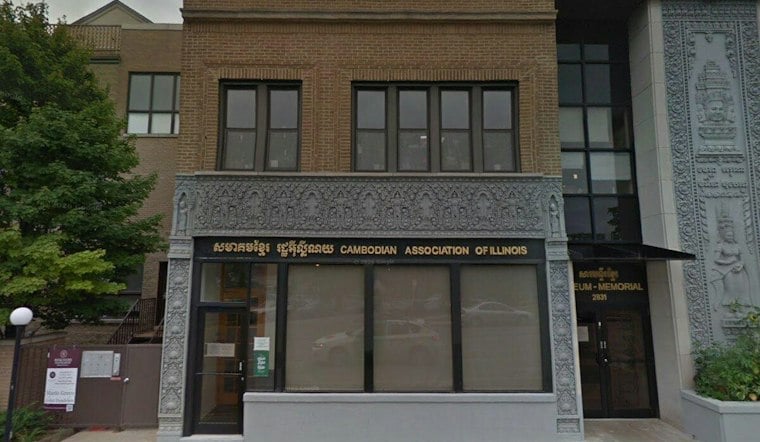
Statewide, the report also discusses Illinois' Asian population. Institutions like Chicago's National Cambodian Heritage Museum and Killing Fields Memorial have taken on the work of educating people about the Cambodian community and preserving forgotten history, according to WBEZ.
Training Teachers Where the State Left a Gap
The TEAACH Act sets requirements, while specific curriculum details remain with local school boards. The Illinois State Board of Education created a TEAACH Act Resource Guide, according to the agency's own documentation.
That left an early gap that community organizations moved to fill. Asian Americans Advancing Justice | Chicago, which drafted the original TEAACH Act language, has contributed resources related to the law, according to Asian Americans Advancing Justice | Chicago. The TEAACH Act also built on pre-existing Illinois education code mandates that already required schools to teach Black history, women's history, Holocaust and genocide studies, LGBTQ+ history, and the history of people with disabilities, according to The Asian American Foundation.
Two Decades of Advocacy Before HB 376
The 2021 law followed nearly two decades of advocacy for AAPI history in Illinois, according to the organization's own account. Early statutory tweaks encouraged the Illinois State Board of Education to include AAPI experiences nearly two decades before HB 376 ultimately passed.
What the Research Says About Ethnic Studies
Education researchers who study ethnic studies curricula have reported that students who participate are more academically engaged, develop a stronger sense of personal empowerment, perform better academically, and graduate at higher rates, per WBEZ's reporting. Researchers have also found that ethnic studies curricula that teach directly about racism produce higher levels of critical thinking among students.
Those findings are part of broader research on ethnic studies discussed in education reporting.
Illinois' Mandate Draws Broader Attention
Illinois' pioneering law has drawn attention beyond the state as discussion of AAPI history instruction continues.





