

























































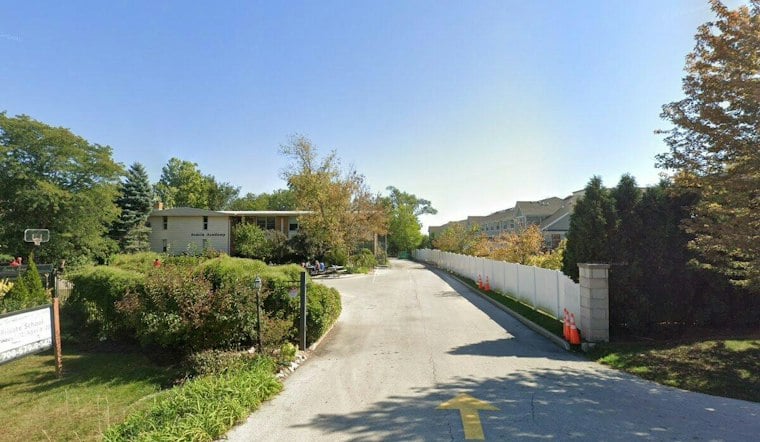
A 15-year-old Chicago sophomore with autism has missed nearly five weeks of school because his mother says she can no longer afford the daily 79-mile round trip required to get him to his specialized program. Antonio Morrison attends Acacia Academy in La Grange Highlands, roughly 20 miles from the family's home in Bronzeville, and his mother says the cost of driving him there and back has become unsustainable.
According to FOX 32 Chicago, Antonio's mother says a Chicago Public Schools hearing officer ordered reimbursement at 76 cents per mile for the 79-mile daily commute, retroactive to Aug. 13, but that she must pay those costs upfront and wait to be repaid. She told the station her reimbursements have sometimes reached $1,100 to $1,200 or more in a given month, a sum she says she cannot keep covering out of pocket while waiting on the district.
A Program Meant to Bridge Transportation Gaps
The family's situation touches on a district program built for exactly this kind of shortfall. CPS's own transportation guidance for the 2026-27 school year says students can qualify for its Financial Incentive Program if they have an IEP or 504 Plan listing transportation as a related service, have a valid transportation request on file, live five miles or more from school, and the district cannot readily provide a route or vehicle, according to Chicago Public Schools. The same guidance notes that students may also qualify for the incentive when CPS simply cannot route them due to complexity or capacity limits.
Notably, the district's policy states that accepting the incentive program does not cost a family its right to CPS-provided transportation down the line. Still, per the FOX 32 report, Antonio's mother says some of those incentive payments have been capped at $500 a month — far short of what she says her actual driving costs have run. The station's report does not specify how that gap has been resolved, if at all.
Virtual Options Offered, but Declined
As Antonio's absence stretched on, the district and his school tried alternatives short of in-person attendance. Acacia Academy began sending schoolwork home, and CPS offered virtual tutoring as well as in-home services, but Antonio's mother turned both down, the same account notes. It's not clear from the available reporting what her specific objections were to those options, only that the family has continued to seek transportation rather than a remote substitute.
A Staffing Picture That's Improved, but Transportation Still Strained
The dispute surfaces as CPS touts gains in special-education staffing even as transportation capacity remains a documented strain across the district. The district said it is hiring nearly 1,000 additional teachers and special-education classroom assistants this school year, according to a Chicago Public Schools press release. CPS also reported that special-education teacher vacancies fell from nearly 6% in 2024 to about 2.1% heading into this school year, while SECA vacancies dropped from more than 7.3% to 2.9% over the same period.
Transportation is a separate story. CPS's own services page acknowledges that the national shortage of school bus drivers is affecting districts including Chicago, and that the district may not be able to provide transportation to every general-education student in magnet or selective programs this year. For those students, CPS says it offers free CTA Ventra cards valued at $35 a month along with a companion pass when district transportation is unavailable or limited — a workaround aimed at general-education families rather than students like Antonio, whose IEP team discussed bus safety.
The Legal Backdrop for Transportation as a Service
Transportation disputes for students with disabilities sit on firmer legal ground than they might for general-education families. Under the Individuals with Disabilities Education Act, transportation is explicitly classified as a related service — one of the developmental, corrective, and supportive services a district must provide to help a child with a disability benefit from special education, according to the U.S. Department of Education. That framework provides legal context for transportation disputes involving students with disabilities, even as the logistics of getting Antonio reimbursed remain a point of friction for his family.
Chicago isn't alone in grappling with the fallout of a strained school transportation workforce. A Columbia News Service report described families of children with special needs scrambling amid a broader school-bus-worker shortage, with advocates saying some children still had no assigned route at all. Separately, a report from STN Online examined how new non-domiciled commercial driver's license rules are compounding school bus staffing challenges in large urban districts such as New York City — a reminder that the pressures bearing down on Antonio's commute reflect a wider national strain on school transportation systems, not just a local shortfall.





