

























































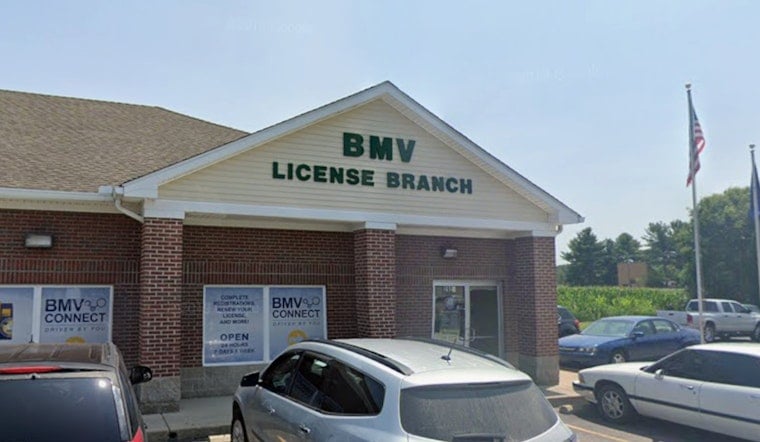
Indiana's Bureau of Motor Vehicles says it's getting closer to launching mobile driver's licenses, and the agency plans to present its proposal to state lawmakers Wednesday morning. The pitch comes as Hoosiers like Lily King, who recently lost her physical license at the Crawfordsville Road BMV branch, say they're ready to ditch the plastic card for something that lives on their phone.
A mobile driver's license is a digital version of a physical license, learner's permit or identification card, typically stored in a smartphone wallet or app, according to WISH-TV. The credentials can be used for age verification by alcohol and tobacco retailers, identity verification for banking, and identity checks during traffic stops, the station reports. BMV Commissioner Greg Dunn told WISH-TV the agency wants a system that is secure, reliable, and complies with Indiana law, adding that mobile licenses require careful planning and must address effects on the community as well as the needs of people verifying identities.
Not everyone is convinced the technology is ready. Sean Risner expressed concern about cybersecurity and fraud, per the same WISH-TV report, while BMV customer Danielle Drake said digital license systems need strong privacy safeguards, should remain voluntary, and that a physical identification option should remain available at all times. Nery Louis, on the other hand, told the station he would use a digital driver's license every day if given the chance.
A Rollout Years in the Making
Indiana lawmakers actually authorized mobile driver's licenses back in 2019 under then-Governor Eric Holcomb, with a target 2021 rollout, but repeated implementation delays pushed the timeline back years. State Senator J.D. Ford, frustrated by the slow pace, authored Senate Resolution 56 calling for formal legislative review of the effort. The BMV has not released a specific launch timeline, WISH-TV notes, even as the agency describes digital licenses as part of Indiana's vision for the future.
The legal backbone for the project is House Enrolled Act 1050, passed in 2023, which requires the BMV to follow international standards to maintain data security for Hoosiers using mobile licenses. That same omnibus transportation law also authorized certified driver training schools to conduct driving skills tests directly, removing a former 90-day waiting period for 16-year-old permit holders, according to the Indiana Bureau of Motor Vehicles. The technical backbone referenced in that act, ISO/IEC 18013-5, uses asymmetric cryptography and public key infrastructure to allow selective data disclosure, meaning a motorist could prove their age at a liquor store without revealing a home address or full birth date, per walt.id.
Privacy Advocates Push Back on 'Phone Home' Risk
The American Civil Liberties Union has raised concerns about privacy, tracking, and security tied to the technology, and the ACLU of Indiana specifically has serious concerns about digital driver's licenses, particularly around privacy, tracking, and government revocation of ID access, per WISH-TV. Those worries trace back to a broader campaign: in June 2025, the ACLU, the Electronic Frontier Foundation, and more than 80 privacy advocacy groups launched the No Phone Home campaign, warning that the ISO/IEC 18013-5 architecture underlying most mobile IDs can let state agencies track where and when digital IDs are presented, according to the American Civil Liberties Union.
Federal standards under consideration by the U.S. Department of Homeland Security require state digital ID frameworks to enforce mandatory encryption for data moving across wireless connections as well as data stored on a phone's hardware, according to the Federal Register. For traffic stops specifically, specialized wireless hardware developed for law enforcement can read mobile licenses via Bluetooth and NFC, letting officers verify a driver's identity from outside the vehicle without ever taking possession of the motorist's phone, per L-Tron.
Indiana Would Join a Crowded Regional Field
Indiana is surrounded by states that have already moved on digital IDs. Illinois, Kentucky, and Ohio have each introduced or authorized mobile driver's licenses in smartphone wallets or state apps, and nationally at least 21 states now use some form of mobile driver's license, per WISH-TV's reporting. Hoodline previously reported on Illinois's iPhone rollout and on California's earlier pilot integrating digital IDs into Google Wallet.
The push has real utility for travelers. As of this year, the Transportation Security Administration accepts REAL ID-compliant mobile driver's licenses from participating states at more than 250 airport security checkpoints nationwide, though the TSA still requires passengers to carry a physical ID as a backup. Whatever Indiana ultimately builds, the BMV has stated it does not plan to phase out physical driver's licenses; the agency says it will provide Hoosiers with updates on how to access new features once the program is closer to launch.
What Happens Wednesday
The BMV's presentation is scheduled for the Interim Study Committee on Roads and Transportation, which begins its meeting at 10 a.m. Wednesday. That same committee has previously evaluated other BMV modernization plans, including a proposal to eliminate physical license plate renewal stickers and paper vehicle registration cards in favor of digital enforcement, according to The Times of Northwest Indiana. For now, the BMV says it is following best practices for digital security as it works toward a system it hopes will satisfy both convenience-seeking Hoosiers and the privacy advocates still watching closely.





