

























































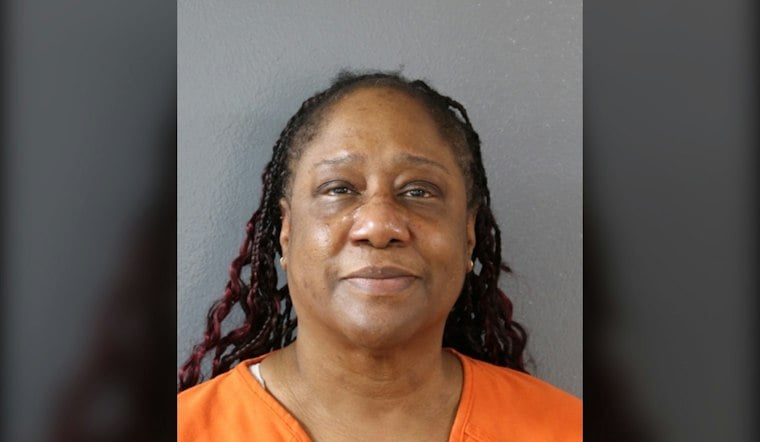
The former Oklahoma County jail phone operator accused of failing to respond to two of four emergency calls during an inmate's fatal beating has been asked by her attorney to undergo a court evaluation of her fitness to stand trial. Debbie Binkley, charged with second-degree manslaughter, is accused of failing to alert guards or supervisors after answering the first and fourth of fellow inmate Messiah Shanks's four calls during the fatal beating of detainee Clinton Pike; the second and third calls went unanswered.
Binkley's defense attorney has requested a hearing to evaluate her mental competency, according to Oklahoma City Free Press. The case has drawn renewed scrutiny to how the Oklahoma County Detention Center handles emergencies inside its high-rise walls. Pike was housed on the 12th floor of the jail alongside Orenzo Byrd, the man accused of beating him, when the calls for help went out.
The 12th floor is specifically designated for detainees with medical and mental health needs, but getting help there is far from instant. Correctional staff testified in court that elevator transit from the ground-floor booking area up to that floor takes five to 10 minutes, the same outlet reports. Detainee Gregory Davis, who died during a medical emergency in 2021, was also housed on the 12th floor.
A Pattern That Predates Pike's Death
Davis's case has already produced a damning record in federal court. During the civil trial over his 2021 death, a gastroenterologist testified that Davis's ulcer perforated 12 to 48 hours before he died and that he could have survived with timely surgical intervention, according to KFOR. Davis had placed 893 unanswered distress calls before he died alone in his cell.
Byrd, accused of beating Pike, had been booked into the detention center just two weeks earlier on charges of robbery with a dangerous weapon, the Free Press notes, and was housed in cell 20 on the 12th floor alongside Pike when the assault occurred. The facility itself was not designed for this kind of medical oversight. The Oklahoma County Detention Center, a 13-story downtown jail, has faced issues including cracked windows documented by state inspectors and lengthy elevator trips described in court testimony.
Sanitation and Safety Checks Under Fire
Regulatory scrutiny has piled up alongside the criminal case. An unannounced May 5 inspection by the Oklahoma State Department of Health found thousands of unrecorded safety checks, and inspectors who sampled 20 housing logbooks also documented shower walls, floors and fixtures across housing pods that were discolored, heavily stained and coated with grime, per the same account from the Free Press.
The jail's governance has been just as turbulent. In March 2026, an Oklahoma County Commissioner introduced a motion to dissolve the Oklahoma County Criminal Justice Authority entirely following a $5.4 million operational budget deficit and unauthorized employee salary increases approved by trust leadership, as Hoodline previously reported. The trust took over daily jail operations from the sheriff's office in July 2020 and has faced governance friction and multimillion-dollar budget shortfalls ever since.
A Sales Tax Vote Looms in November
Amid the turmoil, Oklahoma County Commissioners voted 2-1 in August to place a 0.4% sales tax proposal that could last 25 to 30 years on the November 3 ballot, projected to generate about $600 million over that period for new jail debt, operations, and mental health diversion, according to KGOU. The measure caps any new facility at 800,000 square feet and a maximum of 1,800 beds. Construction is already underway on a new county Behavioral Care Center adjacent to the proposed jail site, funded through federal American Rescue Plan Act pandemic relief dollars that county leaders must fully spend by the end of 2026, planned to operate alongside a replacement detention facility.
The population inside the current jail has fallen dramatically even as these safety failures persisted. Data from the Criminal Justice Advisory Council released this month shows Oklahoma County's average daily jail population dropped from historical levels of roughly 2,400 to around 1,400 detainees, aided by expanded pretrial risk assessment tools, diversion programs, and the local Diversion Hub connecting detainees to support services — a trend Hoodline detailed in an earlier report. Fewer people behind bars has not translated into fewer emergencies falling through the cracks, and the competency hearing sought for Binkley now stands as the next test of whether anyone will be held accountable for the calls that went unanswered on the 12th floor.



