

























































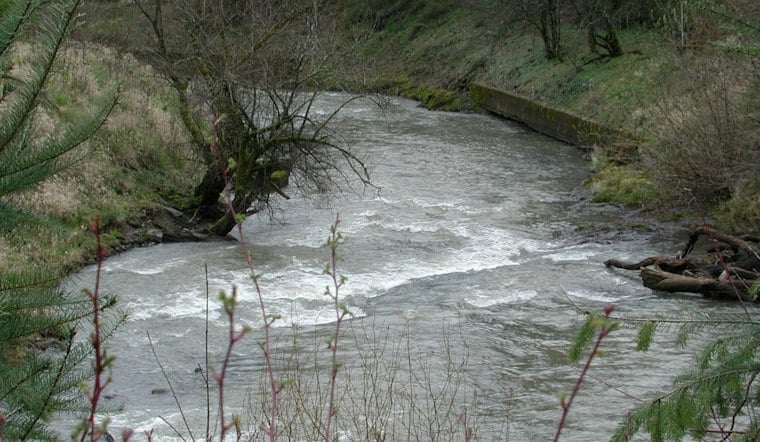
Officials are investigating a mass die-off reported along Portland’s Johnson Creek after residents and watershed observers found hundreds of dead fish and other animals. Portland’s Bureau of Environmental Services is working with the Oregon Department of Environmental Quality, while the Oregon Department of Fish and Wildlife and Oregon State Police are also involved, according to KOIN.
The cause remains unknown. Investigators have been collecting water samples, but no agency has publicly identified a contaminant, disease, oxygen problem or other explanation for the deaths. The reports began with foaming water on Thursday, September 17, followed by reports of dead animals on Friday and Saturday, KOIN reported.
The animals reported dead included hundreds of fish along with lamprey, a Pacific giant salamander and bullfrog tadpoles, according to KOIN. The range of species makes the incident an ecosystem-wide concern, but the species list alone does not establish whether the animals died from the same cause.
A long creek with existing environmental pressures
Johnson Creek runs 26 miles from its headwaters in Clackamas County to the Willamette River in Milwaukie, passing through a watershed that includes parts of Clackamas and Multnomah counties and the cities of Gresham, Happy Valley, Portland and Milwaukie, according to Portland’s Bureau of Environmental Services: Johnson Creek watershed overview.
The creek also has documented long-term habitat challenges. The city’s 2023 Johnson Creek Watershed Report Card says high stream temperatures and a lack of large wood limit the ability of salmon and other native fish to grow and thrive. Those conditions provide background on the watershed’s ecological pressures, but they do not explain this specific die-off.
For now, the central questions are where the deaths were concentrated, what the water samples show and whether a single event affected multiple species. Until investigators release those findings, the reason for the foam and animal deaths remains unresolved.


