

























































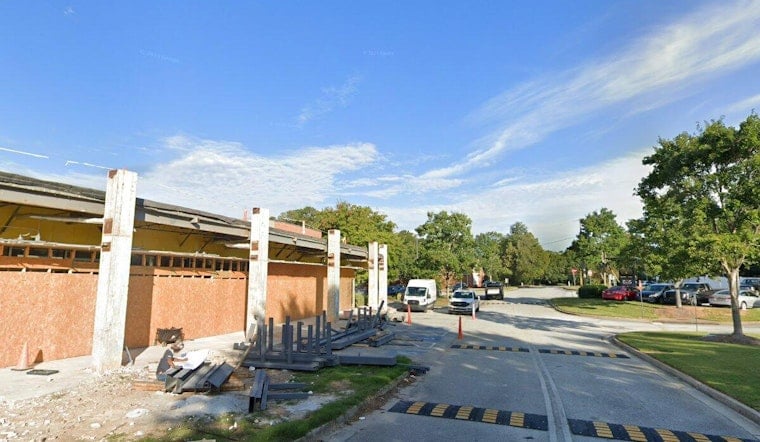
A fourth-grade student at Callaway Elementary School in Jonesboro developed severe headaches after enduring extreme heat in his classroom, prompting his mother to pick him up from school twice this week. The boy attends Callaway Elementary, a Clayton County school serving roughly 660 Pre-K through fifth-grade students, where broken air conditioning has turned classrooms and hallways into an ordeal for kids and staff alike.
According to FOX 5 Atlanta, the Jonesboro mother said extreme classroom temperatures triggered the severe headaches in her son, leading her to pick him up from Callaway twice this week rather than send him back into the heat. Clayton County Public Schools has confirmed HVAC failures in several classrooms at the school in early September and has deployed portable air conditioning units in response, according to WSB-TV. Parents told the station the portables have failed to adequately cool warm hallways and classrooms, leaving the fix incomplete even after crews moved in equipment.
A District Already Stretched Thin by August Heat
The breakdown at Callaway did not happen in isolation. Less than a month earlier, Clayton County Public Schools repeatedly canceled all outdoor activities district-wide on August 10, 13 and 17 as Metro Atlanta heat index values approached 105 to 110 degrees, forcing physical education and recess indoors across every campus in the district. Those cancellations reflect the district's own weather safety protocol, which mandates that outdoor activities and indoor activities in non-air-conditioned spaces be canceled once the heat index hits “Red Level” status at 95 degrees or above.
That threshold underscores just how precarious the Callaway situation has become: a school building meant to offer refuge from dangerous heat outside is now failing to keep temperatures safe on the inside. Callaway Elementary opened in January 2001 and, like many of its sister campuses, relies on central chiller systems that fall under the purview of Clayton County's district-wide maintenance operation.
A Maintenance Operation Managing Thousands of Units
The scale of that operation is enormous. Clayton County's HVAC & Energy Management Department services 108 boilers across district facilities. The strain is not new — maintaining HVAC systems across the district is an ongoing responsibility.
The Regulatory Gap Inside the Classroom Walls
Georgia enforces strict statewide heat safety rules for outdoor high school athletics under GHSA By-Law 2.67, which relies on Wet-Bulb Globe Temperature readings to limit practice and competition in extreme heat. But no such statutory cap exists for indoor classroom temperatures in Georgia public schools, leaving thermal standards for buildings like Callaway Elementary up to local school board discretion.
That gap has shown up elsewhere in the region this year. On August 18, Beacon Hill Middle School in nearby Decatur switched to remote learning after HVAC failures caused classroom temperatures to climb into the 90s, a breakdown Hoodline covered in its report on Decatur's HVAC collapse. Metro Atlanta was also under a heat advisory during the August 2026 heat wave, adding pressure on aging school systems already running at capacity.
The Cost of Heat Beyond Discomfort
The stakes go beyond comfort. For a fourth grader whose mother picked him up twice this week because of headaches, the disruption affects his school experience as well as raising a health concern for his family. The Centers for Disease Control and Prevention advises using fans indoors only when temperatures are less than 90°F, noting that a fan can increase heat exposure above 90°F.
The challenges facing Clayton County's schools also highlight the importance of maintaining cooling infrastructure in public buildings. Cooling infrastructure requires ongoing maintenance across Clayton County's public buildings. According to the Clayton County Public Schools Construction Department, its responsibilities include preparing and managing comprehensive construction budgets and overseeing major renovations, lifecycle upgrades and infrastructure improvements. According to Clayton County Public Schools, the Board discusses, reviews and amends budget drafts before approving a final version.
For now, Callaway Elementary's roughly 660 students are left navigating the same uncertainty as their counterparts across the district: portable units running in impacted classrooms, and a school year unfolding as the issue is addressed. The National Weather Service says an Extreme Heat Warning is issued when extremely dangerous heat conditions are expected or occurring and advises people to stay indoors in an air-conditioned space.





