

























































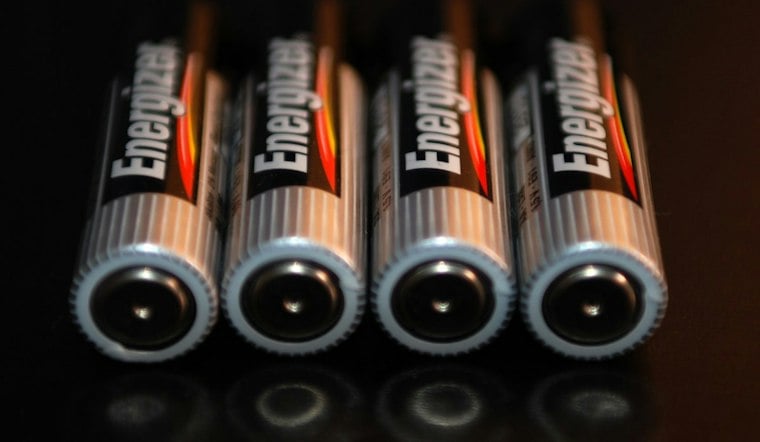
A federal judge in San Jose has rejected class action status for lawsuits accusing Energizer and Walmart of conspiring to keep disposable battery prices artificially high, denying three groups of buyers class treatment. U.S. District Judge P. Casey Pitts issued the decision on Monday, dealing a setback to the proposed classes.
The ruling, first reported by Reuters, does not end the litigation. Pitts allowed the buyers to refile their request for class certification if they can produce different evidence, and he specifically declined to bar plaintiffs from relying on their two economic experts going forward, saying their analyses could potentially bear fruit. But for now, he faulted those same experts for failing to establish that the alleged price-fixing scheme caused uniform harm across the proposed classes.
The dispute centered on whether plaintiffs could show that the alleged price-fixing scheme caused uniform harm across the proposed classes. The court records address the class-certification dispute.
Three Consolidated Lawsuits, One Alleged Scheme
The litigation, filed in 2023, involved three proposed class actions in the U.S. District Court for the Northern District of California: direct commercial buyers led by Portable Power Inc., indirect purchasers led by Don Copeland, and retail consumers led by Kimberly Schuman, according to federal court dockets reviewed by Justia. The consumer and wholesale purchaser lawsuits alleged that Energizer and Walmart conspired to keep disposable battery prices artificially high, with Walmart offering lower retail battery prices in exchange for Energizer agreeing to raise wholesale prices charged to other direct-purchase customers, per the lawsuits.
Plaintiffs' lawyers have said Walmart was Energizer's largest customer, and that Energizer faced pressure from the retail giant to enter into a business arrangement allowing both companies to charge higher-than-competitive prices for Energizer products. The lawsuits alleged an unlawful agreement to suppress competition and fix battery prices. Lead attorneys for the plaintiff groups did not immediately respond to requests for comment, per Reuters' report.
How the Alleged Arrangement Reportedly Worked
Court filings described a more detailed enforcement mechanism behind the alleged scheme. Plaintiffs alleged that Energizer created an internal unit named Project Atlas to police third-party retailers' prices and raise wholesale costs on distributors that undercut Walmart's retail battery prices, according to Business Insider. The lawsuits also described Project Atlas as part of the alleged effort to monitor third-party retailers' prices.
The commercial relationship behind the alleged arrangement ran deep. Walmart historically accounted for roughly 20% of Energizer's total global sales as of 2012 and maintained an exclusive battery supplier arrangement for Walmart's Sam's Club chain until 2013, per court filings cited by Cohen Milstein. Plaintiffs pointed to specific price hikes following an alleged 2018 arrangement between the two companies, and court filings cited in legal news reporting show that 24-packs of Energizer Max Alkaline AAA batteries at Walmart saw an average price surge to $16.24 in mid-2019 - an increase of roughly 33%, according to PYMNTS.
A Market Dominated by Two Brands
The lawsuits also claimed that Energizer's alleged price floor allowed its chief rival, Berkshire Hathaway-owned Duracell, to raise its own battery prices in parallel without risking market share, the same Business Insider report noted. Duracell was not named as a defendant in the litigation despite the alleged spillover pricing effect. Court documents filed in 2024 show that Energizer and Duracell combined control roughly 85% of the U.S. disposable battery market, with Energizer alone accounting for over 50% of domestic sales, according to Justia.
That concentration is reinforced by steep barriers facing would-be competitors. Court records note that the disposable battery market faces high barriers to entry due to restricted access to raw materials such as cobalt, lithium, and graphite, alongside the massive advertising expenditures required to compete with established brands. Those conditions, according to the same court records, have allowed existing dominant manufacturers to sustain elevated retail prices without new entrants driving them down.
Case History and What Comes Next
Monday's ruling was not the first time the case survived a legal challenge. Judge Pitts previously denied Energizer and Walmart's initial motions to dismiss the lawsuits in February 2024, as described by Cohen Milstein and Schneider Wallace.
With class certification now denied across all three proposed class actions, buyers may seek certification again with new expert methodology capable of showing classwide harm. Judge Pitts left that path open, limiting the ruling's immediate effect to the class-certification requests.





