

























































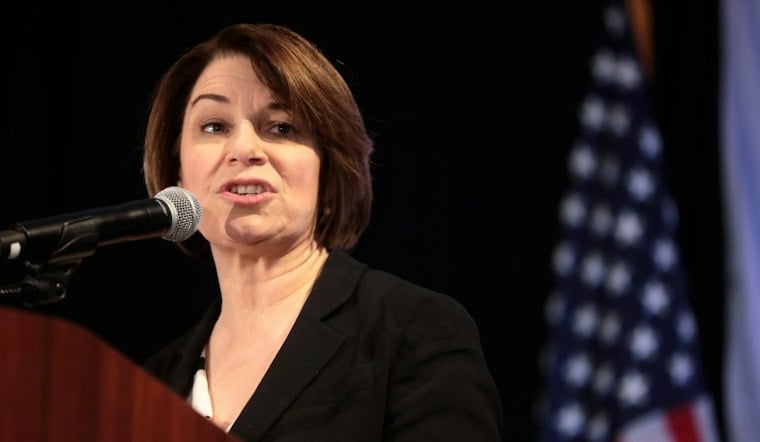
Amy Klobuchar rolled out a fresh round of healthcare proposals Monday at a news conference at Minnesota Oncology in Maple Grove, pitching a state tax credit to help Minnesotans cover health insurance premiums on the individual market if she is elected governor in November. The Demuth campaign wasted little time firing back, arguing that Klobuchar's own record in Washington is to blame for the affordability problems she now says she wants to solve.
Klobuchar's proposed credit is projected to cost the state up to $180 million per year, according to Inforum. She has conditioned the state-level credit on Congress failing to restore the federal tax credits that recently lapsed, according to reporting from 5 EYEWITNESS NEWS. The stakes for Minnesota families are real: after federal enhanced premium tax credits expired at the end of 2025, roughly 89,000 Minnesotans were projected to be affected, with costs expected to rise by 50%.
The Push for a State Backstop
Those enhanced federal credits, passed under pandemic relief, had capped premium contributions at 8.5% of household income, a cushion that disappeared once the subsidies lapsed. Minnesotans bought individual-market coverage through MNsure in 2025, and some enrollees qualified for advance premium tax credits that reduced household insurance costs. Klobuchar has argued the next governor must support affordable and accessible healthcare for Minnesotans, and her platform also calls for expanding the state's bulk purchasing of prescription drugs to negotiate lower prices, along with additional help for small businesses that provide employee health coverage.
Klobuchar's broader healthcare rollout, first unveiled in July, cited warnings from state human services officials that federal Medicaid spending cuts could leave more than 140,000 Minnesotans at risk of losing coverage, according to FOX 9. That federal budget legislation, passed in 2025, restricted Medicaid reimbursement rules and Affordable Care Act subsidies. During an August campaign stop in Winona, Klobuchar also introduced her Minnesota Healthcare Future plan, which calls for expanding state healthcare apprenticeships to address provider shortages, according to KTTC.
Klobuchar Takes Aim at Demuth's Silence
At the Maple Grove event, Klobuchar claimed that Lisa Demuth, the Republican nominee and current Minnesota House Speaker, has not released any healthcare proposals of her own, per 5 EYEWITNESS NEWS. Demuth won the August GOP primary with 43.4% of the vote, or 179,683 ballots, defeating Trump-endorsed candidate Mike Lindell by 11 percentage points despite losing the party's convention endorsement.
The Demuth campaign responded by casting Klobuchar as a career politician who spent 20 years in Washington, D.C., and argued that out-of-pocket costs for families have more than doubled since Klobuchar was first elected to the Senate, per the same 5 EYEWITNESS NEWS report. The campaign credited Demuth with fighting to continue Minnesota's reinsurance program, which it described as nation-leading and said was formed in response to what it characterized as Klobuchar's failed healthcare policies.
Reinsurance and Drug Pricing Context
Minnesota's Premium Security Plan was established under state law in 2017 amid rising individual-market premiums. The program combines federal waiver and state funds to absorb high-cost claims between $50,000 and $250,000, and lawmakers later extended it to head off double-digit premium increases, according to MPR News. The extension continued the program statewide.
The Demuth campaign also criticized MinnesotaCare spending on coverage for undocumented residents, including the program's enrollment and projected costs. Demuth has said that if elected governor, she will ensure healthcare dollars go only to people who need them and will oppose healthcare spending on fraudsters and illegal immigrants.
The Demuth campaign also credited the House Speaker with working to give families more health plan options and pledged she would continue bipartisan work supporting rural hospitals if elected governor.
A Rematch Shaped by Federal Uncertainty
The healthcare clash is the latest flashpoint in a governor's race that took shape after Gov. Tim Walz opted not to seek re-election, a dynamic Hoodline detailed in its coverage of early primary polling. Whether Klobuchar's proposed state credit ever takes effect could hinge on control of Congress after the 2026 midterms, since she has tied the plan directly to whether federal lawmakers restore the lapsed enhanced tax credits. For now, both campaigns are staking their pitch to voters on dueling visions of who should pay when premiums rise and who should be covered when budgets tighten.





