

























































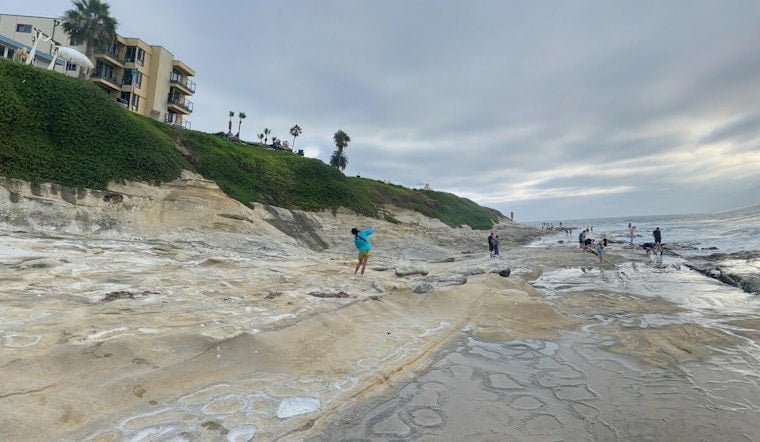
A decade after Brenda Fake started organizing neighbors to clean up La Jolla's crumbling coastal bluffs, the volunteer effort she began has raised more than $1.2 million and grown into a formal partnership with the City of San Diego. Now Council President Joe LaCava plans to propose a policy to the City Council Rules Committee in fall 2026 to make it easier for other neighborhoods across the city to copy the playbook.
Fake's organization, now known as the La Jolla Coastal Conservancy, began her efforts back in 2010, according to the San Diego Union-Tribune. The group holds a five-year Special Use Permit from the city, and its work includes maintenance, trail repairs, and private fundraising across five coastal zones stretching from Coast Walk Trail to Whale View Point, according to the Times of San Diego. This year alone, the group has pulled 16 tons of weeds from the bluffs, per the Union-Tribune's reporting, and it maintains an active project pipeline across all five permitted zones.
The conservancy's track record includes upgrades to the South Case Beach staircase, a new fence at Whale View Point, and improvements to the Coast Walk Bridge, the paper reports. It has completed dozens of such projects and now plans roughly $5 million in capital work over the next three to five years. Fake said the model can be used anywhere and described it as doable and repeatable, telling the Union-Tribune the group often receives $10 donations from many individual supporters alongside larger gifts.
A Playbook Other Neighborhoods Can Follow
The conservancy published a white paper called “Stewardship by Design,” which lays out a step-by-step guide for neighborhood volunteer groups elsewhere in the city, according to the same reporting. The document endorses project naming rights as a fundraising tool but discourages bringing in private concessionaires to operate within parks. La Jolla volunteers also created a website explaining how other neighborhoods can adopt the collaboration model themselves.
Patrick Hadley, described as a city liaison for coastal parks groups, helps community groups navigate city bureaucracy and has said the permitting system is complex and intimidating for volunteers trying to work within it. San Diego officials plan to establish park-group liaisons in other parts of the city, the Union-Tribune reports; the report does not state that Hadley's own role will extend beyond the coast.
A prior City of San Diego Park and Recreation document says the department planned to work with San Diego City Schools to renew 34 expired joint-use agreements under a memorandum of understanding.
Sunset Cliffs volunteers are already adopting the same collaboration model, this time for anti-erosion projects, as the park faces erosion risks from heavy El Niño rains predicted for winter. Leon Scales, treasurer of Friends of Sunset Cliffs and chair of the Sunset Cliffs Natural Park Council, said the volunteer group is preserving Sunset Cliffs Natural Park in Point Loma, a 68-acre resource park with 1.5 miles of coastal bluffs that has long grappled with severe ocean erosion near Adair Street, according to the City of San Diego. Friends of Sunset Cliffs plans to revamp the park entrance off Adair Street and add benches for lectures.
LaCava's Push to Cut Red Tape
LaCava's proposal will not soften city rules or standards, according to the reporting, preserving environmental and structural requirements even as it streamlines approvals. Fake's collaboration model is described as a form of public-private collaboration.
The push comes as San Diego parks, largely built during the city's building boom of the 1960s and 1970s, face a growing backlog of upgrades and maintenance, since park structures generally have roughly 50-year lifespans. That backlog is part of a broader, nearly $8 billion infrastructure gap the city faces, a figure Hoodline previously reported spans streets, storm drains, and park facilities after decades of deferred maintenance and rising construction costs. According to the City of San Diego's Park Amenity Assessment: Cumulative Report, the city tracks maintenance and capital-backlog totals for assessed park areas by Park System.
Equity Concerns Amid Private Fundraising
Not every San Diego neighborhood has the resources La Jolla does, and city officials and observers have flagged that private donations could create an uneven distribution of park upgrades, favoring wealthier areas that can raise large sums privately. San Diego has structured its public funding to counter that imbalance, funneling developer impact fees into low-income areas rather than distributing them evenly by neighborhood. A study available through the National Institutes of Health's PMC repository identified multiple disparities in park use and reported that private philanthropy can help but rarely occurs in lower-income neighborhoods.
The San Diego Parks Foundation, now seven years old, focuses almost entirely on lower-income areas and funds projects and programming. Parks After Dark offers Thursday-through-Saturday programs and free food at several locations. Separately, San Diego Canyonlands focuses on making creeks in older, lower-income southern neighborhoods into community assets, reflecting a similar volunteer-stewardship approach applied to inland canyon systems rather than coastal bluffs.
Andy Field, San Diego's parks director, oversees a department balancing these dual funding tracks — public dollars steered toward historic inequities and private fundraising filling gaps elsewhere. Whether LaCava's forthcoming policy can scale the La Jolla model citywide without deepening that imbalance remains to be seen as he plans to propose it to the council's Rules Committee this fall.





