

























































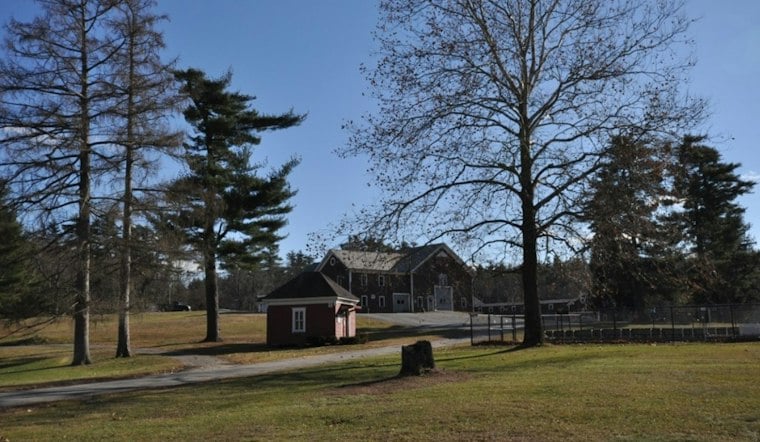
A 72-acre campus in Lancaster that once housed a 19th-century reform school for young women is now at the center of a major state push to build housing, with the Healey-Driscoll administration seeking a developer to turn the historic grounds into a new walkable neighborhood of homes, shops and public spaces. The state's Division of Capital Asset Management and Maintenance has released a formal request for proposals, kicking off a process centered on hundreds of new homes.
A 170-Year-Old Campus Looking for New Life
The site was founded in 1856 as the Lancaster Industrial School for Girls, conceived as a progressive alternative to incarceration for young women, according to Banker & Tradesman. The school closed in 1972, and the property later served as a pre-release facility for MCI Framingham before landing under DCAMM's surplus property unit in 2005, per the same outlet. Today, the Robert F. Kennedy Community Alliance remains the last tenant still operating on the grounds, the publication reports.
Under the state's plan, the selected development team would transform the former campus into a neighborhood anchored by at least 288 homes, with the potential for as many as 386 units if additional local approvals come through, according to The Business Journals. That baseline density of 288 units is authorized under the state's Affordable Homes Act, while the higher figure would require rezoning or a separate agreement among DCAMM, the town of Lancaster and the winning developer.
Blending Old Buildings With New Construction
Much of the housing math depends on how the historic buildings already standing on the site get reused. A regulating plan drawn up by planning and urban design firm Speck Dempsey estimates that up to 64 housing units could come from adaptive reuse of the campus's existing historic structures, as reported by Banker & Tradesman. The firm is led by “Walkable City” author Jeff Speck and former Massachusetts Assistant Secretary of Transportation Chris Dempsey, who designed the site layout to follow the campus's existing historic paths, hedgerows and trees in order to hold down infrastructure costs, according to the New England Real Estate Journal.
The regulating plan itself emphasizes walkability, a range of housing options, active public spaces, historic preservation and high-quality architectural design, per The Business Journals. It emerged from a public engagement process that ran from summer 2025 through spring 2026 and included three community meetings, an open design studio and two pop-up outreach events held jointly by DCAMM and Speck Dempsey.
What Developers Need to Prove Before They Bid
DCAMM's evaluation criteria for the RFP place heavy weight on a developer's proven track record for speed of housing production, alongside the total financial offer submitted, the New England Real Estate Journal notes. That emphasis reflects the state's broader push for rapid buildout amid a persistent statewide housing shortage. Site visits for interested development teams are scheduled for Oct. 7 and Oct. 22, with full RFP responses due Nov. 19.
Any winning proposal will also have to clear a density floor: Massachusetts' State Land for Homes program mandates that surplus property redevelopment projects maintain at least four housing units per acre. DCAMM anticipates selecting a development team in early 2027, with the property expected to transfer to that developer within approximately 18 months following selection, per DCAMM's release. Construction would begin only after that transfer is complete.
Local Buy-In, With a Vote Still to Come
Unlike some other State Land for Homes sites around Massachusetts, Lancaster's redevelopment has moved forward with local officials at the table rather than in opposition. Lancaster Select Board Chair Jason Allison said the town spent more than a year collaborating with state officials and urban planners to draft the regulating plan ahead of a Town Meeting vote on proposed rezoning this fall, according to the New England Real Estate Journal. That rezoning vote is what would unlock the higher end of the housing count, up to 386 units, along with neighborhood-serving commercial space; the process includes public hearings before it goes to a Town Meeting decision.
That collaborative approach stands in contrast to friction the state has encountered elsewhere. In Wellesley, the Select Board filed a lawsuit in Norfolk Superior Court in July challenging DCAMM's disposition of MassBay Community College parking lot land, Banker & Tradesman reported, illustrating the kind of local pushback that State Land for Homes projects can generate in other communities.
State Officials Tout the Site's Potential
DCAMM Commissioner Adam Baacke described the former school campus as one of the most spectacular sites in the entire state surplus property portfolio, citing its natural landscape and historic assets, per the New England Real Estate Journal. Executive Office of Housing and Livable Communities Secretary Juana Matias said converting the long-vacant state land into housing will return the parcel to Lancaster's local tax rolls once it moves into private ownership. Governor Maura Healey said the state's public land can help build needed housing, while Lieutenant Governor Kim Driscoll said building more homes is important to making Massachusetts more affordable, according to the DCAMM announcement carried by The Business Journals.
Lancaster's campus is one piece of a much larger initiative. The State Land for Homes program, which Healey launched in 2025, has advanced plans for more than 5,600 homes across nearly 700 acres of state-owned land in 33 Massachusetts communities, per the DCAMM release. Whether Lancaster voters approve the expanded rezoning at Town Meeting this fall, and which development teams ultimately submit proposals by the Nov. 19 deadline, remain open questions as the process moves forward.




