

























































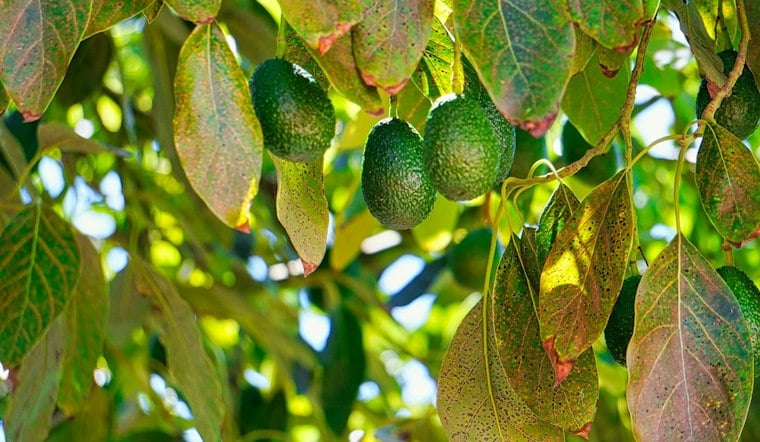
A fungal disease with no known cure is spreading through Tampa Bay backyards, killing infected trees in as little as three weeks and putting an estimated 200,000 Tampa trees — valued at roughly $16.5 million — directly in its path. Laurel wilt has already been detected in all 67 Florida counties, and local experts say communities including Lutz, Temple Terrace, Carrollwood, Brandon, Riverview, Lithia, and Ruskin are especially exposed.
A Disease With No Cure, Spreading Fast
The disease is caused by the fungus Raffaelea lauricola, which clogs the water-conducting tissue inside a tree until it can no longer move moisture from roots to leaves, according to Tampa Free Press. Once infected, trees typically wilt and die within three weeks to three months, and University of Florida researchers have confirmed there are no approved chemical cures available for backyard trees, the outlet reports. Local host species include dooryard avocado, camphor, redbay, and swampbay, while oak, maple, citrus, and mango trees cannot contract the disease.
Laurel wilt first arrived in the United States in 2002 near Savannah, Georgia, hidden inside imported wooden packing crates, and it has since wiped out more than 300 million redbay trees across the Southeast, per the same report. The fungus reached Central Florida by 2006 and arrived in Hillsborough and Manatee counties by 2012, where it has already caused heavy losses in Miami-Dade County's commercial avocado groves. University of Florida researchers, who secured a $5 million USDA grant in December 2024 to combat the disease and develop cold- and disease-tolerant avocado cultivars for Central Florida, note that the pathogen has already cut South Florida's commercial avocado production by roughly 50 percent, according to University of Florida News.
How the Beetles Spread It
The primary vector is the non-native redbay ambrosia beetle, which carries fungal spores inside paired internal head structures called mycangia, growing the fungus in a yeast phase before inoculating it into a tree's vascular tissue, according to the U.S. Forest Service Research and Development program. These beetles spend roughly 90 percent of their lives inside tree trunks, according to the Tampa Free Press report, and they do not typically target small-diameter young trunks. University researchers have also confirmed that the fungus has laterally transferred to at least 10 different ambrosia beetle species, five of which actively transmit the pathogen, University of Florida News notes — a shift that has made single-species trapping and monitoring largely insufficient.
Laurel wilt can also spread underground, moving from tree to tree through interconnected root grafts among adjacent hosts, which allows rapid die-offs to occur within dense groves and tree stands, according to UF/IFAS Extension. Importantly, the fungus does not survive in soil on its own, per the Tampa Free Press. Warning signs include tiny sawdust tubes through the bark, dark streaking inside the sapwood beneath the bark, white crystalline dried sap on the trunk, and wilting brown leaves that remain attached to branches even after the tree has died.
Tampa's Canopy Was Already Stretched Thin
The timing compounds an existing problem for Tampa's urban forest. The city has an estimated 9.3 million trees citywide, and a city urban forest analysis identified laurel wilt as one of four active pests currently threatening them, the Tampa Free Press reports. Exposed trees are predominantly native swamp bays found along the Hillsborough River floodplain and in public green spaces, with at-risk watersheds including Brooker Creek, the Alafia River, and the Little Manatee River.
That vulnerability follows a rough stretch for the city's tree cover. A Hoodline report on Tampa's storm-battered canopy found the city lost about 1,200 acres of tree canopy during the 2024 hurricane season, leaving overall coverage at 29.9 percent in 2025 — before laurel wilt entered the picture at all.
Why Homeowners Cannot Just Spray It Away
Standard, over-the-counter insecticides do not work against laurel wilt because the fungus lives and spreads inside the tree's vascular system, not on its surface, according to the Tampa Free Press. Commercial growers can treat high-value trees preventatively with macro-infusion trunk injections of systemic fungicides like propiconazole, but UF/IFAS Extension notes the labor-intensive process — which requires drilling root flares and pumping large volumes of liquid fungicide through the trunk — is financially unviable for most residential homeowners.
Even popular cultivars offer little protection. Brogdon and Lula avocados have no built-in resistance to Raffaelea lauricola, the Tampa Free Press reports, though UF/IFAS Extension research indicates West Indian cultivars and West Indian-Guatemalan hybrids wilt and die faster than Guatemalan-Mexican hybrid varieties, information that can guide homeowners selecting replacement trees. Researchers with Florida International University and UF have also shown that trained scent-detection dogs can identify volatile compounds released by infected avocado trees before visible wilting even begins, according to a study published in MDPI.
Sanitation Rules and Reporting Infected Trees
Because human transport is the primary way laurel wilt jumps across counties, state and local rules focus heavily on stopping people from moving infected wood. State agricultural officials urge property owners not to move infected limbs, logs, or firewood, the Tampa Free Press reports, and burning infected host wood is heavily restricted by local municipal fire codes. Composting unchipped host wood is often prohibited as well. Under Florida Administrative Code Rule 5B-65.004, state regulations classify the laurel wilt fungus and the redbay ambrosia beetle as plant disease nuisances, prohibiting commercial transportation of untreated firewood and unprocessed wood products without a permit from the Florida Department of Agriculture and Consumer Services.
Tony Padgett said infected wood should not leave the property, and that people should report suspected laurel wilt before cutting the tree down, according to the Tampa Free Press. Proper sanitation and disposal are critical to stopping beetles from moving into neighboring yards. Infected tree removal requires chipping or grinding the entire tree on-site, and the resulting mulch should be covered with a heavy tarp sealed to the ground for at least seven days; an infected tree should be chipped whole and covered with a tarp for a week as well. Once a dead tree has been fully removed, homeowners can plant a new young avocado tree in the same area.
Suspected infections can be reported to the Florida Department of Agriculture and Consumer Services' Division of Plant Industry or to local county extension offices, the Tampa Free Press notes. With no cure available and the fungus already confirmed in every Florida county, officials say early detection and strict sanitation remain the only real tools homeowners have to slow its spread.





