

























































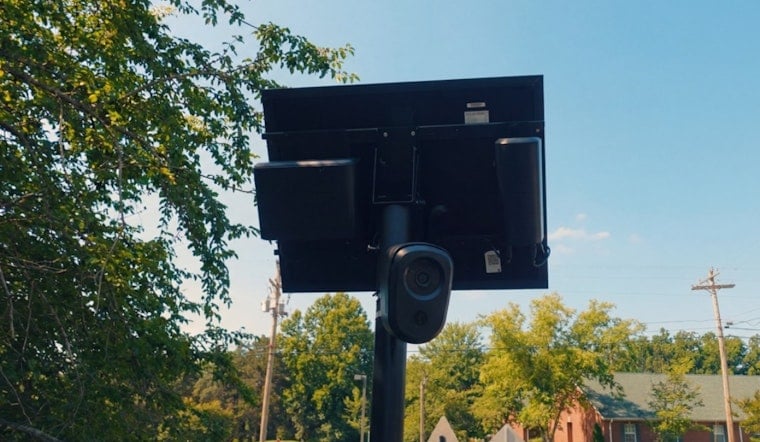
Lebanon is pulling every one of its 20 Flock Safety license plate readers offline starting today, after the city council voted unanimously to sever ties with the vendor over its refusal to answer basic questions about how the cameras' data gets used. The cameras will be shut off across city limits beginning September 9, ending a system installed just two years ago.
The vote itself, held Tuesday night, wasn't really about the cameras' usefulness in solving crimes — it was about who's holding the data. Mayor Mark Messer told FOX19 that the council's distrust is aimed squarely at Flock Safety, not at the Lebanon Police Department's handling of the system. “I'm comfortable with our officers,” Messer said, according to the station's report, adding that he's not comfortable with the city's vendor.
That distinction mattered throughout the meeting. Lebanon Police Chief Jeff Mitchell addressed security concerns directly, telling the council the department requires a case number for anyone accessing the camera system and routinely audits who logs in and why. Per the same account, Mitchell said the system has not been neglected and that Lebanon actually has more safeguards in place than many other cities running similar technology.
Weeks of Silence From the Vendor
The breaking point traces back to August 17, when the city sent Flock Safety a list of 54 written technical and privacy questions. Twenty-one days later, according to Messer, the company had answered none of them. That silence, more than any single incident, seems to have convinced council members they couldn't keep vouching for a system they couldn't fully explain to residents.
“I have a difficult time maintaining the public's trust when I can't explain to them what exactly these cameras are doing,” Messer said, per the station's report. Messer and the council framed the removal as a rejection of Flock Safety's lack of transparency — not a verdict on the police department or the investigative value of the tool itself. Residents who spoke at the meeting urged the council to do more thorough vetting if another license plate reader system ever comes up for consideration; the council did not discuss whether it would pursue a replacement system.
Part of a Regional Wave
Lebanon's decision follows moves by several municipalities across Greater Cincinnati and Northern Kentucky. Hoodline previously reported that Lebanon had installed its 20 Flock cameras in 2024 and that Mayor Messer had questioned Flock's privacy practices in a letter even before Tuesday's vote.
Oxford set the tone for the region on August 18, when its city council voted 6-1 to fully terminate its 14-camera Flock contract over concerns that local vehicle data could flow to thousands of outside agencies, as detailed by the Oxford Free Press. Days later, Hamilton County Sheriff Charmaine McGuffey ordered a countywide pause of all 75 Flock cameras her office operates, citing the need for stronger vendor guardrails and statutory parameters, according to the Village Press.
A Statewide and National Pattern
The pushback extends well beyond the Tri-State. More than 8,000 Flock cameras remain active across Ohio as of this month, per tracking data from the volunteer advocacy group DeFlock cited by The Ohio Newsroom, showing how widely the technology is still deployed even as individual communities walk away from it. Nationally, local governments have canceled or terminated automated license plate reader contracts. According to a Tennessee Department of Transportation report, automated license-plate recognition does not work perfectly in the United States, underscoring the importance of accuracy safeguards when agencies use the technology.
Other Ohio cities have taken more cautious middle paths. Dayton temporarily covered its 72 Flock cameras with plastic bags during an internal review, while Cleveland's city council limited its Flock contract to a six-month extension and opted out of the company's nationwide lookup network, per the same Ohio Newsroom report. Part of the broader discussion, as Hoodline has previously reported, concerns the policies governing private vendor platforms like Flock Safety.
Federal lawmakers are weighing in too. U.S. Representative Thomas Massie introduced the “Flock-Off Act” this month, aiming to ban federal grant funding for automated license plate reader surveillance technology, according to Readers.id. Facing mounting scrutiny nationwide, Flock Safety has updated its network standards to require automated misuse detection tools and shorten its default data retention period from 30 days down to seven, per the same outlet.
For now, Lebanon joins a growing list of communities that followed other Tri-State cities in cutting ties with the vendor, even as its own police department maintained the cameras were a useful and well-monitored investigative tool. Whether the city revisits license plate reader technology down the road remains an open question the council left untouched on Tuesday.





