

























































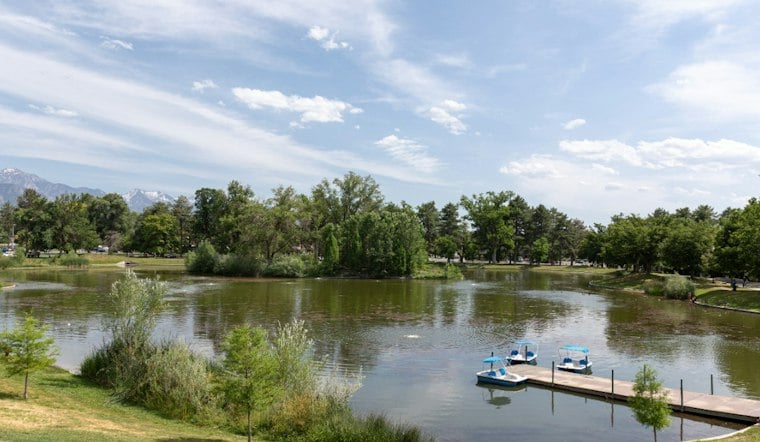
Liberty Park pulls in roughly 7,000 visitors on a typical weekday and close to 11,000 on Saturdays and Sundays, and that kind of traffic is exactly why Salt Lake City is now scrambling to figure out how to pay for a vision plan that could cost as much as $41 million. The park's 150th anniversary is in 2032, and city officials say its aging infrastructure needs more than just a fresh coat of paint.
The city’s estimate puts the three-phase Liberty Park Vision Plan at $36.3 million to $40.9 million. The work is intended to address aging infrastructure and long-deferred maintenance, according to KSL.com. City Council Vice Chairwoman Erika Carlsen said the plan will need additional funding and support to move forward, the outlet reported.
Public lands staff recently walked the City Council through an update on the plan, the product of a cultural landscape report and vision planning process that began in 2024. Kathryn Sonntag, associate landscape architect for Salt Lake City Public Lands, said the plan focuses on enhancing the park's existing features rather than reinventing them, per KSL's reporting. The plan itself, shaped by feedback from more than 1,000 people, was released publicly in May 2026.
A Phased Schedule, With the Largest Work Deferred
The vision includes new riparian vegetation along the park pond, a boardwalk at its western end for birdwatching, and a walking path circling the water — the same pond that saw oil slicks pool on its surface after a ruptured Chevron pipeline spilled roughly 33,600 gallons of crude into Red Butte Creek in June 2010, per the Utah APPLETREE Program. Planners also want to plant new trees to help preserve the park's iconic tree canopy and replace the historic greenhouse with a new one, according to KSL's reporting.
The first phase includes a road diet in the park’s southwest corner to separate the perimeter trail from vehicle traffic, as well as perimeter-path improvements and safer park entrances. These projects and deferred preservation and maintenance work are estimated at $10.8 million to $13.1 million, and could be done over the next five years as funding becomes available, KSL reports.
The next phase, projected to cost $3.2 million to $4.4 million, is expected to begin within five to 10 years. The largest phase, estimated at $22.3 million to $23.4 million, is not expected to be considered until beyond the next decade. It includes converting nonfunctional grass to water-wise meadows, according to KSL.
A Park Built On Layers Of History
Liberty Park's roots run deep even by Utah standards. Salt Lake City bought the original 100-acre property from the estate of Brigham Young in April 1881 for $27,500, and the park officially opened in June 1882, according to Utah Historical Markers. The site still holds the Isaac Chase Mill, completed in 1852 and recognized as the oldest remaining commercial and industrial structure in Utah, individually listed on the National Register of Historic Places.
The park is also home to the eight-acre Tracy Aviary, which opened in 1938 after banker Russell Lord Tracy donated his private bird collection to the city, and the 1856 Chase Home, which has housed the Chase Home Museum of Utah Folk Arts since 1987 as the only museum in the country dedicated exclusively to a state-owned folk art collection, according to the Utah Division of Arts & Museums.
Kathrine Andra, senior planning strategist for Salt Lake City Public Lands, identified the park’s usage, popularity and significance as reasons it became a priority for a vision plan, according to KSL.
Where The Money Might Come From
Rather than relying only on property taxes, city officials are considering possible grants from county, state and federal governments, sponsor funding and additional concessionaires in the park, according to KSL. Associate landscape architect Kathryn Sonntag said the greenhouse could be a candidate for public-private partnerships involving education or event space.
City Council Chairman Alejandro Puy suggested exploring naming rights, sponsorships and other partnerships to stretch taxpayer dollars. The search for outside funding comes after the city adopted a 12.5% property tax increase during its latest budget cycle to help balance a $498.2 million general fund. That budget also included more than $13 million in cuts, including pausing the landscape exchange program and delaying staff hiring, according to KSL.com.
Salt Lake City adopted its 20-year Reimagine Nature: SLC Public Lands Master Plan in June 2022 after public input, according to the City of Salt Lake City. Voters separately approved an $85 million Parks, Trails & Open Space bond that same November with 71% support, funding projects across the city including an upgraded all-abilities playground planned for Liberty Park's Rotary Play Park, which closed in September 2025 for a full redesign after two decades as a regional draw.
What the Bond Covers — and What It Doesn’t
Salt Lake City says the separate $5 million Rotary Play Park redevelopment is funded through parks impact fees and the Parks, Trails, and Open Space General Obligation Bond. The plan’s remaining funding is still being explored, according to Salt Lake City.
Liberty Park has also seen smaller-scale transformation already play out. The former Seven Canyons Fountain, shut off in 2017 over health and safety concerns, reopened in October 2025 as the dry, interactive Seven Canyons Refuge art installation — a project Hoodline covered in our reporting on the refuge's opening.





