

























































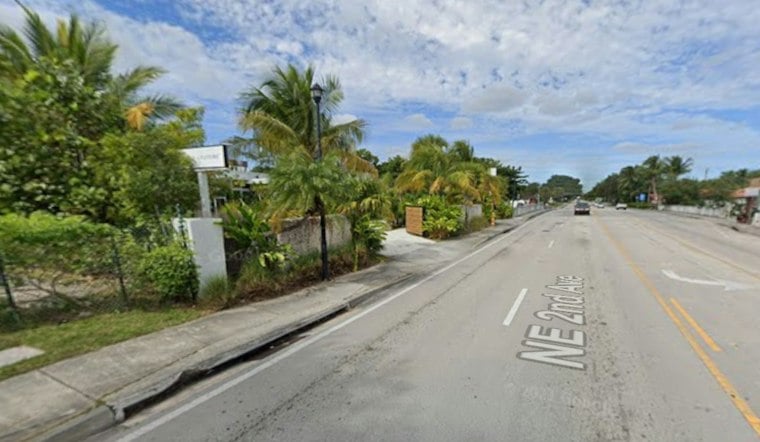
A converted 1960s gas station on NE 2nd Avenue in Miami's Little River neighborhood is now pouring coffee alongside its garden arrangements and hanging moss displays. Plant the Future, a botanical art and design studio that has operated for 19 years, added a café component to its Little River location six months ago, giving visitors a reason to linger among the ceramics and greenery rather than just browse.
The shop at 8484 NE 2nd Ave, Miami, FL 33138 serves cakes and coffees out of a space built from repurposed and sustainable materials, according to WSVN 7News. The outlet's report, credited to Shireen Sandoval and Gabriela Perez, describes a moss cave tucked into the property and complimentary chlorophyll water offered to guests. Handmade ceramic cups, made in Miami, are part of the café's offerings, and hanging decor fills the interior alongside garden arrangements for sale.
A Studio Built on Biophilic Design
Plant the Future was founded in January 2008 in Miami's Wynwood Art District by Argentine-born industrial designer Paloma Teppa and partner Yair Marcoschamer, according to The Shopkeepers, before the studio later expanded into Little River. The company's aim, per the same WSVN report, is to provide a community place for people who love nature and to help visitors slow down and unplug.
The studio's profile grew well beyond its Little River storefront. It created living green exterior walls and the lobby moss mural “Daylife Swimmer” for 1 Hotel South Beach, according to 1 Hotels, and it operates a secondary boutique mini shop inside that same property on Collins Avenue. At Art Basel Miami Beach in late 2024, the studio presented “The Spanish Moss Sanctuary,” a large-scale live installation of multi-tiered hanging Spanish moss and organic ceramic seating, as noted by Miami Living Magazine.
Little River's Industrial Roots and Its New Draw
The ground beneath the café carries its own layered history. The Little River area along the C-7 Canal was originally inhabited by the Tequesta Native American tribe and was formally annexed into the City of Miami in 1925, according to Discovery. The neighborhood, spanning Miami's 33138 and 33150 ZIP codes, recorded a population of roughly 14,348 residents in recent U.S. Census data, per the IN Miami Group.
Once an industrial and working-class corridor, Little River is rapidly evolving into a haven for boutique retail, creative studios, and destination food-and-beverage concepts, owing to its historic charm, open commercial spaces, and relative affordability compared with neighboring Wynwood or the Design District. As of April 2026, average monthly one-bedroom rent in the neighborhood sat at $1,525, well below Miami's citywide average of $2,558, according to Bisnow. That gap has helped pull creative concepts like Plant the Future's café into the area even as land values shift around it.
Growth Pressures Closing In
The neighborhood's momentum as a culinary and culture destination was underscored in February when local venue Bar Bucce was named a James Beard Award semifinalist for Best New Bar, a milestone Hoodline previously reported. That recognition arrived alongside far larger forces reshaping north-central Miami. The Miami-Dade County Commission granted final approval in April 2025 for the Little River District, a $3 billion, 63-acre master plan expected to add more than 5,700 housing units and a new Tri-Rail station, according to Housing Finance.
Nearby, demolition began in March on a 12-acre site in West Little River for The HueHub, an $880 million project planned to include seven 35-story towers with more than 4,000 workforce apartments. It's a scale of change that raises open questions about how long-standing businesses navigate rising commercial land values, and whether Little River can hold onto its quieter, community-centered feel as thousands of new residential units move through the pipeline. For now, Plant the Future's converted gas station stands as a bridge between the neighborhood's industrial past and its emergence as a cultural district, pouring coffee and chlorophyll water for anyone who wanders in.





