

























































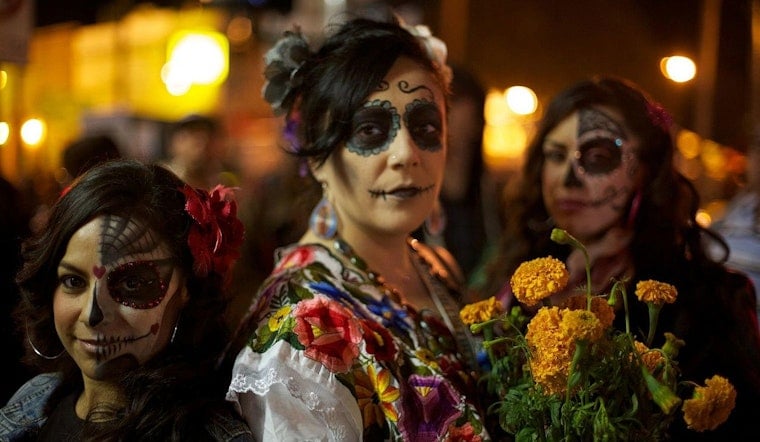
Long Beach's Día de los Muertos festival is coming back to the waterfront on Sunday, November 1, running from 1 p.m. to 7 p.m. at Rainbow Lagoon, a year after the city scrapped its annual celebration entirely. The free, public event is presented by First District Councilmember Mary Zendejas and the City of Long Beach, and it marks a notable return for a tradition that skipped 2025 amid community anxiety over immigration enforcement.
That 2025 cancellation came after Long Beach called off its planned Día de los Muertos celebration due to community safety concerns tied to federal immigration enforcement operations across Southern California, according to the Long Beach Post. Hoodline covered that decision at the time in a report on the 2025 parade cancellation. The pause left a gap in a celebration that, per details shared in Long Beach City's Facebook post, is now set to return this fall.
A New Format at Rainbow Lagoon
Rather than reviving the multi-block street parade down Pine Avenue that defined the celebration in recent years, organizers have shifted the 2026 event to a single-location festival format at Rainbow Lagoon, according to the Signal Tribune. The 12-acre waterfront park, built on tidal landfill where the historic Rainbow Pier once stood, is known for its Japanese-style bridges, seawater lagoons, and swan pedal boats, per the same account citing City of Long Beach Parks, Recreation & Marine. The move consolidates security, community resources, and cultural programming into one contained setting rather than spreading them across downtown streets.
That contrasts sharply with the 2024 celebration, when Long Beach hosted its 9th Annual Día de los Muertos event with a downtown parade along Pine Avenue that was broadcast locally on ABC7 Los Angeles, according to Visit Long Beach. Hoodline reported on those plans in an earlier piece detailing the 2024 parade and festival plans. This year's return to a single park setting represents a clear operational shift from that larger street-based format.
Mayor and Councilmember Voice Support
Long Beach Mayor Rex Richardson issued a statement praising the festival for honoring generations past who helped shape the city while offering a shared space for remembrance, according to the City of Long Beach. The festival is being presented by Councilmember Zendejas, who made national history in 2019 as the first Latina wheelchair user elected to public office in the United States, according to the Long Beach Post. Zendejas represents the First District, which includes Downtown Long Beach and the waterfront shoreline and is home to roughly 52,781 residents, per the Downtown Long Beach Alliance.
The festival will feature culturally rich performances, a resource fair, and vendors, according to details in the seed Facebook post. Nonprofit organizations and community groups may submit resource fair applications through October 23, 2026, and those entries must be culturally relevant. Food vendors and retailers can also submit vendor interest forms by the same October 23 deadline, with full details available at longbeach.gov/diadelosmuertos.
Why the Celebration Matters Citywide
The festival's return carries added weight in a city where Hispanic or Latino residents make up 43.8% of Long Beach's total population of roughly 455,500 people, the largest racial or ethnic group in the city, according to U.S. Census Bureau data released this year. In a city with that demographic makeup, public cultural celebrations like this one serve as touchpoints for community cohesion, and the one-year gap left a noticeable void for many residents.
Día de los Muertos programming isn't limited to the municipal festival. Cultural activities extend throughout Long Beach during October and November, including local business activations such as Marie's Tek Tec at Roxanne's in California Heights alongside neighborhood community altars, according to Visit Long Beach. Official municipal events also draw organizational support from the Port of Long Beach, the Downtown Long Beach Alliance, Visit Long Beach, and Long Beach Transit, per the City of Long Beach.
Zendejas has been a visible presence on other downtown initiatives in recent months, from advocating for the new waterfront amphitheater to supporting arts space development at the Armory Arts Collective. Her sponsorship of the Día de los Muertos festival's return continues that pattern of civic investment in Downtown Long Beach's cultural and public life as the city works to rebuild participation after last year's cancellation.





