

























































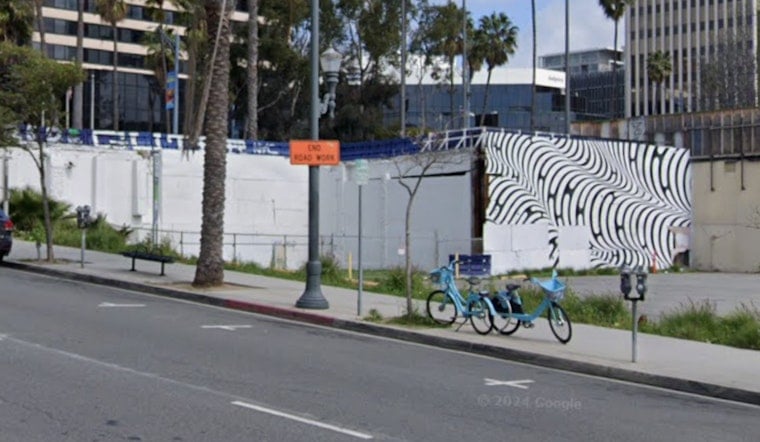
The century-old pedestrian tunnel that runs beneath Ocean Boulevard in Downtown Long Beach is getting a heavy-duty metal fence, an effort city officials say is meant to keep people from living inside a space that has caught fire at least four times since 2022. The Jergins Tunnel, a 30-foot-wide, 181-foot-long passage once used by thousands of beachgoers a day, has instead become one of downtown's more persistent encampment sites in recent years — even as the city has publicly promised to turn it into a speakeasy and music venue tied to a long-delayed hotel project.
According to the Long Beach Post, the city spent $156,200 on materials and labor for the fortified fence, which is expected to be finished by mid-to-late September. City officials have declined to disclose the fence project's total anticipated cost. Wood panels previously installed to block access to the tunnel were routinely bypassed by people seeking shelter there, prompting the switch to a more permanent metal barrier.
Brett Ales, who owns Beach Hut Deli near the tunnel entrance, told the outlet that approaching the site came with a noticeable smell. Firefighters have doused fires inside the tunnel repeatedly since 2022, and the space has become the subject of local concern over both safety and its uncertain future.
A Tunnel Built for Crowds, Sealed by a Widened Road
Businessman Andrew Jergins built the tunnel in 1927 after a municipal traffic survey found up to 4,000 pedestrians an hour crossing the Pine Avenue and Ocean Boulevard intersection on peak weekends, according to the Beachcomber. The subterranean passage originally held retail concession stalls and let visitors reach the beach and the old Pike amusement park without dodging traffic on Ocean Boulevard, per the Long Beach Post's reporting. The tunnel was used regularly until 1967, when the roadway above it was widened and its entrances were sealed because the expanded street extended directly over the original entry stairs.
The 10-story Jergins Trust Building, which stood above the tunnel, was demolished in 1988 after earlier hotel redevelopment proposals collapsed, according to Wikipedia. That left the corner lot at Ocean Boulevard and Pine Avenue vacant for decades. Local residents have since sought ways to revive the tunnel as a monument to Long Beach history, and the site gained an unexpected pop-culture boost when Lana Del Rey released the title track of her album “Did You Know That There's a Tunnel Under Ocean Blvd.” in December 2022, name-checking the tunnel's mosaic ceilings and painted tiles.
Hard Rock Hotel Plans Remain Stalled
City leaders announced in 2023 that the tunnel would be incorporated into a new 31-story Hard Rock Hotel planned for the site, with promises that the subterranean space would become a speakeasy and music venue. Hoodline first reported on the hotel proposal when it was unveiled, noting the development was slated to include more than 26,000 square feet of event space. Construction on the hotel was supposed to begin in the summer of 2024 and the project was scheduled to open by spring 2027, but according to the Long Beach Post, construction has not begun despite that planned start date. Developer Steinhauer Properties has requested an extension of the hotel's building permits and did not respond to the outlet's requests for comment. Craig Nakano said the city has discretion to grant an extension for the permits. City officials anticipate an update on the hotel plans as soon as fall 2026.
Second Downtown Landmark to Get a Fence This Year
The Jergins Tunnel fence is the second barrier recently erected around a downtown Long Beach landmark. The city spent $811,449 building a wrought-iron fence around the Billie Jean King Main Library, a project Hoodline covered when the library fence sparked backlash from local homelessness advocates. That fence blocked much of the library's outdoor terrace, which had often been crowded with tents and sleeping bags; city officials say fewer people are now camping there, and the cleared space has allowed for outdoor library programs. Officials have defended the library barrier by citing an estimated $70,000 in annual savings on sidewalk power washing.
Long Beach's Citizens' Advisory Committee on Homelessness Policy wrote a letter to the mayor and City Council arguing that the library fence money would have been better spent housing people. Some residents have criticized the cost of that fence and view it as a symbol of the city's broader failure to reduce homelessness. The same tension now surrounds the tunnel project: Jocelin Padilla wrote that the fence would improve site security and reduce the potential for vandalism and fires, even as the underlying question of where displaced people will go remains unresolved.
Homelessness Numbers Climbing Citywide
The debate unfolds against a backdrop of rising need. Long Beach's 2026 Point in Time Count, conducted in January and published in July, identified 3,729 people experiencing homelessness citywide — a 3.7% increase from 2025 — according to the City of Long Beach. The proportion of unsheltered individuals did fall to a four-year low of 69.4%, even as overall totals have increased in six of the past seven years despite expanded local shelter investments.
Regional data cited by LAist shows 40% of unhoused respondents in the count named financial hardship or job loss as the primary cause of their situation, while 61.9% of newly unhoused residents said they lost their housing outside Long Beach. The city had declared a local state of emergency on homelessness in January 2023 to speed up shelter construction and outreach, but the City Council formally ended that emergency order in February 2024, after which departments returned to standard capital planning procedures, according to the Signal Tribune.
Not everything salvaged from the old Jergins site has ended up behind a fence. Two 15-foot-tall terra-cotta pillars that once topped the Jergins Trust Building were rediscovered in an overgrown lot along the Los Angeles River bike path and restored, and in August 2012 they were re-erected as the entrance gateway to the Drake Chavez Greenbelt and Willmore Heritage Garden, according to the Long Beach Post. For now, though, the tunnel that inspired a Grammy-nominated song remains sealed behind wood panels turned metal fencing, its speakeasy future still years away and its recent past defined by fire crews and eviction notices rather than mosaic ceilings.





