

























































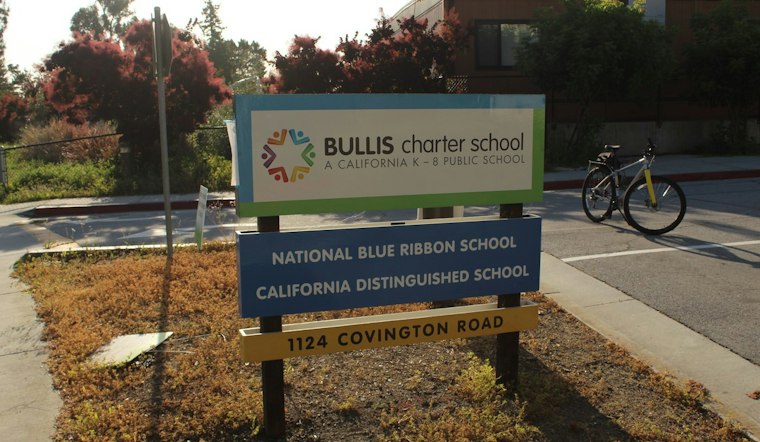
The Los Altos School District Board of Trustees voted unanimously, 5-0, on August 17 to abandon its at-large election system and shift to area-based voting, a move triggered by a letter alleging the current setup violates residents' voting rights. The resolution formally sets the district on a path toward electing trustees from geographic sub-regions rather than districtwide, with the changes phased in for the 2028 and 2030 election cycles.
The trigger was a demand letter from Santa Barbara attorney Robert Goodman, sent on behalf of Los Altos resident Thomas Yih, alleging the district's current election system violates the California Voting Rights Act, as reported by the Mountain View Voice. Yih is a former Bullis Charter School board member, and Goodman has sent a similar pre-litigation letter to the City of Carpinteria, according to a staff report filed with the City of Carpinteria. Yih did not respond to a request for comment, per the same report.
California's Elections Code Section 10010 gives agencies a narrow 45-day window after receiving a CVRA demand letter to pass a resolution of intent to switch to district elections. Doing so triggers a 90-day delay in litigation, according to the City of Vallejo. The board's action began the district's transition process.
A District Long Entangled With Bullis Charter
The district's relationship with Bullis Charter School has been tumultuous, the Mountain View Voice's report notes, and that backdrop is impossible to separate entirely from the current fight over election maps. LASD Trustee Vladimir Ivanovic resigned in January, effective in March, specifically over the board's decision to hand its newly acquired 11.7-acre San Antonio Shopping Center campus to Bullis Charter, as Hoodline previously reported. The district plans to move Bullis Charter to a new campus under construction in that same San Antonio-area site.
Voters approved Measure EE in November 2024, a $350 million bond funding campus repairs, accessibility upgrades, and construction tied to the San Antonio site, according to the district. Bullis Charter School itself has taken no position on the election-system change, and Bullis board member Maureen Israel said the planned shift in school-board elections appears unrelated to the charter school, adding that individual civic activities by Bullis families or former board members do not reflect anything about Bullis, per the Mountain View Voice's reporting.
How the New Map Would Work
Under the current at-large system, voters across the entire school district can vote for all five trustees. The proposed area-based system would instead divide the district into five sub-regions, letting voters in each area elect just one trustee representing their portion of the district. The district plans to hold public hearings in January 2027, work with a demographer in February and March 2027 to draw five trustee areas of roughly equal size, and adopt a final map in April 2027 — timing that will not affect the November 2026 election, since current trustee terms remain intact under the phased rollout.
The district's own resolution noted that no local agency in California has successfully defended against a CVRA challenge in court, a track record borne out by cases like the City of Santa Monica, which racked up millions of dollars in legal fees fighting its at-large system before lower courts, according to the City of Los Altos. The California Voting Rights Act bars at-large elections when they impair a protected class's ability to elect its preferred candidates or otherwise influence outcomes. Ballotpedia provides enrollment totals and general demographic information for LASD and the City of Los Altos, according to Ballotpedia.
Part of a Broader Local Shift
LASD is far from alone. The City of Los Altos received its own CVRA violation letter in April 2024 and is undertaking redistricting; districts 2 and 4 will be elected in 2026. The neighboring Mountain View-Los Altos Union High School District received a similar CVRA notice, adopted a transition resolution in September 2024, and is targeting its first area-based elections for November 2026, a shift Hoodline has tracked in recent coverage. Foothill-De Anza Community College District made a similar shift to area-based elections back in 2022.
The examples above show a broader local shift toward area-based elections. Statewide, hundreds of government agencies have established district elections in recent years, largely under the same legal pressure now reshaping how Los Altos families will choose their school board.



