

























































Mankato Regional Airport just got a lot closer to finally getting a control tower. The Federal Aviation Administration awarded the airport an $11.5 million grant this week, part of a $1.1 billion nationwide airport funding push announced by the Department of Transportation on September 14, and the money pushes Mankato's total secured airport grants to $29.6 million toward a project now estimated at $31.6 million.
The bulk of the new grant — about $10 million — is earmarked for the long-sought air traffic control tower, with the remaining $1.5 million going toward taxiway improvements, according to MPR News. That still leaves the city with a $2.1 million funding gap to close, though officials say Mankato can pursue additional FAA grant programs to help cover the remainder, per the same report.
Mankato Regional Airport is the busiest airport in Minnesota that lacks a control tower. It logs roughly 126,000 takeoffs and landings a year and had about 105 based aircraft in 2025, according to the outlet's reporting. City Manager Susan Arntz called it, in her words, the busiest Minnesota airport without a tower, and said building and staffing one “will strongly enhance safety for airport users and the region.”
Why a College Town Airport Sees So Much Traffic
Much of that traffic volume traces back to Minnesota State University, Mankato's aeronautics program, which enrolls more than 700 students and uses the airport as its main training base, the article notes. The airport's economic footprint locally is estimated at $23.8 million, and it supports about 214 regional jobs, per the same account.
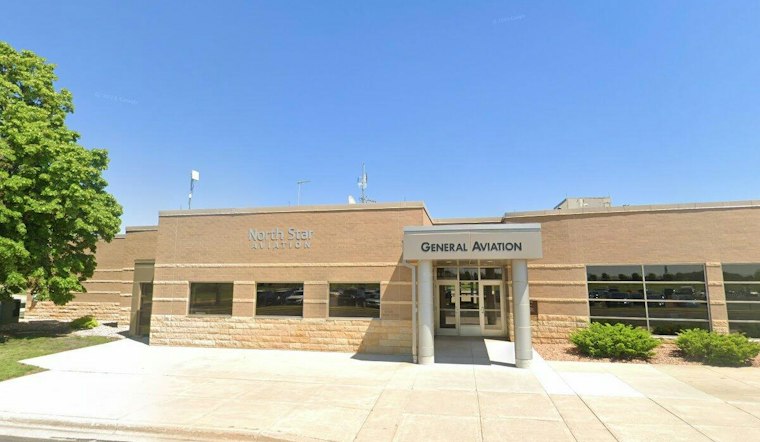
North Star Aviation, the university's exclusive flight training provider, runs a fleet of 42 aircraft out of Mankato — including Piper Archers, Piper Seminoles, Cessna 152s, and an Extra 300L — and logs more than 40,000 flight hours annually, according to Fly Mankato. The flight school employs 205 people, including 91 instructors, and holds FAA examining authority, a certification held by fewer than 17% of flight schools nationwide, according to background compiled by the City of Mankato. Comparative research from the University of Minnesota Humphrey School of Public Affairs identifies Mankato Regional as Minnesota's second-busiest airport after Minneapolis-St. Paul.
No Tower Yet, So Pilots Talk to Each Other
Right now, pilots flying in and out of Mankato Regional rely on flight plans and self-announced radio communications rather than a controller directing traffic, per MPR News's report. SkyVector lists the airport's radio frequencies and CTAF-related information, along with its primary runway at 6,600 feet long.
Once built, the tower is planned as a contract facility — one of roughly 265 of the 520 air traffic control towers nationwide that are operated by private companies under FAA oversight rather than staffed directly by federal employees, per the outlet's reporting. The FAA outsources control services at smaller, lower-activity airports like Mankato through this contract tower model, and standard program guidelines require candidate airports to demonstrate a benefit-to-cost ratio of at least 1.0, according to the Federal Aviation Administration.
A Long Road, With a Setback Along the Way
The project hasn't moved in a straight line. Earlier design and environmental work had already been completed.
U.S. Representative Brad Finstad sought $3.5 million in FY26 funding for Mankato Regional Airport, according to available records. The following month, the Minnesota Legislature authorized $1.26 million in state funding specifically for the tower project as part of a regional capital investment package, per the Minnesota House of Representatives. A public open house gathered community input on the tower design.
What Comes Next
U.S. Transportation Secretary Sean Duffy said in a news release that the administration is upgrading airport infrastructure, enhancing runway safety and expanding family-friendly terminal features nationwide, and added that the broader investment includes vehicle transmitters meant to improve air traffic controllers' visibility. Arntz said the first-ever control tower will enhance MSU Mankato's aeronautics program and allow for programmatic adjustments, and she said she hopes construction on the tower can start next spring, with the current target for completion in spring 2029 following an earlier projection that it would be operational by 2027, according to MPR News's report.
Mankato's award was one of dozens announced in the same federal round. Elsewhere in Minnesota, Wheaton Municipal Airport received $3.2 million to reconstruct a runway, Warroad International Memorial Airport received more than $5 million to reconstruct taxiways, Range Regional Airport is set to receive $3.5 million for wildlife perimeter fencing reconstruction, and Minneapolis-St. Paul International Airport will receive $1.5 million to reconstruct taxiway and runway lighting, per the outlet's reporting.





