

























































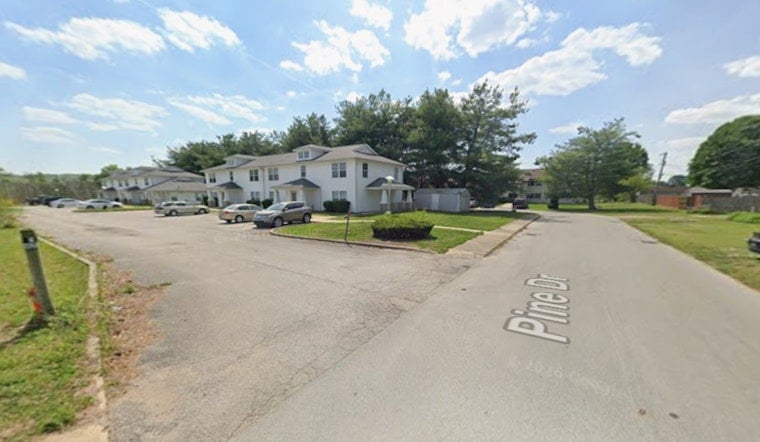
A man became trapped inside a seven-foot storm drain at Pleasant Drive Apartments in Martinsville on Tuesday afternoon after entering the drain to clean it. Firefighters arrived within minutes, confirmed his depth and condition, and began setting up a technical rescue operation before anyone went in after him.
The Martinsville Fire Department received the entrapment call just after 3 p.m. Tuesday, according to WRTV. Rescue unit R142 arrived within minutes of a direct 3:01 p.m. phone call confirming the man was trapped roughly seven feet down, as reported by WTHR. That quick confirmation of the drain's depth let crews immediately call for specialized rescue equipment and medical backup.
Once additional personnel arrived, the fire department prepared for what is known as a confined space entry, per the same account. Before anyone went underground, crews checked air monitors, set up positive pressure ventilation, and rigged a rope system to safely lift the man out. Only after those precautions were in place did a technician enter the drain to reach him.
A Multi-Agency Response Under Time Pressure
The operation required coordination beyond the fire department alone. Morgan County Public Safety Dispatch, the Martinsville Police Department, and Morgan County EMS all took part, with EMS providing paramedic support and hospital transport, the station's report notes. The fire department itself confirmed the rescue involved its crews along with a few other agencies working the scene together.
Using the rope and harness system, crews lifted the man out of the drain and brought him to a hospital for evaluation. Pleasant Drive Apartments, located near East South Street, dates back to 1974, according to Apartment Finder — and like many multi-family complexes of that era, it relies on sub-surface storm drainage infrastructure that periodically needs debris cleared, which is what the man was reportedly doing when he became stuck.
Why Firefighters Wouldn't Rush In
The careful, staged approach reflects why confined space rescues are treated so cautiously nationwide. Research from the National Institute for Occupational Safety and Health has found that more than 60% of workplace confined space fatalities occur among would-be rescuers who enter without proper training or safety gear. Federal Bureau of Labor Statistics data similarly shows that hazardous atmospheres — oxygen deficiency or toxic gases like carbon monoxide or hydrogen sulfide — account for 56% of all confined space workplace deaths in the country.
Those risks are why federal workplace safety rules require specific equipment and procedures for entries like the one in Martinsville. Occupational Safety and Health Administration regulation 29 CFR 1910.146(k)(3)(ii) mandates that mechanical retrieval systems, such as tripods or rope harnesses, be deployed for any vertical permit-required confined space entry deeper than five feet — exactly the kind of rope system the Martinsville Fire Department rigged before sending its technician down. Separate OSHA general industry standards call for continuous forced-air ventilation and atmospheric testing to keep oxygen levels between 19.5% and 23.5% throughout an entry.
Cleaning Work Carries Hidden Risk
Industry data on confined space fatalities suggests the man's task was riskier than it may have appeared. Routine maintenance, cleaning, and inspection activities account for nearly 25% of all confined space-related workplace deaths nationwide, according to Occupational Health & Safety trend data. Separate federal construction standards under OSHA 29 CFR 1926 Subpart AA also require monitoring for engulfment hazards, including flash flood risk, whenever personnel work inside storm sewers or drainage systems.
It remains unclear whether the man was a resident, an employee, or an independent contractor working at Pleasant Drive Apartments, and whether the cleaning work had been authorized with any required safety permits. The Martinsville rescue also echoes a similar operation in central Indiana last month, when IFD pulled off a sewer rescue using specialized confined space technicians trained under IAFF standards to pull a trapped subject from a municipal drainage system.




