

























































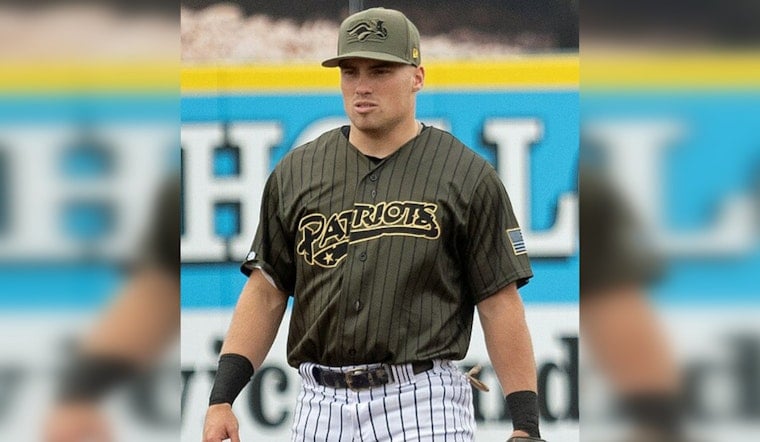
Caleb Durbin has seen it up close. A teammate of the Red Sox third baseman received a threatening social media direct message that referenced the player's newborn baby, sent by a sports bettor upset over a game's outcome. Now Massachusetts regulators are rolling out a new tool meant to identify and punish people who send messages like that one.
The Massachusetts Gaming Commission introduced its “Bet on Respect” initiative this week, giving athletes, fans, and others a portal to report bettors who cross the line from heckling into harassment, according to The Boston Globe. The reporting system, detailed by Legal Sports Report, allows the commission's Sports Wagering Division to work with sportsbook operators to try to identify anonymous harassers before referring cases to the state's Investigations and Enforcement Bureau for possible placement on Massachusetts's involuntary exclusion list under regulation 205 CMR 152.
Durbin, who played with the Milwaukee Brewers last season before joining the Red Sox, described the incident while attending a Red Sox game against the Mariners at Fenway Park, per the Globe's reporting. His teammate reported the direct message to the team, and the team took action after receiving the report. Durbin said the messenger, when contacted by the teammate and told the message went too far, responded, “Oh, I'm so sorry.”
A Widening Definition of Harassment
“It should not be normal for athletes to receive hateful language from bettors,” Durbin said, adding that sports bettors regularly fling hateful and threatening language at athletes on social media and that social media itself opens the door to hostile direct messages landing in players' inboxes, according to the Globe's report.
Jordan Maynard, chair of the Massachusetts Gaming Commission, framed the initiative's goal as one of basic decency rather than politeness for its own sake. “The initiative asks people to be decent and kind rather than simply nice,” Maynard said, according to the Globe. He also pushed back on the idea that a bad bet excuses cruelty: “Losing a bet does not justify making an athlete's life miserable,” he said.
Under Massachusetts's regulatory language, the conduct at issue includes “a willful and malicious knowing pattern of conduct or series of acts over time directed at a specific person that seriously alarms them and would cause substantial emotional distress,” as well as expressing an intent to injure another person or damage their property. The commission may place an offender on the state's exclusion list if there is enough evidence, a process the initiative explicitly aims to distinguish from the ordinary cheering and razzing that has always been part of sports.
Reporting Requires Real Contact Information
Unlike some tip lines, the Gaming Commission's portal does not allow anonymous submissions. Users must provide a name, phone number, and email address, according to GamblingHarm.org, which also notes the protections extend beyond athletes themselves to their family members, coaches, and game officials. A reported incident can spark a commission investigation, though the dossier does not specify how quickly investigators can unmask anonymous harassers once a report is filed.
The initiative has assembled a wide network of Massachusetts sports partners, including the Boston Red Sox, Boston Celtics, Boston Bruins, New England Patriots, New England Revolution, and Boston Legacy FC, alongside the NCAA. Sportsbook operators DraftKings, FanDuel, BetMGM/MGM Springfield, Caesars, Bally Bet, Fanatics Betting and Gaming, and Encore Boston Harbor and Penn Entertainment/Plainridge Park Casino have also partnered with the commission. A promotional video for the campaign features Red Sox pitcher Garrett Crochet, Bruins goaltender Jeremy Swayman, Celtics executive Brad Stevens, soccer player Griffin Yow, and Maynard alongside other commission commissioners.
Massachusetts Follows a Path Ohio Set in 2023
Massachusetts gained regulatory authority over sports wagering in 2022 and began developing a harassment deterrent shortly after, according to the Globe's account, with the commission continuing that work as legal betting expanded across the state. The approach echoes a strategy Ohio pioneered in 2023, when that state became the first to let regulators ban bettors who harass athletes after University of Dayton men's basketball players faced aggressive social media threats, as SportsHandle reported at the time.
Ohio's Casino Control Commission has continued that work through its “More Than A Bet” public awareness campaign, which found that between 15% and 25% of all online abuse directed at student-athletes is tied directly to sports gambling, according to SBC Americas. That scale of harassment has been echoed in national data: an NCAA study released in June 2025 analyzed more than one million social media posts during the 2025 March Madness tournaments, flagging over 54,000 for potential abuse and confirming 3,161 abusive or threatening messages that led to 103 formal investigations and 10 law enforcement referrals, per the NCAA.
A separate NCAA survey published in November 2025 found that 36% of Division I men's basketball players and 16% of Football Bowl Subdivision football players reported receiving betting-related social media abuse within the prior year. An earlier NCAA pilot study, covered by AP News, found female student-athletes faced roughly three times more online threats than male athletes during championship events, with sports betting accounting for 12% of all verified abuse across more than 72,000 AI-flagged messages.
Enforcement Carries Real Stakes for Sportsbooks Too
The consequences are not limited to individual bettors. Under Massachusetts regulation 205 CMR 152.06, licensed sportsbooks and casinos face fines, account suspensions, or even license revocation if they knowingly or recklessly fail to block excluded individuals from betting or entering gaming facilities, according to the Legal Information Institute. Licensees are required to coordinate with the Massachusetts State Police Gaming Enforcement Unit to keep excluded bettors off both apps and casino floors.
The Gaming Commission has shown it is willing to penalize operators before. Hoodline previously reported on a $450,000 DraftKings fine issued in July 2025 after the Boston-based sportsbook accepted credit card deposits on more than 1,000 wagers, a violation of the state's ban on credit card funding for sports bets that dates back to when wagering was first legalized in 2022.
NCAA President Charlie Baker has also pushed for a related but distinct fix, urging state gaming commissions nationwide in January to eliminate individual college athlete prop bets, arguing that single-player wagers generate the most intense and direct harassment against student-athletes. Ohio, Maryland, Vermont, and Louisiana have already banned those prop bets, according to the NCAA. Whether Massachusetts will follow with its own prop bet restrictions remains an open question, but for now, the Bet on Respect portal represents the state's most direct answer yet to the kind of message Durbin's teammate received.





_(cropped).jpg)