

























































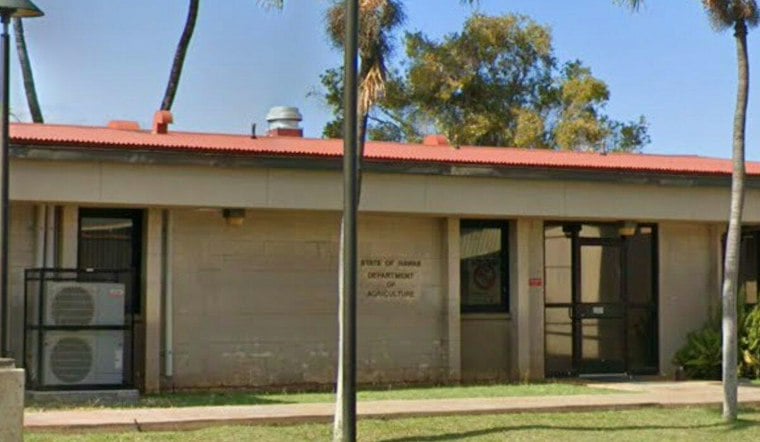
Mayor Richard Bissen signed Bill 98 into law, permanently codifying the Maui County Food and Nutrition Security Plan and locking in a long-term framework meant to strengthen how food is grown, harvested, processed, distributed, consumed and recovered across the county. The measure, introduced by Councilmember Gabe Johnson, cleared the Maui County Council unanimously on second and final reading on September 4.
A Plan Years in the Making Becomes Law
Bill 98 adds the food security plan as a new chapter to the Maui County Code, according to Citizen Portal, a legal mechanism designed to ensure the plan survives changes in county administration rather than sitting as a discretionary policy document. As Maui Now reports, the plan itself was developed through a multiyear community process led by the Maui County Department of Agriculture, drawing input from hundreds of residents across Maui, Molokaʻi and Lānaʻi, including farmers, ranchers, fishers, hunters, educators and public health professionals.
“Food security is too important to our future to simply create a plan and put it on a shelf,” Bissen said, per the same outlet's report. Johnson echoed that sentiment, noting that codifying the plan gives it staying power beyond any single council term or mayoral administration.
What the Plan Actually Covers
The framework focuses on four interconnected goals: strong local food economies and viable agricultural career pathways, access to nourishing and culturally relevant foods, healthy and resilient ecosystems paired with responsible stewardship of natural resources, and expanded support for producers and local food production. The Department of Agriculture has already begun implementing the plan, partnering with producers, community organizations, nonprofits, small businesses and government agencies to carry out its goals, the report notes.
Bill 98 also establishes a framework for maintaining and updating the plan as community needs evolve over time. Progress will be tracked through a public dashboard on the Department of Agriculture's website, scheduled to launch in January 2027, giving residents a way to monitor whether the county is actually meeting the benchmarks it has set for itself. The plan document is available at www.mauicounty.gov/agriculture.
Why the Timing Matters
The new law arrives as financial pressure on local households has intensified. A 2024 survey cited during council deliberations found that 60% of Maui County residents and 70% of wildfire survivors reported cutting back on groceries due to financial strain, according to Maui Now's coverage of the council process. That strain sits atop a much larger structural vulnerability: Hawaiʻi imports an estimated 85% to 90% of its food supply annually at a cost of roughly $3 billion, according to Honolulu Civil Beat, leaving island communities exposed to shipping delays and disaster disruptions.
Those disruptions are not theoretical for Maui farmers. Following mid-August flash flooding from Hurricane Lala that battered local farmlands, the Hawaiʻi State Legislature allocated $100 million in emergency recovery funds for fiscal year 2026 to assist agricultural producers and rural communities, as Hoodline previously reported. Bill 98's codified plan is meant to guide future county policies, programs and investments related to food security, agriculture and the local food economy in the face of exactly this kind of climate disruption.
Built on a Department Designed to Advocate, Not Regulate
The new law builds on a structural choice Maui County made in 2020, when voters approved a charter amendment establishing Hawaiʻi's first county-level Department of Agriculture, which officially launched on July 1, 2022, according to Hawaiʻi Public Radio. Unlike the Hawaiʻi State Department of Agriculture, which functions primarily as a regulatory and enforcement authority, Maui's county-level department was created with an explicit mandate to act as an advocate and support agency for farmers and ranchers, according to reporting from Honolulu Civil Beat. Rogerene “Kali” Arce, a Native Hawaiian homesteader from Molokaʻi with more than 30 years of agricultural and conservation experience, was appointed the department's inaugural director in July 2022 and led the community engagement process that shaped the plan.
Maui County's push for local food resilience has state-level company. Hawaiʻi's Aloha+ Challenge framework has set a goal of doubling local food production by 2030, targeting 20% to 30% local food consumption statewide, according to the Sustainable Hawaiʻi Initiative. The county has also taken its own earlier steps toward that goal: in December 2023, the Maui County Council passed Bill 103, also authored by Councilmember Johnson, creating tiered property-tax structures to encourage owners of fallow agricultural land to lease acreage to active producers.
Farm Bureau Flags Unresolved Zoning Questions
Not every stakeholder signed off without reservations. During August committee testimony, Maui County Farm Bureau representative Hugh Starr asked the council to delay Bill 98 so producers could review how the food plan interacts with pending county zoning rewrites and the state's Important Agricultural Lands Act, according to Citizen Portal's coverage of the hearing. The council ultimately passed the bill unanimously without the requested delay, and how the food security plan will align with those broader land-use rules remains an open question as implementation moves forward.





