

























































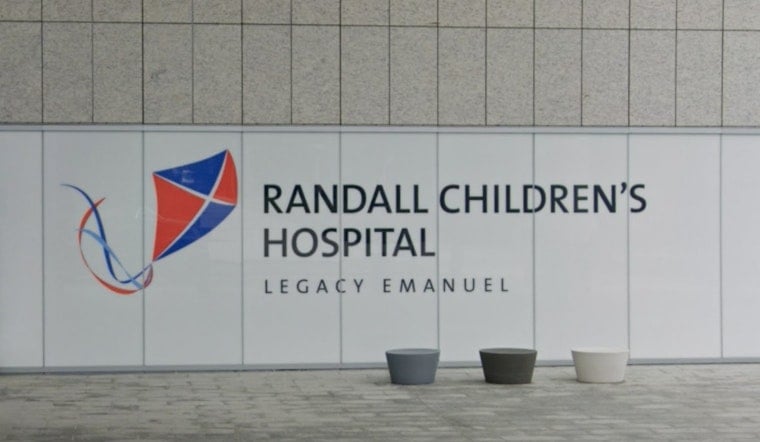
People who visited Legacy Mount Hood Medical Center in Gresham or Randall Children's facilities in Portland in late August may have been exposed to measles, according to a joint warning from Oregon health officials. The alerts cover three separate windows across three locations between Aug. 25 and Aug. 30, adding fresh exposure sites to a year that has already pushed Oregon's measles count past 50 cases — its highest total since 1991.
The Oregon Health Authority and Multnomah County identified the exposure sites as Randall Children's Primary Care Clinic at 501 N. Graham St. in Portland, the Randall Children's Hospital emergency department waiting room at 2801 N. Gantenbein Ave. in Portland, and the Legacy Mount Hood Medical Center emergency room waiting room and department at 24800 SE Stark St. in Gresham, according to The Oregonian/OregonLive. The primary care clinic exposure ran from 1:20 to 4:11 p.m. on Aug. 25, the hospital emergency department exposure ran from 3:21 to 5:23 p.m. on Aug. 28, and the Gresham emergency room exposure ran from 10:04 a.m. to 1:49 p.m. last Sunday. Legacy Mount Hood and Randall Children's had both already been flagged for possible measles exposures in recent weeks before these latest alerts, per the same report.
Statewide Case Count Reaches Levels Not Seen Since 1991
Oregon has now reported 50 measles cases so far in 2026, according to the Oregon Health Authority as cited by OregonLive's report. That builds on an earlier milestone: by mid-August, the state had already recorded 45 confirmed cases, surpassing its 2024 peak of 31 and marking its highest annual total since 1991, according to The Lund Report. Oregon had recorded only a single confirmed measles case in all of 2025, making this year's surge especially stark.
Nationally, more than 2,900 measles cases were reported across the United States in 2026, the highest number in 35 years. In August, Pennsylvania health officials confirmed two measles-related deaths among unvaccinated people — the first measles-related deaths reported in the U.S. this year — prompting an ongoing review by the Centers for Disease Control and Prevention into the exact causes of death.
Vaccination Gaps Fuel the Surge
Public health officials link the case surge directly to declining early childhood vaccination rates. As of August, the MMR vaccination rate among 2-year-olds in Oregon had fallen to 88%, below the national average of 90% to 91% and well short of the 95% threshold needed to maintain community immunity, according to KATU. Two doses of the MMR vaccine are about 97% effective at preventing measles.
The gap extends beyond Oregon. CDC data updated in August shows nationwide MMR vaccine coverage among U.S. kindergartners dropped from 95.2% in the 2019–2020 school year to 92.4% in 2025–2026, leaving an estimated 280,000 kindergartners unprotected, per the CDC. Oregon's own wastewater surveillance program, launched last February through a partnership between the Oregon Health Authority and Oregon State University, had already detected low-level measles virus concentrations across nine counties — a sign that the virus was circulating more broadly than clinical case counts suggested, as Hoodline reported on the sewer testing.
Health Departments Stretched Thin
The wave of exposures is straining local public health capacity. Multnomah County health officials have noted that local agencies face severe budget constraints following the expiration of federal COVID-19 relief funds, prompting the Oregon Health Authority to modify investigation guidelines and reduce active contact-tracing burdens on local staff, The Lund Report's account notes. Public health departments no longer have the resources to treat every measles exposure as an isolated emergency, leaning instead on public notices like this one.
Legacy Mount Hood and Randall Children's join a growing list of Portland-area healthcare sites flagged this year. Oregon health officials previously warned of possible exposures at a Gresham Legacy GoHealth clinic in late July and an Oregon City Legacy GoHealth clinic in mid-April, a pattern Hoodline covered in its report on the Oregon City urgent care scare. In July, four separate Providence Health facilities across Portland, Oregon City and Happy Valley were flagged after an infected patient triggered consecutive exposure alerts in emergency departments over a single weekend, according to the Oregon Health Authority.
What to Watch For and Who Is Most at Risk
Measles symptoms usually appear seven to 21 days after exposure and typically begin with fever, cough, runny nose and red eyes, followed by a rash that starts on the face and spreads to the rest of the body. People with measles can spread the virus beginning four days before the rash appears and continuing four days afterward, and the virus can linger in the air for up to two hours after an infected person has left a room, since it spreads when an infected person coughs or sneezes.
Infants, children younger than 5, pregnant people and immunocompromised people face a greater risk of serious illness, which can include pneumonia and brain swelling. People who develop symptoms should call a healthcare provider before going in, so clinics can take precautions to avoid exposing other patients. Anyone who was at the listed locations during the specified times should check their vaccination records and watch for symptoms for 21 days.
Getting Vaccinated After a Possible Exposure
Unimmunized individuals exposed to measles can receive an MMR vaccine within 72 hours of exposure to prevent or lessen illness, while high-risk individuals — including infants under 12 months, pregnant women and the immunocompromised — can receive immune globulin within six days, per guidance from the Centers for Disease Control and Prevention. People born after 1957 who never had measles and have not been vaccinated should get the MMR vaccine as soon as possible.
Residents without a primary care physician can call the Multnomah County Health Department's central appointment intake line at 503-988-5558, which connects patients to its seven primary care clinics and nine high-school-based student health centers serving youth ages 5 to 18 regardless of insurance status, according to Oregon.gov. The exposures at Legacy Mount Hood and Randall Children's mark the latest entries in a summer that has already touched Kaiser, Providence and Legacy facilities across the Portland metro, a pattern Hoodline has tracked in its coverage of Clackamas exposures.





