

























































When the Federal Aviation Administration ordered every plane in American skies to land immediately on the morning of September 11, 2001, Memphis International Airport became an unplanned refuge for close to 40 diverted flights and thousands of passengers who had nowhere else to go. Buses shuttled travelers off the tarmac and into the terminal, where planes sat parked wingtip to wingtip, and within hours, ordinary Memphians were opening their homes to total strangers.
John Greaud was the airport's director of maintenance that day and helped coordinate the response from the emergency operations center, according to Action News 5. He estimated the diverted flights carried between four and five thousand passengers into a city that suddenly had to figure out where they would all sleep. “The order was to get everybody on the ground as quickly as possible,” Greaud said, describing the chaotic scramble as the national airspace emptied out.
That scramble traced back to a single order issued at 9:42 a.m. EDT, when FAA National Operations Manager Ben Sliney directed the first-ever national ground stop, forcing more than 4,500 airborne civilian aircraft nationwide to land at the nearest available airport, according to a report cited by the Western Standard. Air traffic controllers across the country managed to land more than 4,500 aircraft within the first three hours without incident, a feat the National Air Traffic Controllers Association has called the single greatest tactical accomplishment in air traffic control history.
Why Memphis Could Handle the Overflow
Memphis International Airport — officially the Frederick W. Smith International Airport — was a Northwest Airlines hub in 2001, with extensive airport improvements and ramp infrastructure, according to Simple Flying. Republic Airlines made Memphis a hub in 1985 and later merged with Northwest Orient Airways, which became Northwest Airlines; Northwest merged with Delta Air Lines in 2008.
The airport's controllers also had an unusual advantage: nightly experience managing FedEx's massive cargo operation trained them to land aircraft quickly and efficiently, and that cargo-flight muscle memory let them manage the diverted flights on a national scale, per the same account. Regional coordination extended beyond Memphis's own runways, too — controllers at the Memphis Air Route Traffic Control Center secured a military C-130 flight waiver during the shutdown to transport a donor organ for a heart transplant after commercial aviation had been grounded entirely, according to the National Air Traffic Controllers Association.
Strangers Opened Their Doors
Once the planes were down, the harder job began: finding beds for thousands of stranded strangers. Churches and community groups across Memphis offered to pick up passengers and provide overnight lodging, and by the end of the day, the community had picked up every stranded traveler, the article notes. Greaud said no one declined when asked to help.
Local residents and organizations provided housing and care so that passengers would be comfortable overnight, a level of hospitality documented in contemporary reporting. The Memphis Flyer described local reactions in the days that followed.
Memphis residents gave blood in the immediate aftermath. Memphis also dispatched a specialized FEMA Urban Search and Rescue team to Washington, D.C., to assist in emergency response and recovery efforts at the Pentagon, per testimony before the U.S. House Committee on Transportation and Infrastructure.
An Eerie Quiet, Then a Lasting Legacy
In the days after the attacks, Memphis skies grew unusually silent, and about a week later residents heard a military plane overhead — a rare sound during a period when commercial air traffic had all but vanished. That silence has echoed forward into how the city marks the anniversary a quarter-century later.
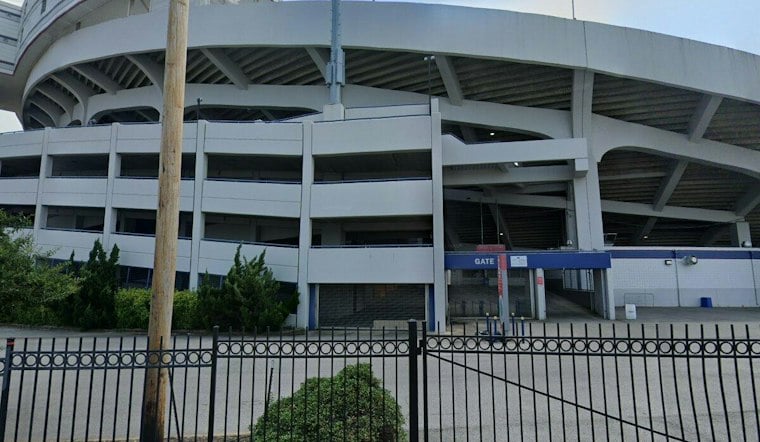
The spirit of that 2001 hospitality still shapes Memphis civic life today. Orpheum Theatre staff have taken action inspired by the story of the 9/11 flight diversions, according to the Orpheum Theatre Memphis. This year, Memphis also debuted its first 9/11 stair climb at Simmons Bank Liberty Stadium, honoring the 343 firefighters lost in New York, as part of the city's 25th-anniversary observances.





