

























































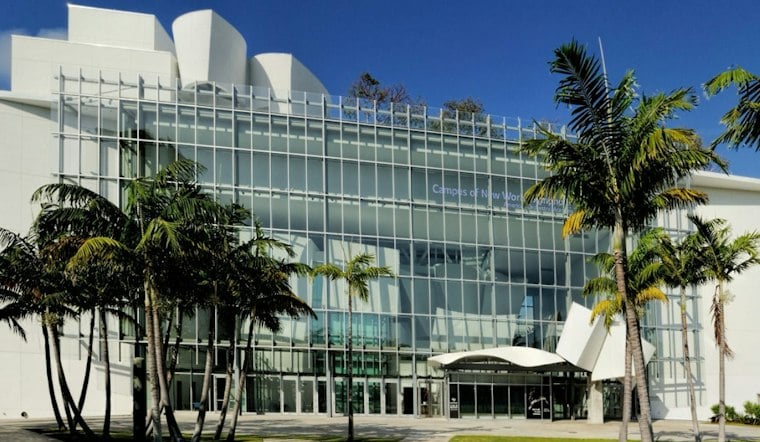
Composer Primous Fountain is still fighting the New World Symphony in federal court over a Miami Beach concert that was supposed to showcase his life's work and never happened. Fountain, who has composed nine symphonies and fifteen other orchestral works, sued the orchestra for breach of contract and racial discrimination after a planned 2022 concert titled “Primous Fountain: An American Original” fell apart.
According to The Miami Times, the concert was scheduled for April 16, 2022, in Miami Beach, and would have marked the first U.S. performance of Fountain's work in more than 40 years. Fountain said he and collaborators worked toward the concert for two years, and that its all-composer, single-artist format would have been unusual for an American or Western European orchestra. He said the concert would have been a testament to what other Black people could do.
The lawsuit, which also names New World Symphony co-founder Michael Tilson Thomas and executive director Martin Sher, was originally filed October 14, 2025, in the U.S. District Court for the Southern District of Florida under case number 2:25-cv-14374, according to court records reviewed by Justia Dockets. New World Symphony defendants attributed the concert's cancellation to Tilson Thomas's brain cancer diagnosis and treatment, according to a court filing known as document 95, per the Times report.
A Concert Undone by Illness and Disputed Accommodations
Michael Tilson Thomas, the founder and former music director of the New World Symphony, was diagnosed with glioblastoma multiforme in 2021 and stepped down as artistic director of the orchestra in March 2022, per the Times. His condition, the orchestra's defendants say, prevented him from preparing for and conducting a full performance of Fountain's compositions. Tilson Thomas died in April 2026 from the aggressive brain cancer, a loss Hoodline previously covered.
Fountain has said he requested two alternate conductors for the performance, but according to court documents cited by the Times, the New World Symphony determined that option was unfeasible. Fountain alleges the concert was canceled without reason and that the orchestra never responded to two demand letters he sent afterward. He has maintained there was an implied agreement, an explicit agreement, and an oral agreement covering the planned performance.
New World Symphony attorney Joshua Munn said neither the orchestra nor its counsel were authorized to speak on the ongoing litigation, according to the Times report. A federal court granted a request from New World Symphony's legal counsel to dismiss Fountain's racial-discrimination complaint on July 23, 2026, but Fountain refiled the complaint, according to Munn as cited by the Times. Fountain filed a Third Amended Complaint on July 9, 2026, continuing to pursue the discrimination claims, according to Primous Fountain's own account of the filing. He has also sought reassignment of the judge in the case, per the Times.
A Self-Taught Prodigy Backed by Music Giants
Fountain's path to the New World Symphony dispute began decades earlier in Chicago, where he began teaching himself music composition at age 15 and started composing during high school. Chicago Defender arts editor Earl Calloway discovered Fountain and later introduced him to music producer Quincy Jones, who has won 28 Grammy Awards. Jones became a financial patron during Fountain's teenage years after reviewing an early manuscript of Fountain's composition “Manifestation,” providing monthly stipends so Fountain could compose full-time, according to Primous Fountain's own biography. Jones and Fountain later pursued an agreement that led to Jones commissioning Fountain's Second Symphony.
“Manifestation” was Fountain's debut performance, staged by the Chicago Symphony Orchestra around 1970. Dance Theatre of Harlem founder Arthur Mitchell later choreographed the piece into “Manifestations,” which became the company's signature ballet, per the same biography. Jazz icon Miles Davis, after hearing Fountain's orchestral music through Herbie Hancock, invited Fountain to be his guest for a week in Boston and offered to present the work to Columbia Records.
Fountain's early credentials extended well beyond those endorsements. In 1974, at age 25, he became the youngest composer in history to win a John Simon Guggenheim Fellowship, and he received a second Guggenheim Fellowship in 1977, according to a 1980 report from The Washington Post. He also earned the Goddard Lieberson Fellowship from the American Academy of Arts and Letters, given to mid-career composers of exceptional talent, along with a national award from Broadcast Music Incorporated. Outside composing, Fountain played trumpet and bass and formed a jazz group with Michael Davis, who later became known as a member of Earth, Wind & Fire.
Leadership Turnover at the Miami Beach Orchestra
The lawsuit unfolds as the New World Symphony, an 87-musician orchestra based in Miami Beach, navigates significant institutional change. Howard Herring, who led the orchestra as President and CEO for 25 years and oversaw completion of its Frank Gehry-designed campus, announced in March 2026 that he would step down on June 30, 2026, a transition Hoodline reported in its piece on the orchestra's retirement countdown. The New World Symphony also held a tribute performance honoring Tilson Thomas as part of its 2025-26 season, featuring pianist Jean-Yves Thibaudet.
The case also lands against a broader industry backdrop. A report from the Institute for Composer Diversity and the League of American Orchestras found that programming of works by living BIPOC composers across U.S. orchestra seasons grew from 1.8% in the 2015-16 season to 10.4% in 2023-24, according to the League of American Orchestras. Even so, separate demographic data from the league showed Black or African American musicians made up just 2.1% of player rosters across surveyed U.S. orchestras, underscoring how underrepresented Black artists remain within the field Fountain has spent his career trying to break into. In an interview published by the National Endowment for the Arts, Aaron Dworkin said he saw very few African-American and Latinx musicians in orchestras during his undergraduate years. According to the National Endowment for the Arts, Dworkin said that the number of African-American musicians in major orchestras had doubled since Sphinx's inception.





