

























































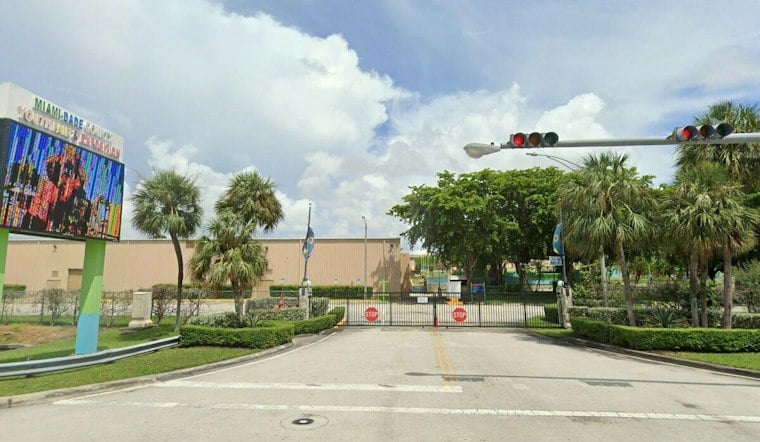
For Cuban Catholics in South Florida, the Miami image of Our Lady of Charity is both a religious icon and a physical link to an island many left or can no longer easily visit. That history gave added weight to Tuesday’s gathering, when more than 3,000 people attended a celebration at the Miami-Dade Fair & Exposition Convention Center in West Miami, according to the Miami Herald.
The event included a procession, worship music and Mass celebrated by Archbishop Thomas Wenski. The Archdiocese of Miami said the observance marked the 26th anniversary of the U.S. Conference of Catholic Bishops’ designation of the Ermita de la Caridad as a national shrine in 2000. This year’s theme, “Caminando con su Pueblo,” means “Walking With Her People.”
A shrine built around exile and continuity
The Miami shrine’s significance predates its national designation. The National Shrine of Our Lady of Charity says the image venerated there arrived from Havana on Sept. 8, 1961. That night, it presided over a Miami Stadium Mass attended by 30,000 exiled Cubans.
The shrine’s permanent structure was dedicated in 1973 by Cardinal John Krol, then president of the U.S. Conference of Catholic Bishops, according to the shrine’s chronology. The site later became a national shrine in 2000, formalizing a role it had already assumed for many Cuban exiles: a place where devotion, memory and concern for relatives on the island could be expressed together.
That connection remains visible in the language of the current celebration. The Herald reported that Wenski prayed for unity, reconciliation and hope for Cubans, while describing conditions on the island as involving shortages, limited electricity and restricted freedoms. Those remarks were pastoral statements about the community’s concerns, not a measure of every attendee’s personal circumstances.
Power failures add urgency to diaspora concerns
Cuba’s electricity problems have continued beyond any single local event. NBC Palm Springs, citing Cuban authorities, reported July 7 that the island had experienced eight nationwide blackouts since October 2025 and three major grid collapses during 2026 by that date. The figures document repeated system-wide disruptions, but they do not establish how any particular family represented at Tuesday’s service was affected.
The broader migration picture also requires caution. U.S. Customs and Border Protection reported 68,044 unique Southwest Land Border encounters involving people from Cuba or Nicaragua in November 2022, equal to 35% of all unique encounters that month. That figure combines two nationalities and describes encounters, not admissions. The Department of Homeland Security’s Office of Homeland Security Statistics further warns that enforcement tables count events and may count the same person more than once.
Recent arrivals also face changing immigration rules. U.S. Citizenship and Immigration Services says the Department of Homeland Security terminated the CHNV parole programs on March 25, 2025, and later moved to terminate parole granted through them and revoke related work authorization, subject to litigation developments. That policy context helps explain why immigration status may be part of the anxiety surrounding Cuban families in the United States, but it does not show how many people at Tuesday’s Mass were affected.
The gathering therefore carried two timelines at once: the shrine’s documented history as a place of Cuban religious and exile life, and a present marked by power failures, migration pressure and legal uncertainty. The event offered solidarity and prayer, while leaving the most immediate questions—how conditions are affecting families on the island and which recent arrivals face concrete immigration consequences—specific to individuals rather than answerable from the ceremony’s attendance alone.





