

























































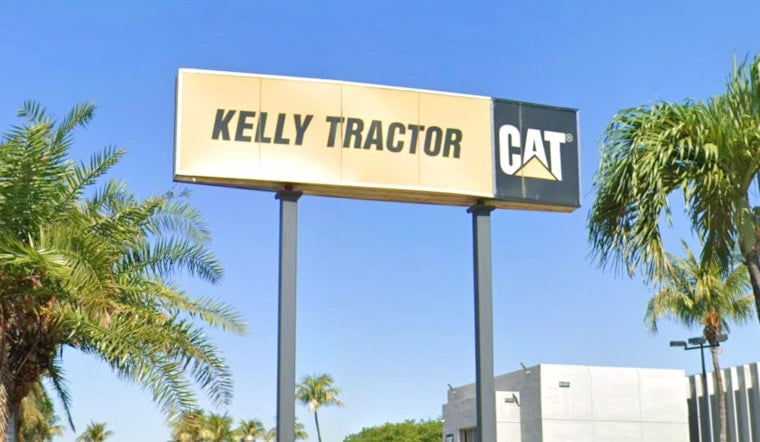
Miami-Dade County commissioners voted 9-to-3 to let Kelly Tractor build its new headquarters on more than 140 acres of sensitive wetlands outside the county's urban development boundary, ending a three-year fight that survived a mayoral veto and eight separate deferrals. The project sits in west Miami-Dade near Northwest 137th Avenue and the end of the Dolphin Expressway, adjacent to an existing 100-acre warehouse development.
The vote, reported by WPLG Local 10, caps a process that began when Kelly Tractor filed its application three years before the vote. Chris Kelly told commissioners the company has owned the land since 1984, while company representative Roy Coley argued Kelly Tractor demonstrated an economic need as an international equipment-business player and a South Florida emergency-response provider. Miami-Dade County found the environmental need had been balanced sufficiently to make the project more acceptable, according to Coley.
The project had already been in the spotlight earlier this year. In February, Mayor Daniella Levine Cava issued a rare veto against the commission's initial approval of the text amendment, warning that paving over 160 acres of wetlands threatened the drinking water aquifer and Biscayne Bay while sidestepping standard development review, according to WLRN. Rather than attempt an immediate override, commissioners voted to reconsider the item, triggering a stretch of deferrals that ran through May.
A Text Amendment Under Fire
Much of the controversy centered on process rather than the project itself. Miami-Dade's professional planning staff repeatedly recommended denying the application, reporting that the county already held roughly 700 acres of vacant, industrially designated land inside the existing boundary and warning that taxpayers could end up funding infrastructure extensions, according to The Real Deal. Kelly Tractor used a Comprehensive Development Master Plan text amendment rather than the standard map-expansion process, which carries lower voting thresholds; environmental advocates noted it was the only one of 15 UDB expansion applications filed since 2021 to take that route, per Action Network.
Commissioner Danielle Cohen Higgins, who voted against the project, said the text amendment opened the floodgates for Miami-Dade development outside the urban development boundary. She said the legislative changes that followed indicated the approval process itself was improper, and argued the application was effectively approved through vote-counting until supporters secured the numbers they needed.
Commissioner Raquel Regalado, who supported the eventual approval, said she had already passed an item two months earlier curtailing the text-amendment process, and that the broader issue would return to the commission. Miami-Dade legislation now plans to bar text amendments for similar applications going forward. Regalado also said the project includes permanent funding to preserve and restore wetlands.
Concessions That Won Over Votes
Ahead of the final vote, Kelly Tractor revised its proposal to commit to preserving at least 63.1 acres of wetlands on its 246-acre site and acquiring another 20 acres for conservation through a county land preservation program, according to the same Real Deal reporting. The company also donated land to the county, according to Commissioner Rene Garcia, who said the application underwent extensive scrutiny and review. Roy Coley said Levine Cava required the applicant to essentially complete everything an urban development boundary application would have demanded, even though it came in through the text-amendment path, and added that Kelly Tractor ultimately received little benefit from having used the amendment at all.
Founded in the 1930s in Clewiston and based at its Doral facility since 1971, Kelly Tractor is a Caterpillar dealer that says it outgrew its existing space and needed room for future growth. The approved plan calls for a 2.7 million-square-foot industrial headquarters with repair bays, heavy machinery storage, fueling stations, rail access, and a helipad, per The Real Deal. The project ultimately includes more than 80 acres to be owned and maintained by the company for wetlands preservation.
A Line Drawn in 1983
Miami-Dade established its urban development boundary under Ordinance 83-58 on July 8, 1983, to limit suburban sprawl, encourage infill in the urban core, and shield the Everglades ecosystem and agricultural land. The boundary runs from the Broward County line south to Florida City, and expansions beyond it have faced legal setbacks before: in February 2025, Florida's First District Court of Appeal upheld a ruling that invalidated the county's 2022 approval of the 380-acre South Dade Logistics and Technology District expansion because the county missed statutory deadlines, according to Audubon Florida — a case Hoodline previously covered in earlier reporting.
State lawmakers weighed in this year too. In March, Florida legislators passed land-use preemption bill HB 399 but stripped out provisions that would have lowered the local voting thresholds needed to expand urban development boundaries in Miami-Dade, Orange, and Seminole counties, according to Florida Politics. The Kelly Tractor project has been controversial throughout, and its approval was opposed by many Miami-Dade residents who saw it as eroding a growth boundary that has stood for more than four decades.





