

























































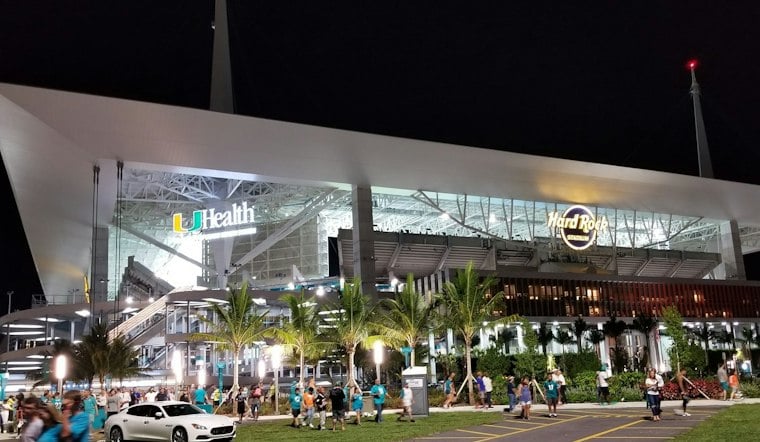
The Miami Dolphins are 0-2 under new coach Jeff Hafley, and with the franchise still chasing its first playoff win since December 30, 2000, the old talk of a curse is making the rounds again — this time with an actual psychic weighing in. Lilliana, a third-generation Miami psychic and spiritual advisor who has practiced professionally for more than 20 years, says the energy tied to the Dolphins property is real, but she does not believe it is permanent.
A Rough Start To The Hafley Era
Miami opened the season with a 27-13 loss to the Las Vegas Raiders, then fell 35-13 to the San Francisco 49ers, leaving the team at 0-2 heading into a matchup with the Kansas City Chiefs at Hard Rock Stadium. It is the first season of the post-Tua Tagovailoa, post-Mike McDaniel era, with Hafley now running the sideline, Jon-Eric Sullivan installed as general manager, and Malik Willis under center behind what is currently the youngest roster in the NFL. As Miami New Times reports, the shaky start has reheated a decades-old question in South Florida sports circles: is this team simply rebuilding, or is something older working against it?
The numbers back up why fans keep asking. Since 2002, the Dolphins have advanced to the playoffs exactly once and have not won a playoff game since that 2000 win, according to a report from the Washington Post. That drought remains a defining frustration for the franchise.
What The Psychic Says She Senses
Lilliana describes what she has diagnosed as energy connected both to people who have passed and to the land itself — something she says existed long before the Dolphins ever occupied the property. She identifies greed and envy as recurring themes running through that energy, and says she has sensed a message suggesting the team will not prosper from the property as things currently stand. Still, she is careful to note that not every bad situation means someone is dealing with a curse, and she points to a pattern she finds more telling: the Dolphins repeatedly approaching success before unexpected setbacks derail them.
She believes that pattern, and the underlying energy she describes, can change. Lilliana says she would begin any curse-clearing effort by addressing the land's spiritual history, then work to establish spiritual protection around both the stadium and the people connected to it. She frames this as a staged process rather than a single ceremony, and says the old energy has not completely broken — but she also sees an opening. The new era under Hafley and Sullivan, she says, carries a lighter energy than the franchise's past, giving Miami what she calls a genuine opportunity for a fresh start.
Lilliana also has a message for the fan base itself: stop feeding the belief that failure is inevitable. She says Dolphins fans contribute negative energy of their own by expecting catastrophe before it happens, and that changing the collective mindset around the team could matter as much as any spiritual clearing.
The Tequesta History Behind The Talk
The curse narrative traces back to construction of Joe Robbie Stadium in Miami Gardens, when work in 1985 uncovered Native American artifacts and human remains. According to the Miami New Times' 2014 investigation into the so-called Curse of the Tequesta, the findings were identified as likely belonging to the Tequesta people and were located near where team offices now stand; Dade County archaeologists excavated the burial grounds in six-inch increments before construction was allowed to continue. That same report notes a 1989 Sun-Sentinel story in which Rick Weaver received calls warning that the stadium was cursed and needed an exorcism — an episode that, along with reporter Ryan Yousefi's tongue-in-cheek dig into the theory, helped cement the Curse of the Tequesta in Dolphins folklore.
A Franchise Still Searching For Answers
The on-field numbers make the drought hard to ignore regardless of what one believes about curses. Since moving into their current stadium in 1987, the Dolphins have zero Super Bowl appearances, only six playoff victories, twelve head coaches and a 49 percent winning percentage, according to WRMF. That is a steep drop from their Orange Bowl years, when the franchise won two Super Bowls, appeared in five, notched 14 playoff wins and posted a 63 percent winning percentage. Even the Marlins, WRMF notes, won two World Series while playing in that same stadium before relocating to the old Orange Bowl site.
History suggests Miami has little margin left this season. CBS Sports reports that only 12 percent of NFL teams that started 0-2 since 2002 have made the playoffs. The 1993 Cowboys, 2001 Patriots and 2007 Giants are examples of teams that won the Super Bowl after opening 0-2.
For now, Lilliana says the choice in Miami is less about exorcising ghosts and more about whether the fan base and franchise decide to stop expecting the worst — and whether Hafley's young roster can give them a reason not to.





