

























































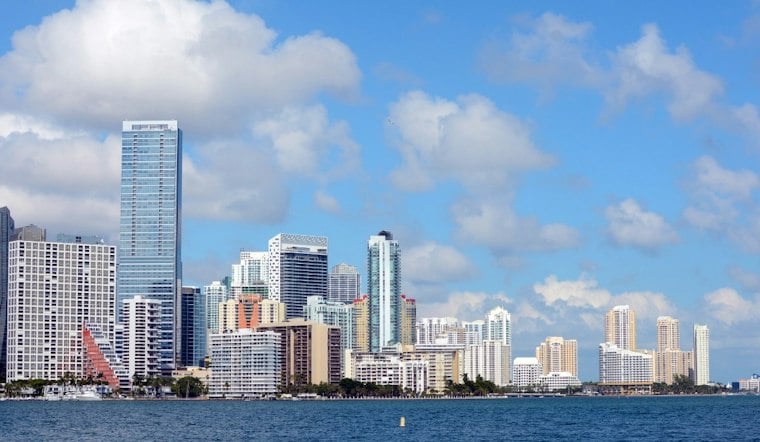
Miami scored 29 out of 100 on a national report card measuring new construction and affordability. It was the only Florida metro with a failing grade, while the other Florida metros received passing marks; the state’s overall grade was a B. The September ranking assessed 100 U.S. metros on housing construction and the affordability of new homes.
What the Miami Score Measures
Realtor.com Economic Research published its 2026 Metro Report Cards on September 16. The affordability scores used 2025 listing and household-income data; homebuilding scores compared each metro's share of U.S. Census Bureau building permits with its share of the national population. Miami's overall score was 29.0, with 18.9 points for affordability and 39.1 for homebuilding, according to the New York Post. Des Moines scored 83.4 overall, including 88.3 for affordability and 78.4 for homebuilding, in the same report.
Miami was not the lowest-scoring metro nationally: Los Angeles scored 12.0, the lowest of the 100, followed by Providence, Rhode Island, at No. 99 and New York at No. 98, according to the Mortgage Bankers Association. The rankings place Miami among several coastal metros with weak scores, while a number of Midwest and Southern metros scored higher.
Squeezed Between the Everglades and the Ocean
Geography is one constraint on Miami's housing supply. The metro is bounded by the Everglades to the west and the Atlantic Ocean to the east, leaving less room for outward expansion, the New York Post reports. The outlet also cites high land, construction, labor, financing, insurance, permitting and approval costs, which can make lower-priced projects harder to deliver and steer developers toward luxury units.
The price difference between new and existing homes is especially large in Miami: new construction carries a 248% premium over the price of a median resold home, the New York Post analysis found, the highest among the 100 metros. Ana Bozovic, a Miami-based real estate agent and founder of Analytics Miami, told the outlet that privately financed projects are difficult to price within reach of the median household in a market that attracts global wealth and international buyers. Daniel Ickowicz also described local buyers competing with capital from Latin America, the Northeast, Europe and elsewhere.
The Math Doesn't Work for Median Earners
The affordability gap is concrete. Miami's median annual income is $74,274, while the metro's median-priced home costs $507,237. A typical earner would spend nearly 47% of income on a monthly payment for that home, according to the New York Post's report—well above the widely recommended 30% affordability threshold. Lower-income and first-time buyers therefore face competition for existing housing as new homes enter the market at substantially higher prices.
That land math is compounded by costs that have nothing to do with a mortgage. Florida remained the most expensive state in the country for homeowners insurance in 2026, with statewide policies averaging between $5,500 and $11,000 annually, while South Florida coastal properties routinely see premiums exceeding $11,000, according to Live Covered. There are early signs of relief, though: more than 40 private insurers filed rate cuts averaging 6% to 15% for 2026 following 2022 and 2023 tort reform, and state-backed Citizens Property Insurance instituted its first rate decrease since 2015, an 8.7% cut, according to the Gordon Agency.
Condo owners face another squeeze layered on top of insurance. Under Florida's post-Surfside condo safety law and its amendments, associations in buildings three stories or taller lost the ability to waive structural reserve contributions as of December 31, 2024, a change that mandates structural integrity studies, per AERIALLY.AI.
The Rest of Florida Is Building Its Way to Passing Grades
Other Florida metros scored much better. Jacksonville and Palm Bay each earned an A- and scored above 70 overall, placing in the national top 10, according to the New York Post's coverage of the rankings. Lakeland, Cape Coral, North Port and Orlando received B-range grades. Those results help explain how Florida earned a statewide B even as Miami failed.
State lawmakers have tried to force more density into places like Miami through the Live Local Act, which allows taller, denser residential construction in commercial areas. The law's fourth major iteration, House Bill 1389, took effect July 1 and expanded eligible sites to property owned by public school districts, cities, counties and qualifying religious institutions, while barring local governments from using setback rules to cap building heights, according to Holland & Knight. Washington has also gotten involved: the federal 21st Century ROAD to Housing Act, signed July 11, now lets Community Development Block Grant funds go directly toward affordable housing construction and requires grant recipients to keep a public, searchable database of undeveloped public land, per the Bipartisan Policy Center.
Zoning Fixes Can't Close a Billion-Dollar Gap
Miami-Dade's affordability challenge is also reflected in the county's rental shortage. A May submission to Miami-Dade County by local research nonprofit Miami Homes For All documented a countywide gap of 90,000 affordable rental homes for households earning up to $75,000 a year, compared with a gap of 17,000 units for households earning up to 120% of the area median income. The figures show a much larger shortfall for lower- and moderate-wage households.
The shortage is not only a matter of zoning. In a March study reported by Miami New Times, Miami Homes For All found that more than 100 planned affordable housing projects totaling nearly 13,700 units across Miami-Dade were stalled, with an estimated $1.5 billion gap in public subsidies, local bonds and soft financing. The findings point to a financing barrier alongside the county's need for more housing.
Renter Burdens and What County Assistance Counts
A separate measure of housing pressure comes from renters: according to Miami Homes For All’s analysis of Census and employment data, 90% of Miami-Dade renters with incomes below $50,000 are cost-burdened. That local renter finding is distinct from the metro report card’s measure of home-purchase affordability. Miami-Dade County’s draft 2024 Consolidated Annual Performance and Evaluation Report said 281 households had been assisted, about 48% of the program-year goal, according to the county report. That figure counts households assisted, not newly completed homes; it should not be read as a tally of finished units or as a count of the stalled projects.
Some of those tensions are already playing out in court. A September lawsuit against Miami Beach challenges a proposed 25-story tower at 1501 Collins Avenue that would include 50 workforce housing units under the Live Local Act, one of several local disputes testing state housing preemptions in South Florida. The fight illustrates how litigation and municipal resistance can slow delivery of exactly the kind of dense workforce housing the report card suggests Miami needs.
Options raised in the New York Post's report include allowing more multifamily housing, supporting accessory dwelling units, adding density around transit and employment hubs, making underused properties easier to redevelop, and speeding up permitting. For Miami, where outward expansion is constrained, the central challenge is increasing the supply of attainable housing through redevelopment and more efficient use of available land.





