

























































A University of Miami student leader accused of hiding a camera in his roommate's bedroom appeared in Miami-Dade bond court by Zoom on Wednesday, where a judge set his bond at $3,500 and ordered him to stay away from both the victim and the off-campus home near Southwest 63rd Avenue and 62nd Terrace in South Miami.
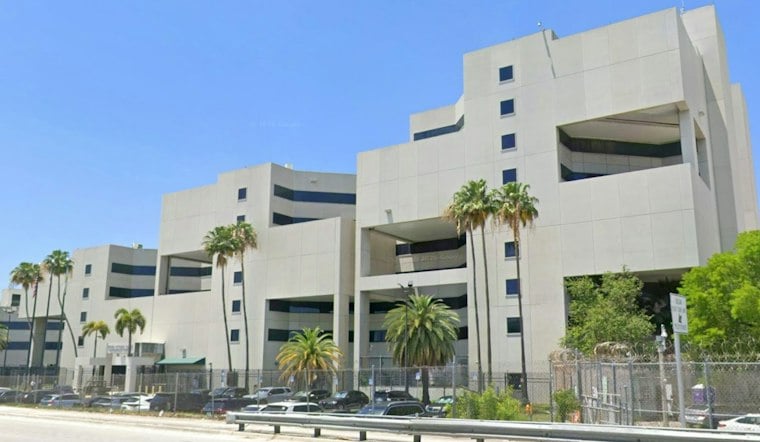
Dylan Hugh Long, a 21-year-old University of Miami senior studying political science and economics, was booked at the Turner Guilford Knight Correctional Center on charges of video voyeurism and burglary, according to NBC 6 South Florida. As part of his release conditions, Long was granted a single police-escorted visit to retrieve his personal belongings from the home, WPLG Local 10 reports.
During Wednesday's hearing, Long's defense attorney told the magistrate the case amounted to a roommate argument that took an unexpected turn rather than a premeditated crime, according to the same station's account. That framing came just a day after South Miami police arrested Long on the University of Miami's Coral Gables campus, more than two weeks after his roommate first discovered the device.
How the Camera Was Found
The victim discovered a hidden camera device emitting a blue light inside his nightstand at the off-campus South Miami home, according to the arrest report cited by NBC 6. He confronted his roommate, and Long initially denied any involvement with the device, per the same report.
The victim then accessed files stored on the camera himself. Those files showed multiple videos of Long operating and testing the device before it was placed in the nightstand, the arrest report states. Confronted with that evidence, Long admitted the camera belonged to him and that he had placed it in his roommate's bedroom without the roommate's knowledge.
Long told investigators he planted the camera because his roommate had not responded to his text messages and he wanted to confirm the roommate was actually reading them, according to the arrest report. Though the victim found the device on September 12, South Miami police did not arrest Long until September 29 — a 17-day gap during which the roommate had already confronted him and reviewed the digital files himself, per the same reporting.
A Student Leader With a High Campus Profile
Long's arrest stands out in part because of his standing on campus. He served as Chief of Staff and Student Director of the University of Miami's George P. Hanley Democracy Center, an institutional research center operating under faculty direction at the Coral Gables campus. He also represented the university on its collegiate debate team, placing first in individual competition at the Ronald Reagan and Pepperdine Debate Invitational in January, according to the university.
Why Burglary Charges Apply
Long faces charges under two distinct Florida statutes, with separate potential penalties under each. Florida Statute § 810.145, revised under House Bill 1389 in 2024, makes digital voyeurism by an adult 19 or older a third-degree felony punishable by up to five years in state prison and a $5,000 fine per count, according to The Florida Senate. The 2024 update renamed the offense and revised its penalties; the statute's imaging-device definition already includes digital and electronic devices and formats capable of recording or storing images.
The burglary charge stems from a separate statute that surprises many people unfamiliar with Florida law. Florida Statute § 810.02 generally defines burglary as entering a dwelling, structure, or conveyance with intent to commit an offense, subject to exceptions, and separately addresses certain forms of remaining after entry; burglary of a dwelling is a second-degree felony carrying up to 15 years in prison, according to a legal explainer from the Brancato Law Firm. Florida law does not require forced entry or property theft for the burglary statute to apply — entering a dwelling, structure, or conveyance with intent to commit an offense can satisfy the general definition, subject to exceptions.
University Discipline Could Run Alongside the Criminal Case
Beyond the criminal courts, Long could also face consequences through the University of Miami's own conduct process. The university's Student Rights and Responsibilities Handbook specifies that students accused of off-campus felony violations face university conduct proceedings running parallel to criminal courts, with potential penalties including administrative suspension or expulsion, since the university retains administrative jurisdiction over student conduct that threatens campus safety.
It remains unresolved whether the University of Miami will initiate formal disciplinary proceedings through its Office of Student Rights and Responsibilities, and whether forensic analysis of the seized camera and other digital devices will reveal additional uncharged incidents or victims.
A Separate Florida Case
Hoodline reported in May that a 27-year-old law student in Winter Park was arrested on digital voyeurism charges after planting hidden cameras inside a business restroom. The story described hidden cameras in public bathrooms as a broader problem.





