

























































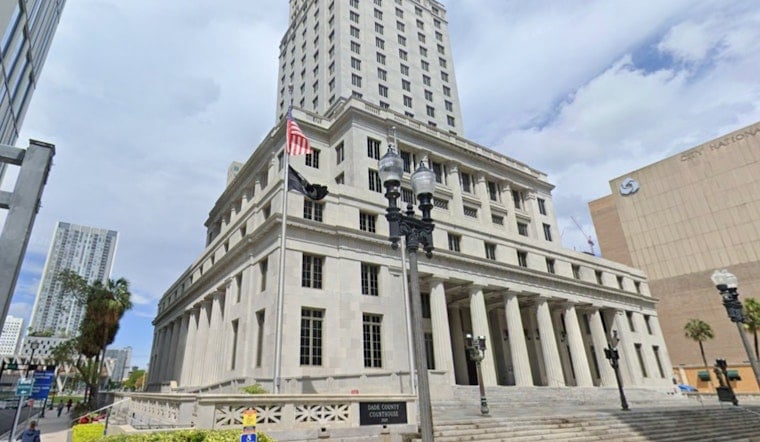
A Miami-Dade circuit judge wants Jorge Barahona tried no later than March in the killing of his adopted 10-year-old daughter Nubia and the torture of her twin brother Victor — but prosecutors and defense attorneys alike say that timeline is probably not realistic. The case, which began with a gruesome discovery along I-95 in West Palm Beach on Valentine’s Day 2011, has now stretched almost 17 years without a trial.
Judge Andrea Ricker Wolfson has asked attorneys to propose viable trial dates at the next hearing, scheduled for Monday, according to the Miami Herald. Wolfson told the court that Barahona, now 59, must be prepared to either go to trial or reach a plea deal, per the same report. But Barahona’s attorneys, Stephan Lopez and Jimmy Dellafera, told the court that a March trial is unlikely, with Lopez calling the timeline unrealistic. Lopez was appointed to the case in December, and Dellafera followed in August, and the pair say they are still reviewing evidence and interviewing witnesses left behind by Barahona’s previous defense teams.
A Trial Delayed for Years by Competency Fights and Attorney Turnover
The case has been stalled repeatedly over the years. In July 2025, Wolfson ruled Barahona mentally competent to stand trial following a two-day evidentiary hearing, reversing her own March 2024 finding of incompetence that had halted proceedings and sent him to a state mental health facility, according to Local 10 News. Psychological experts presented conflicting evaluations during that hearing, the station reported, and the ruling found Barahona capable of assisting his own attorneys.
Court turnover has also reset the clock repeatedly. As reported by Stet News, Barahona’s lead court-appointed attorney withdrew in February 2023 amid a state investigation into alleged overbilling in capital cases, forcing an entirely new defense team to restart trial preparations. Hoodline previously reported on the case’s incompetency ruling in 2024, before Wolfson’s July 2025 reversal put the case back on track toward trial.
What Investigators Say Happened to the Twins
According to the Miami Herald, the case dates to Valentine’s Day 2011, when police found Nubia Barahona’s body wrapped in plastic and covered with chemicals in the back of Jorge Barahona’s pickup truck along I-95 in West Palm Beach. Barahona was found in the driver’s seat, suffering from chemical burns himself, while Victor — his adopted twin brother — was discovered suffering seizures from chemical burns of his own. Victor survived the assault and was last known to be living with relatives in Texas, per the Herald’s reporting.
Police investigators say Jorge and Carmen Barahona beat and tortured the twins and, according to the Herald, shocked them while locked in a bathtub and used electrical cords to tie them. Jorge Barahona worked as a Westchester electrician and has been jailed since March 2011; he now faces 20 counts including first-degree murder, eight counts of aggravated child abuse with great bodily harm, eight counts of child neglect, abuse of a corpse, and attempted first-degree murder with a deadly weapon, according to Local 10 News. He faces the death penalty if convicted, and the Herald reports he understands the severity of the potential penalties.
While held without bond at the MetroWest Detention Center in Doral in March 2021, Barahona was attacked and beaten by five fellow inmates as he slept, with jail reports indicating he was targeted because of the child abuse charges against him, per Local 10 News.
Wife's Plea Deal Hinges on Testimony Against Husband
Carmen Barahona, now 75 and jailed at the Turner Guilford Knight Correctional Center, was charged in connection with Nubia’s killing and reached a plea deal with prosecutors in 2020. Under that agreement, she pleaded guilty to first-degree murder and aggravated child abuse in exchange for a life sentence, but her formal sentencing remains deferred until she testifies against her husband at trial, according to CBS News. Failure to testify truthfully would void her plea deal and expose her to capital punishment, the outlet reported.
Case Reshaped Florida Child Welfare Law and Death Penalty Rules
The Barahona case had ripple effects well beyond the courtroom. Florida’s child-welfare agency was scrutinized for its failures in protecting Nubia and Victor before the killing, and a July 2014 Miami-Dade grand jury presentment went further, accusing child welfare administrators of deliberately manipulating child death investigations to obscure the true number of fatalities statewide, according to REFORM Talk. That followed a similar 2011 grand jury report condemning systemic failures in the Barahona home.
The public outrage helped drive the Florida Legislature to pass a comprehensive child welfare reform law in 2014 that increased funding to hire child protection investigators, lower caseloads, and overhaul abuse hotline protocols, according to FlaglerLive. State lawmakers separately awarded Victor Barahona $3.75 million in 2017 through a legislative claim bill, on top of an earlier $1.25 million payment, bringing the state’s total settlement to $5 million, per Florida Politics.
If Barahona’s case does reach a jury, it will do so under a changed legal landscape. Florida law, enacted in 2023 and upheld by the state Supreme Court in December 2025, now allows prosecutors to secure a death sentence with just an 8-4 jury recommendation rather than a unanimous vote, according to WUSF. Florida is one of only two states that allow non-unanimous jury death recommendations, the outlet reported.
For now, the case remains in limbo. Wolfson has set her sights on a March trial date, but with both prosecutors and the defense signaling doubt, according to the Miami Herald, the 17-year wait for a resolution in Nubia Barahona’s death may not be over yet.



