

























































A young Miami patient named Carlos Perez was born with a heart defect that went undetected until he arrived at a Baptist Health emergency room with a dangerously fast, irregular heartbeat. What doctors found once they looked closer was almost unheard of: a heart with five chambers instead of the usual four. Weeks later, Carlos was walking out of the hospital after just six days, the first pediatric patient in Florida to undergo robotics-assisted cardiac surgery.
The surgery, led by Dr. David Kalfa, repaired an atrial septal defect using robotic assistance rather than traditional open-heart techniques, according to Miami's Community Newspapers. Kalfa is chief of cardiovascular surgery and co-director of the Nicklaus Children's Hospital Heart Institute, and he was the first joint hire of the FIU/Nicklaus Children's partnership. He called the case a demonstration of “what is possible when innovation, preparation and multidisciplinary expertise come together in the service of children with heart conditions.”
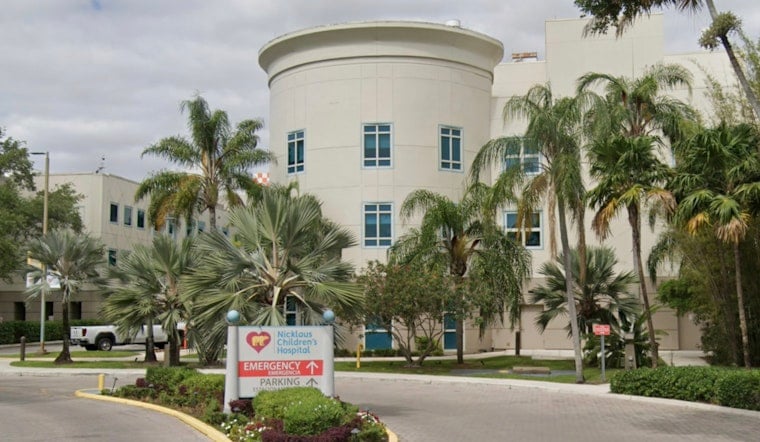
The procedure took place at Nicklaus Children's Hospital Heart Institute and brought together specialists who don't typically share an operating room. Baptist Health cardiac surgeons, who normally operate on adults, joined the pediatric team for the case, and their robotic surgery expertise proved essential to pulling off a repair that fewer than a handful of hospitals nationwide have attempted on a child.
A Rare Diagnosis Complicates an Already Difficult Case
What made Carlos's condition especially unusual wasn't just the atrial septal defect itself, but the anatomy surrounding it. The extra chamber discovered in his heart is consistent with a congenital defect known as cor triatriatum, in which an abnormal membrane divides an atrium — a condition that, per medical literature published in StatPearls, accounts for less than 0.1 percent of all congenital heart disease cases. Atrial septal defects on their own are far more common, occurring in roughly 13 out of every 10,000 U.S. births according to the Centers for Disease Control and Prevention, but the combination of the two conditions in one small patient is what made the case so unusual.
Dr. Makoto Hashimoto, a professor and director of robotic cardiac surgery at FIU Medicine and a cardiac surgeon at Baptist Health Miami Cardiac & Vascular Institute, said the rarity of the condition made outside expertise indispensable. “Because this congenital heart condition is so rare, Dr. Kalfa gave us valuable insights before and during the surgery,” Hashimoto said, per the Community Newspapers report. Hashimoto previously led one of Japan's largest heart programs before becoming the first major joint hire of the FIU/Baptist Health alliance.
Why Robotic Tools Rarely Reach Small Chests
Robotic systems are widely used across many adult surgical specialties, but their use in pediatric and congenital heart surgery has remained limited. The core obstacle is physical: robotic instruments are engineered at adult anatomical scale, and the American Hospital Association notes that even though da Vinci systems have been FDA-cleared since 2000 and were used in more than 2.6 million U.S. procedures in 2024, fitting those same instruments inside a small pediatric chest remains a persistent barrier, as detailed by the American Hospital Association. Pulling off a robotic repair on a child requires technical expertise, multidisciplinary coordination and careful patient selection, all of which shaped how Carlos's care team approached the case.
When it works, robotic cardiac surgery can offer qualifying patients smaller incisions, faster recovery and improved outcomes compared with open procedures. Carlos recovered quickly after the minimally invasive surgery and went home the day after the operation, ultimately discharged after six days in the hospital total.
An Academic Alliance Built for Complex Cases
The operation reflects a broader partnership between Florida International University, Nicklaus Children's Hospital and Baptist Health, with three FIU Herbert Wertheim College of Medicine faculty members collaborating on the case. Dr. Tom C. Nguyen, a professor and chair of the Department of Surgical Sciences at FIU Medicine, system chief medical executive of Baptist Health Heart & Vascular Care, and director of minimally invasive surgery at Baptist Health Miami Cardiac & Vascular Institute, emphasized the stakes of operating on smaller patients. “Small incisions make a big difference, especially in children,” Nguyen said.
Nguyen is also partnering with the FIU College of Engineering and Computing to develop an AI-powered stethoscope, part of a broader push at the institution to pair engineering research with bedside cardiac care. Hashimoto, for his part, is exploring how surgeons acquire and refine robotic cardiac surgery skills and is working with FIU medical students on complex case studies — building a pipeline meant to expand this kind of surgery beyond a single milestone case.
This wasn't the first time Nicklaus Children's and Baptist Health teams had crossed institutional lines for a complicated case. In October 2025, surgical teams from both systems partnered to repair a liver pseudoaneurysm in a 13-year-old girl, an earlier example of the kind of cross-institutional collaboration that made Carlos's case possible. FIU faculty physicians also treated a 73-year-old South Miami man earlier in 2026, underscoring how the same academic-clinical network serves patients across a wide age range.
Research Aims to Solve the Next Problem: Growing Hearts
Beyond the operating room, the Kalfa Lab for Congenital Heart Research at FIU is tackling a related long-term challenge — developing storage systems that keep donor heart valves and other tissues viable over time. In April 2026, researchers there demonstrated a custom-built pulsing bioreactor and patented nutrient solution capable of keeping donated living heart valve tissue viable outside the body for at least seven weeks, work aimed at pediatric partial heart transplants, according to FIU News. Unlike mechanical or animal-tissue valves, living valve transplants can adapt and grow with young patients as they age.
Kalfa brought considerable surgical history to Miami before this case. He performed the world's first “domino” infant heart transplant in 2023 at Columbia University, a procedure in which donor valves from one heart recipient were repurposed to save a second infant, FIU News reported. He later led Nicklaus Children's Heart Institute to perform Florida's first pediatric pulmonary Ozaki procedure using a patient's own pericardial tissue, a milestone Hoodline reported on in February.
The institutional backbone supporting all of this work traces to a 2023 academic alliance between the FIU Herbert Wertheim College of Medicine and Baptist Health South Florida, formed to address a projected statewide shortfall of nearly 18,000 physicians by 2035. That partnership broke ground on a 100,000-square-foot medical center on FIU's main campus, funded in part by a $30 million gift Hoodline covered in its report on the new Shaham Academic Medical Center, with the building set to open in early 2028. The first cohort of physician residents began clinical training under the expanded affiliation on July 1, 2025, officially establishing Baptist Hospital as a statutory teaching hospital.
For now, Carlos Perez's recovery stands as the most visible result of that years-long buildout. FIU and its clinical partners say the goal is ensuring patients of all ages have access to advanced care close to home, rather than needing out-of-state referrals for rare congenital conditions like the one discovered in Carlos's heart.





