

























































Felyz Rodriguez and her partner were walking to work when they were attacked by people in a car. Rodriguez is transgender.
According to The Advocate, the car was reversed and Rodriguez fell to the ground.
The attack was unprovoked, and the couple were walking. Rodriguez's partner was pepper-sprayed.
Injuries and an Ongoing Search for the Car
Miami-Dade Fire Rescue personnel who responded found that both Rodriguez and Lopez had suffered cuts, bruises, swelling and burning from the pepper spray, according to Joseph Peguero Rivera, deputy sheriff of the public affairs office at the Miami-Dade Sheriff's Office, as relayed by the Advocate. The agency's General Investigations Unit is now leading the inquiry, though it has said it has no additional information to share at this time.
Detectives are working from the neighbor's video, which according to the Daily Mail also captured the suspect vehicle's license plate — a potentially critical lead as investigators try to track down the car and its occupants. NBC 6 South Florida reported that the couple had briefly stepped into the street before the verbal exchange turned physical. Rodriguez and Lopez want to press charges, per the Advocate's reporting on the WTVJ account, and Rodriguez said plainly: “This was my life and my partner's life on the line.”
Why Hate Crime Charges Face a Legal Hurdle
The Miami-Dade Sheriff's Office did not respond to questions about whether the attack would be investigated as a hate crime, and Rodriguez herself has questioned whether the assault was bias-motivated or something more personal. That uncertainty runs into a real statutory gap: under Florida Statute § 775.085, the state's hate crime penalty enhancement law covers race, religion, sexual orientation and several other categories, but does not explicitly list gender identity among its protected classes.
That means Miami-Dade State Attorney Katherine Fernandez Rundle's office, which maintains a dedicated Hate Crimes Unit for bias-motivated offenses, faces statutory limits if it tries to apply a state-level bias enhancement based on Rodriguez's transgender identity alone. Federal law separately criminalizes violence motivated by actual or perceived gender identity under the Matthew Shepard and James Byrd Jr. Hate Crimes Prevention Act, codified at 18 U.S.C. § 249, according to the U.S. Department of Justice.
A Recently Rebuilt Sheriff's Office Takes the Case
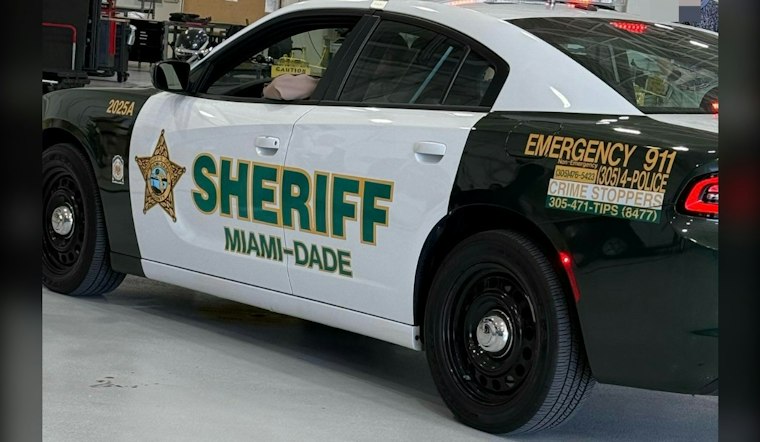
The agency now investigating the assault is itself a relatively new institution. The Miami-Dade Sheriff's Office officially replaced the former Miami-Dade Police Department on January 7, 2025, under newly sworn Sheriff Rosie Cordero-Stutz — the county's first elected sheriff since 1966, according to Miami-Dade County. The transition ended nearly six decades without an independently elected sheriff in the county.
The office's General Investigations Unit has handled other cases involving violence against transgender Miami-Dade residents in recent months. In a five-year-old cold case solved this August, detectives charged a suspect in the 2021 stabbing death of Lenoris Henry Marlowe, a transgender woman found dead in Northeast Miami-Dade; the suspect was already serving a life sentence for an unrelated conviction.
A Broader Pattern in the Data
National statistics suggest reported violence tied to gender identity bias has been climbing. FBI Uniform Crime Reporting data compiled by the Williams Institute at UCLA School of Law found that reported hate crime offenses motivated by gender identity bias rose from 184 in 2018 to 527 in 2024, growing from 2.2% to 3.9% of all reported hate crimes nationwide — though researchers caution that official figures likely represent a floor given known reporting gaps. That rise came even as overall reported hate crime incidents nationwide fell 7.0%, from 11,404 in 2024 to 10,606 in 2025, according to FBI data released in August.
A peer-reviewed analysis published in PMC has noted that official police statistics frequently undercount bias-motivated crimes against transgender victims, pointing to widespread misgendering and misidentification in initial police reports and coroner records as a systemic obstacle. For now, whether investigators will locate the suspect vehicle through the license plate captured on video, and whether the case will draw federal civil rights scrutiny given the limits of Florida's hate crime statute, remain open questions as Rodriguez and Lopez push to see charges filed.



