

























































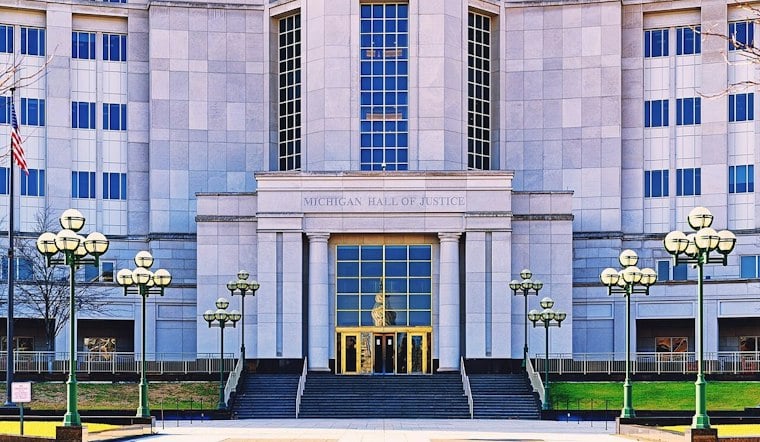
Michigan's sex offender registry shrank by nearly half this week, with state police removing more than 20,000 names from a list that had held roughly 43,000 people. The mass removal happened almost overnight, between September 9 and September 11, after the Michigan Supreme Court ruled that the state cannot apply 2021 registry requirements to people whose offenses occurred before July 1, 2011.
The ruling came in People v. Eddie Lee Smith, decided September 9, in which the state's highest court found that retroactively applying the 2021 amendments to Michigan's Sex Offenders Registration Act to older cases amounts to unconstitutional ex post facto punishment, according to MIRS News. The decision reversed a lower appellate ruling and held that lawmakers cannot impose newer, more punitive registration rules on people convicted under older versions of the law. As CBS Detroit reported, state officials confirmed the registry had contained about 43,000 actively registered names before the purge began.
Crucially, the court also rejected any workaround that would have let the state simply shift pre-2011 registrants onto an earlier version of SORA instead of dropping them outright. That “severance or revival” approach was explicitly barred, per the same MIRS News report, meaning Michigan has no fallback statute currently on the books for people whose crimes predate July 2011. Unlike past court rulings where a replacement law was already waiting in the wings, lawmakers here have not yet drafted one.
State Police Say Their Hands Are Tied
Michigan State Police Director Col. James F. Grady II said the department did not create the statutory change but is legally required to comply with the court's order, directing public and legislative concerns to state lawmakers, according to a statement carried by the department. State police maintain the registry database and are statutorily obligated under state law to run both the internal law enforcement version and the public-facing online lookup tool.
State police noted that a typical registry entry includes a person's photo, physical description, age, primary address, work address, and records tied to the underlying criminal conviction, per CBS Detroit. The agency has said the registry exists to help the public prevent and guard against future criminal sexual acts by convicted offenders. Officials also cautioned that the removal numbers could keep shifting as the ongoing review of state records continues.
Decades of Legal Fights Over the Registry
This week's purge is the latest chapter in more than a decade of court battles over Michigan's registry. The U.S. Court of Appeals for the Sixth Circuit ruled in 2016's Does v. Snyder that retroactive 2006 and 2011 amendments to SORA amounted to unconstitutional punishment, a decision the U.S. Supreme Court declined to review the following year, according to research from the University of Michigan Law School. Federal judges at the time found the law functioned like parole or criminal punishment by creating school exclusion zones and mandatory in-person reporting.
Michigan's registry began in 1994 as a confidential law enforcement tool under Public Act 295, according to the Michigan Senate Fiscal Agency, before legislative revisions in 1996, 2006, 2011, and 2021 turned it into a public online database with strict residency and reporting mandates. Then-Attorney General Dana Nessel argued in a 2019 court filing that the law had expanded into an overly broad punishment that failed to distinguish dangerous predators from low-risk individuals, noting that public access encouraged social ostracization and vigilantism, per state records. Earlier this year, in June, the Michigan Supreme Court ruled in People v. Shaver that its 2021 People v. Betts decision striking down the 2011 amendments applies retroactively to people seeking collateral review, allowing some past registry-violation convictions to be challenged, according to the Detroit Legal News.
Civil Rights Attorneys Call the Registry Oversized
ACLU of Michigan attorney Miriam Aukerman said following the ruling that Michigan's registry had grown into one of the largest in the nation, arguing that automatic lifetime registration undermines people's ability to reintegrate into their communities, according to KFI AM 640. A federal class action, John Does A-H v. Whitmer, filed in February 2022, separately argues that even the 2021 revised statute remains unconstitutional because it still lacks individualized risk assessments, per court filings reviewed by Justia. That case represents multiple subclasses, including post-2011 registrants and people convicted of non-sexual offenses.
With no replacement statute currently in place for pre-2011 offenders, the responsibility now shifts to the Michigan Legislature to decide whether to write a new, constitutionally sound registry model. Until lawmakers act, state police say they will continue implementing the court's order as records undergo further review.





