

























































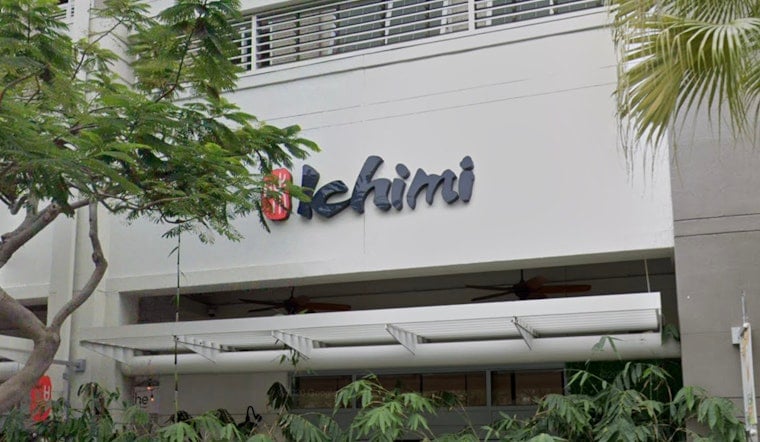
Inspectors shut down Ichimi's Midtown Miami ramen restaurant for a couple of days after a routine visit turned up 23 total violations, including three high-priority issues and rodent droppings scattered across five different areas of the kitchen and storage spaces. The restaurant, located at 118 Buena Vista Blvd. — also listed as 3251 N.E. First Ave. — passed a second re-inspection two days later, allowing it to reopen in time for the weekend rush.
The violations were detailed in a report from the Miami Herald, whose restaurant inspection coverage forms the backbone of this account. During Wednesday's routine inspection, inspectors counted 15 rodent droppings behind a freezer in the storage area, 18 droppings in single-service storage near the bathrooms' hallway, and 10 droppings in the alcohol storage room. Ten more droppings turned up behind a freezer next to the walk-in cooler, according to the same report.
A Dishwasher With Nothing Left To Sanitize
Beyond the pest activity, inspectors found the restaurant's dishwasher sanitizer measuring zero parts per million — a reading with real consequences, since Florida's sanitation rules, adopted from the U.S. FDA Food Code, require chlorine sanitizing solutions in commercial dishwashers and warewashing stations to sit between 50 and 100 parts per million, according to state licensing records. Inspectors also noted that Ichimi lacked a chlorine chemical test kit for sanitizer use at the three-compartment sink, warewashing machine, or wiping cloths, according to the Herald's report.
The kitchen had other problems too. The report describes standing water under the triple sink and a reach-in cooler, soiled ceilings and vents in the kitchen and prep area with accumulated food debris, grease, dust, or a mold-like substance, and a black or green mold-like substance built up inside the ice machine and bin. Inspectors also found a handwash sink by the cookline that had been removed, missing plumbing pipes under the handwash sink at the front counter, and a hole or other damage to a wall near storage and the hallway bathroom wall. Soy sauce and cooking oil were also found stored on the floor by the dishwashing area, per the same account.
The Follow-Up Inspection
When state inspectors returned Thursday, some rodent droppings remained, though in smaller numbers. The follow-up found five droppings behind the freezers next to the back-door exit, four behind the freezer next to the walk-in cooler, eight under single-service storage, six by the alcohol storage room, and five under the three-compartment sink, the Herald reported. Ichimi passed its second re-inspection on Friday, clearing it to reopen for the weekend.
This is not the first time an Ichimi location has drawn scrutiny from state health inspectors. The Herald's report notes that the Midtown location had a similar inspection in 2024. In December 2025, state health inspectors ordered the temporary closure of Ichimi's Coral Gables location on Salzedo Street after finding 30 health violations, including a cockroach infestation in which an inspector counted roughly 500 pieces of roach excrement, according to WPLG Local 10. That prior case, along with the Midtown location's 2024 inspection, could carry weight if regulators consider escalated enforcement, since state guidelines allow the Division of Hotels and Restaurants to bypass informal warnings and pursue formal administrative complaints, fines, or license suspension when the same violations recur across inspections.
How Florida Handles Emergency Closures
Emergency closure orders like the one issued at Ichimi Midtown are authorized under Chapter 509 of the Florida Statutes, which lets the Division of Hotels and Restaurants halt food service immediately when inspectors observe conditions that present an imminent public health hazard. The restaurant must then pass a mandatory callback inspection confirming all high-priority hazards are resolved before it can reopen, according to a legal explainer from Elevate Legal Services. State inspectors categorize violations into three tiers — High Priority, Intermediate, and Basic — with high-priority issues automatically triggering a follow-up re-inspection.
Ichimi's shutdown fits into a much larger pattern across South Florida. An analysis of Florida DBPR public records found that Miami has more than 9,200 licensed food service establishments, the highest concentration in the state, and that inspectors issued 85 emergency closure orders across a recent 12-month span, according to a Reddit analysis of the data. During the same week as Ichimi's inspection, state inspectors temporarily closed five other South Florida restaurants across Palm Beach and Broward counties for pest infestations, citing 81 establishments with three or more high-priority violations across 434 visits, per the Boca Post.
Ichimi has been a fixture in Midtown Miami's dining scene since it first opened in January 2016, building a following for its ramen, bao, and gyoza as a popular izakaya destination. Emergency closure orders are meant as immediate public-safety interventions rather than final court convictions or permanent license revocations, but the recurring pest and sanitation citations across Ichimi's locations point to an ongoing compliance challenge for the restaurant group.





