

























































Steven “Flaco” Fernandez cuts hair out of a 20-foot shipping container tucked behind a pediatric dental office just off 3300 South in Millcreek, Utah. The 26-year-old, who came to the United States from El Salvador at age 10, has been cutting hair for less than three years — and on Oct. 1, he plans to leave his day job as a pediatric dental assistant to run his one-chair barbershop, The Cut Box, full-time.
Fernandez's path to that milestone started small and shaky, according to FOX 13 News Utah. He first rented an 8-by-10-foot shipping container month to month, setting up a single barber chair, mirrors and his tools inside the cramped space. There was a stretch of two weeks without a single client, a rough enough patch that he nearly gave up on the shop entirely.
Then business turned. The station reports that the week after he came closest to quitting, Fernandez cut hair for 13 clients — enough of a turnaround to convince him to keep going. He eventually purchased his own 20-foot container, upgrading from the rented unit into the current version of The Cut Box.
A Quiet Chair Built for Sensitive Clients
Part of what's kept clients coming back is the calm of a single-chair setup. Ryan Robison became a customer after his son got a haircut from Fernandez; Robison told the outlet his son is sensitive to noise during haircuts, a detail echoed in local directory feedback describing the shop's quiet, single-chair environment as ideal for kids who struggle with noisy, multi-chair salons, according to Atly. Listings for The Cut Box carry a 5-out-of-5 star rating built largely on that same feedback.
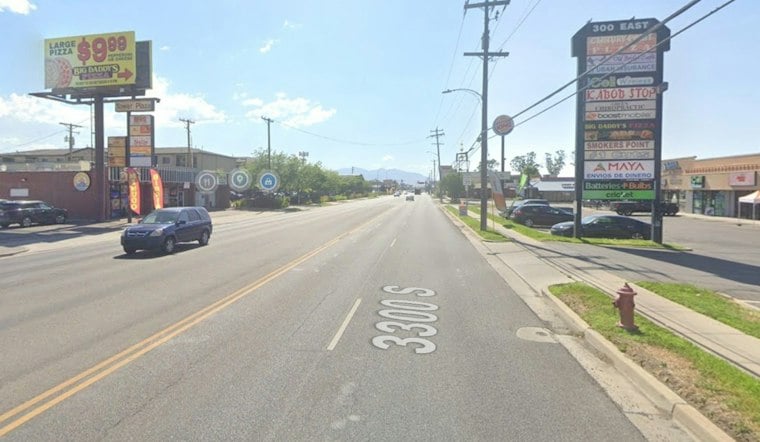
The shop's location behind Happy Tooth Pediatric Dentistry adds a bit of natural synergy for families already dealing with a child's sensory needs, according to Wanderboat. The container sits just off the 3300 South corridor, where commercial development has been underway, per Building Salt Lake.
Family Support Behind the Dream
Sarah Fernandez, per the station's report, said Steven makes his big dreams happen. His mother worked two jobs after the family moved to the United States, supporting him while she learned a new language — a foundation the outlet frames as part of what's driven his push toward full-time barbering.
Fernandez has now built enough of a client base to make the leap official. Beyond his own chair, he hopes to earn an instructor's license so he can teach younger barbers both the craft and the business side of the trade. Utah's requirements for that credential were reshaped this year: under Utah Code § 58-11a-302.21 as amended in 2026, earning a barber instructor license requires completing a 75-clock-hour instructor training program, holding six months of licensed practice, and passing the NIC Instructor Examination, according to Pabau. Once earned, the instructor certificate doesn't expire as long as the underlying license stays active, the same source notes.
Utah's Barbering Rules Just Got Easier to Enter
Fernandez's timing also lines up with a broader overhaul of Utah's licensing system. Effective January 1, 2026, under Utah Senate Bill 330, the state established a 130-hour Barbering Permit for basic services while consolidating full credentials into a 1,250-hour Cosmetologist/Barber license, according to Beauty License Guide. That's a significant drop from the 1,600 hours Utah previously required for a full cosmetology or barbering license, according to Associated Hair Professionals.
The lowered barrier to entry arrives alongside strong job growth projections. Barber positions in Utah are projected to grow by 32% between 2022 and 2032, according to industry data cited by Beauty Schools Directory — growth that outpaces the national average for the trade.
Building Out the Cut Box Concept
Fernandez plans to expand beyond his own container, with additional Cut Box shops that could each operate as their own small business under the broader concept and carry the individual barber's name. The idea taps into a national shift: converted shipping containers have increasingly moved beyond freight transit into micro-retail, pop-up storefronts and modular commercial spaces as a lower-cost alternative to traditional building leases, according to openPR.
That model works financially for a small operator: a 20-foot shipping container in the Salt Lake City region runs roughly $2,650 used or up to $4,350 new in 2026, according to Onsite Storage Solutions. Any additional containers Fernandez places on commercial land in Millcreek would still need to comply with applicable city requirements under Municipal Code Chapter 18.59, per the City of Millcreek.
The shop's growth mirrors the city around it. Millcreek officially incorporated as an independent city in Salt Lake County on December 28, 2016, and has since grown, according to KSL. For Fernandez, a single container behind a dental office has turned into the start of something bigger — and Oct. 1 marks the day he bets on it full-time.





