

























































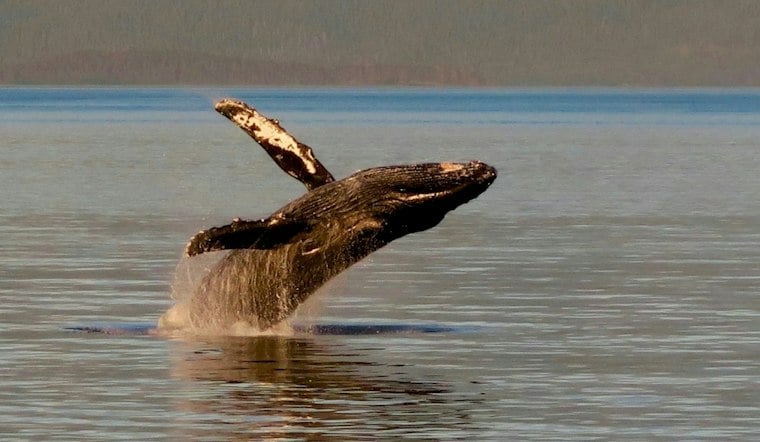
The rescue underscores why boaters who spot a whale or other marine animal caught in fishing gear are asked to notify the Marine Animal Entanglement Response team or the U.S. Coast Guard rather than attempt a rescue themselves, according to Boston 25 News.
The response program is operated by the Center for Coastal Studies, whose Marine Animal Entanglement Response staff remain on call around the clock for cases involving whales and sea turtles. The center says the program has freed more than 200 large whales and other marine animals since 1984, according to its program information.
The Wellfleet rescue
The team responded September 19 after a Hyannis whale-watch boat reported an approximately 18-foot minke whale towing a buoy near Wellfleet. Coast Guard crews joined the search, and responders later located the animal in Cape Cod Bay, the Cape Cod Times reported.
The gear was lodged around the whale’s head, with line passing through its mouth and extending toward its tail. Responders spent about two hours working alongside the moving animal before cutting the section around its head with a hook-shaped knife, according to NBC 10. After the head line was cut, the whale released the remaining gear, with the Coast Guard assisting, Boston 25 News reported.
Entanglement risks and prevention
According to NOAA Fisheries, 64 large-whale entanglements were confirmed in U.S. waters in 2023, below the 2007–2022 annual average of 71.8. Massachusetts accounted for 23.4 percent of confirmed live whale-entanglement reports in that national data. The Center for Coastal Studies says its response program has freed more than 200 large whales and other marine animals since 1984, though these figures do not provide a general success rate for all entanglements. NOAA Fisheries' Atlantic Large Whale Take Reduction Plan includes measures such as weak links, sinking groundline, gear marking, seasonal area closures and limits on traps per trawl. The agency says those measures were also intended to benefit minke whales, which can be incidentally injured or killed in gillnet and trap/pot fisheries.
The Center for Coastal Studies also says its broader disentanglement work includes collaboration with other agencies and a U.S.-Canada network established in 1994. Its program guidance emphasizes that marine animals should be left to trained responders, because attempts by untrained people can endanger both the animal and those trying to help them, according to the center.




