

























































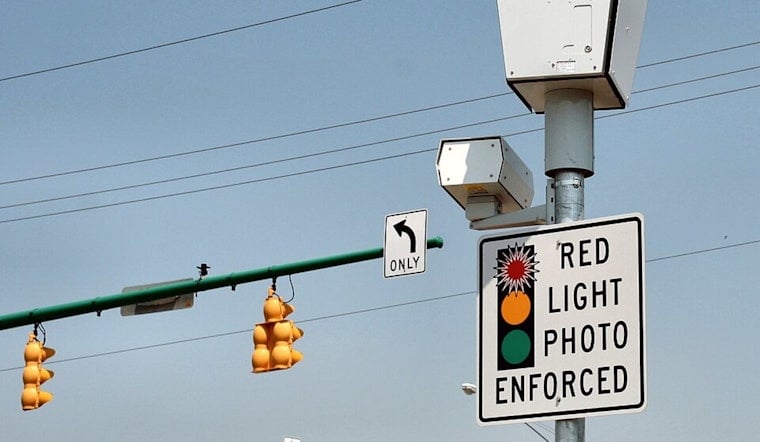
Minneapolis's speed camera pilot is already changing driver behavior, and city leaders are moving to build on that momentum. Traffic cameras have slowed speeders at the program's first five locations, according to FOX 9 Minneapolis-St. Paul, which reports the city is now considering adding more of the devices around town.
The numbers behind that push are striking. An official annual report released by the City of Minneapolis found that average daily speeding violations across the five initial pilot locations fell 67 percent between October and December 2025, dropping from an average of 73.1 daily violations per site in October to just 24 by December, according to CBS News. The pilot launched October 1, 2025, following state enabling legislation, and Hoodline covered that launch of five cameras at the time.
City officials have now identified 11 high-priority expansion sites in a 2025 traffic camera analysis report, marking the next wave of automated speed and red-light enforcement, per the same CBS News account. The city reportedly evaluated thousands of eligible street segments before narrowing the list down to those corridors, the outlet notes.
What the Fines Actually Look Like
Penalties under the pilot are civil, not criminal: drivers caught going 10 to 19 mph over the limit face a $40 fine, while those going 20 mph or more over face $80, per the City of Minneapolis. First-time offenders get a warning or can take a free safety class to waive the fee entirely, and the citations carry no license points and do not affect insurance rates.
That non-punitive framing is central to how the city is selling expansion. Traffic crashes involving clear speeding caused more than 40 deaths in Minneapolis between 2022 and 2024, and the city's Vision Zero data shows that most of those victims were not themselves speeding or otherwise violating traffic laws, according to MPR News. Minneapolis adopted Vision Zero with the stated goal of eliminating all traffic fatalities.
State Law Sets a Hard Ceiling
Any expansion is bounded by state statute. Under Minnesota Statutes Section 169.147, lawmakers capped Minneapolis's traffic safety camera pilot at a maximum of 42 camera locations and authorized red-light enforcement alongside speed detection through July 31, 2029, according to the MN Revisor's Office. That same 2024 law granted pilot authority exclusively to Minneapolis and Mendota Heights.
Geography adds another constraint. Minnesota law restricts speed camera placement to municipal-controlled roads within 2,000 feet of a school, preventing Minneapolis from placing cameras on county roads or state highways without further legislative approval, per the MPR News report. Many of the city's high-speed corridors fall under Hennepin County or MnDOT jurisdiction, putting them out of reach for now.
Mendota Heights Moves to Citations
The state's only other pilot city offers a preview of what comes next. Mendota Heights officially entered its citation phase this month after issuing 1,037 warnings during a summer test phase on Delaware Avenue, logging more than 87,000 vehicles during that warning period, according to Patch.
Beyond the two pilot cities, Minnesota has begun using cameras on highways as well. MnDOT started deploying work-zone speed cameras in late July along Interstate 35W in Burnsville and Highway 65, sending warning letters to drivers going 10 or more mph over posted work-zone limits, CBS News reported. The agency has recorded more than 11,000 work-zone crashes statewide since 2021.
Statewide Expansion Hits Political Wall
Not every camera proposal has moved forward. A legislative bid, HF 3431, that would have expanded automated speed and red-light cameras to municipalities statewide stalled in the Minnesota House Transportation Committee in February after a 67-67 party-line tie vote driven by privacy concerns, according to the League of Minnesota Cities. Opponent lawmakers argued that automated enforcement risks mass surveillance.
That friction echoes a broader regional debate over camera technology playing out well beyond Minneapolis, including recent Hoodline reporting on Champlin's decision to pull its Flock cameras and a St. Paul council leader's call to end the city's camera contracts. Even so, national survey data suggests broad public appetite for targeted use: 70 percent of drivers support automated speed enforcement cameras in designated high-risk areas with a history of speed-related crashes, according to research published by the AAA Foundation for Traffic Safety and reported by 95 KQDS. Speeding plays a role in nearly 30 percent of traffic fatalities nationally, the outlet notes.
For Minneapolis, the path forward now runs through the same statutory limits that shaped the pilot's rollout in the first place. City leaders can point to falling violation counts at the first five sites as justification for expansion, but any new cameras will still need to fit within the 42-location cap, sit on city-controlled streets near schools, and clear the same kind of civil-penalty structure already in place. Whether the 11 priority corridors identified in the city's analysis end up hosting the next cameras will depend on how quickly Minneapolis works through those constraints.





