

























































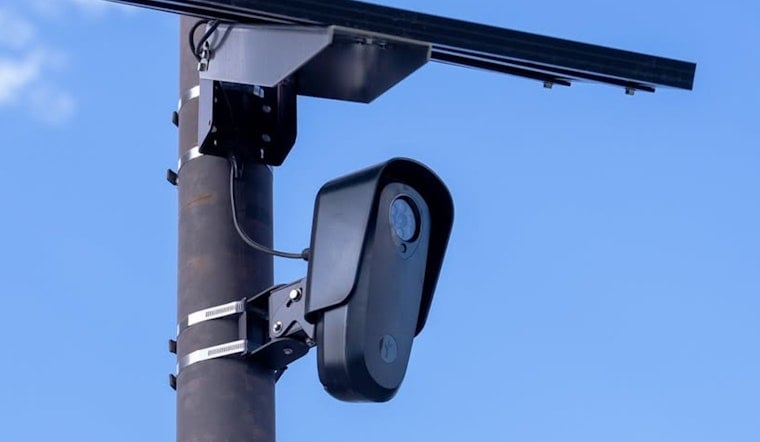
Champlin has pulled every one of its Flock Safety license plate reader cameras offline after vandals struck two camera locations, city officials confirmed. The move, announced in a Facebook post from the City of Champlin on Monday, comes as municipalities across Minnesota scramble to respond to a wave of anti-surveillance vandalism and mounting public distrust of the cameras.
City staff said the decision to temporarily remove the remaining cameras was made to protect city assets after equipment at two Flock camera sites was vandalized, according to the City of Champlin. As of Monday, none of Champlin's Flock cameras were operating. The city said it had received a growing number of questions from residents about the status of the program, and that staff responded to an inquiry raised during an August 24 open forum before deciding to address the issue more broadly.
City staff are now compiling formal answers to a long list of resident questions, covering everything from when the cameras were installed and how they currently operate to what information they collect, how long that data is retained, what privacy safeguards exist, who can access the footage, whether it's shared with other agencies, and how much the whole program costs taxpayers. Those responses are expected to appear in the September 14 city council meeting packet, the city said. Flock Safety maintains a transparency page specific to the Champlin Police Department's camera program for residents seeking more detail in the meantime.
A Statewide Pattern of Damaged Cameras
Champlin's vandalism problem is far from isolated. Cities across Minnesota experienced a wave of vandalism and theft targeting license plate reader cameras in August, including the physical removal and theft of all eight Flock cameras in Winona and three in Isanti County, according to FOX 9. Law enforcement agencies across the Twin Cities metro and greater Minnesota have reported sawed-down poles and stolen equipment that can cost thousands of dollars per unit to replace.
Nationally, the trend is even broader. Advocacy group DeFlock found that at least 100 cities have deactivated Flock cameras or canceled contracts, with vandalism reported across 36 states, as reported by NPR. Opposition groups have increasingly published online maps of camera locations while pushing municipalities to abandon license plate readers altogether.
Neighboring Cities and Counties Retreat From Flock
Champlin isn't the only Hennepin County community wrestling with the technology. The Dayton city council voted on August 25 to suspend its automatic license plate reader program after residents gathered more than 200 signatures demanding the city terminate its Flock Safety contract, according to reporting cited by KSTP. St. Paul Mayor Kaohly Her and Police Chief Axel Henry announced that the city would remove its own Flock cameras following public hearings over third-party data sharing, with council leadership noting that local vehicle data had been accessible to 60 outside agencies before the reversal, per MPR News.
The pullback extends beyond the metro. Sherburne County and Isanti County both withdrew from their Flock camera trial programs in August, citing eroded public trust, hardware vandalism, and insufficient staff to process real-time alerts — Isanti had logged roughly 3 million vehicle scans over a four-month evaluation before pulling its eight cameras, as Hoodline previously reported on the sheriff's exit. Columbia Heights had already moved to terminate its Flock contract earlier in the year, a decision that preceded a spike of 32 car break-ins after that city's camera network went dark.
What the Law Says About Data and Privacy
Any answers Champlin staff produce will have to account for Minnesota Statute Section 13.824, which classifies license plate reader data as private and requires that information not tied to an active criminal investigation be destroyed within 60 days, according to the Minnesota Revisor's Office. The statute limits ALPR data to license plates, timestamps, locations, and vehicle photos, and it bars any central state tracking repository without explicit authorization.
State lawmakers tried to tighten those rules further this year. Legislation under HF 4205 and SF 4739 sought to shrink the retention window from 60 days to just 48 hours and restrict out-of-state data sharing, but the bills stalled in a divided House committee, per MinneapoliMedia. Vendor Flock Safety has since announced its own policy changes, including a mandate that law enforcement searches include case numbers by year's end and a requirement for multi-factor authentication on user logins, while updating contract language to clarify that police departments retain full ownership of captured data.
The Cost of Cameras, On and Off
Even paused programs carry financial weight. Standard Flock Safety camera subscriptions run municipalities between $2,500 and $3,000 per camera annually under a lease model in which the vendor retrieves hardware if a contract ends, according to Safe and Sound Security, with additional installation fees of $250 to $350 per pole. Those figures will likely factor into the cost and funding questions Champlin residents have raised, and which city staff are expected to address alongside the program's operational status in the September 14 meeting packet.
For now, Champlin's cameras remain offline with no timeline given for reinstallation. The city has said only that it is working through the backlog of resident questions and will share what it can when the council convenes this month.




