

























































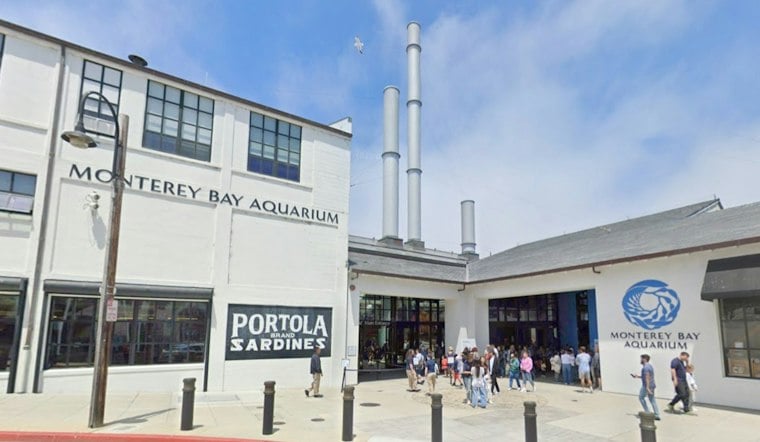
Monterey Bay Aquarium is opening a bilingual exhibit built entirely around getting toddlers to move like the animals they're watching, with a centerpiece African penguin habitat, a 20-foot coral reef and multiple play areas designed for children ages 2 to 6. Ocean in Motion / La Danza del Mar opens November 7 on Cannery Row, replacing the aquarium's long-running Splash Zone gallery.
The new gallery is the aquarium's answer to a question that has occupied early-childhood researchers for years: can a toddler learn to care about an animal simply by copying the way it moves? According to The Mercury News, CEO Jenny Gray said the exhibit builds empathy with ocean life in kids through movement, while aquarium staffer Emily Saich said the experience connects children with live animals through movement and play. The gallery uses children's-book-style labels that put animals front and center as main characters, and caregivers are encouraged to read those labels aloud and invite children to consider the animals' point of view, per the same report.
The new gallery opens under Gray, who became the aquarium's CEO in May, succeeding founding executive director Julie Packard after her four-decade tenure leading the institution, according to KQED. Gray previously served as CEO of Zoos Victoria in Australia and served as president of the World Association of Zoos and Aquariums, KQED reports.
An Expanded Home for a Critically Endangered Species
The African penguin habitat sits at the heart of the new gallery, and its expansion carries real conservation stakes. The species is listed as critically endangered on the International Union for Conservation of Nature Red List after wild populations declined by more than 97% over the last 100 years to about 9,900 breeding pairs in 2024, according to the Monterey Bay Aquarium. Scientists estimate wild African penguins could face extinction by 2035 without active intervention, the aquarium notes.
Monterey Bay Aquarium also takes part in the national African Penguin Species Survival Plan, exchanging chicks and breeding pairs with other accredited U.S. facilities to maintain genetic diversity in captivity. In 2025, an aquarium-hatched penguin named Gerry was relocated to Maryland Zoo as part of that same breeding initiative, according to The Maryland Zoo. While African penguins waddle awkwardly on land, they can reach underwater swimming speeds of up to 12 miles per hour while hunting, and the gallery's digital interactives encourage children to imitate both the waddling and the swimming, per the aquarium's exhibit page. The penguin exhibit was made possible through sponsorship from the Susie and Gideon Yu family, per Mercury News reporting.
Movement as the Organizing Idea
Every corner of the gallery was built around a single design principle: let children physically become the animals. The exhibit's 20-foot living coral reef tank features a custom-built wave machine, with a wave rippling through the reef water, according to PR Newswire. That coral community features bluespotted ribbontail rays, clownfish, anemones and coral, and sits near a coral-themed play area, per Mercury News reporting.
Species were chosen for their distinct movements: flamboyant cuttlefish that flutter, clownfish that nestle into anemone tentacles, and spotted garden eels that sway in the current, all cued by visual prompts and interactive floor shapes that invite children to physically mirror the motion, according to the aquarium's exhibit page. A leaping blenny exhibit uses floor shapes that cue visitors to hop from rock to rock, while a big-belly seahorse exhibit replicates a seagrass-tower habitat where dozens of seahorses hold onto seagrass, per the Mercury News. The gallery also includes a new water play area and a fully accessible primary pathway designed for visitors of all ages and abilities, the paper reports.
The Research Behind the Play
The design isn't just whimsical; it's grounded in early-childhood research. Exhibit designers structured the interactive elements based on studies showing that physical movement, role-play and mimicry in children ages 2 to 6 activate empathy that can spark lifelong environmental stewardship, according to PR Newswire. Planners engaged directly with young children and their caregivers early in the design process to make sure the interactives matched natural childhood behaviors, the same release states.
That approach lines up with a broader institutional push. Developing informal early-learning exhibits that build curiosity and empathy for marine life is an explicit goal of the aquarium's 2024–2029 Strategic Plan, which prioritizes modernizing facilities and expanding educational outreach for younger generations, according to the Monterey Bay Aquarium. Aquarium leadership hopes visitors will leave with a stronger commitment to protecting animals and their ocean homes, per Mercury News reporting.
Funding, Access and What's Replaced
Ocean in Motion was funded by aquarium members and donors, with major leadership gifts from Connie and Bob Lurie and the Acton family, according to the Mercury News. Aquarium members will get early access during special preview events ahead of the public opening, the paper notes.
The gallery replaces Splash Zone, the family exhibition space that opened at the aquarium in 2000 and served as its primary dedicated early-childhood gallery for more than two decades, according to Smart Meetings. Located on historic Cannery Row and built on the site of the former Hovden Cannery, Monterey Bay Aquarium draws roughly 2 million visitors a year and has welcomed hundreds of millions of guests, including 2.7 million students admitted free of charge, since it opened in 1984, according to the aquarium.



