

























































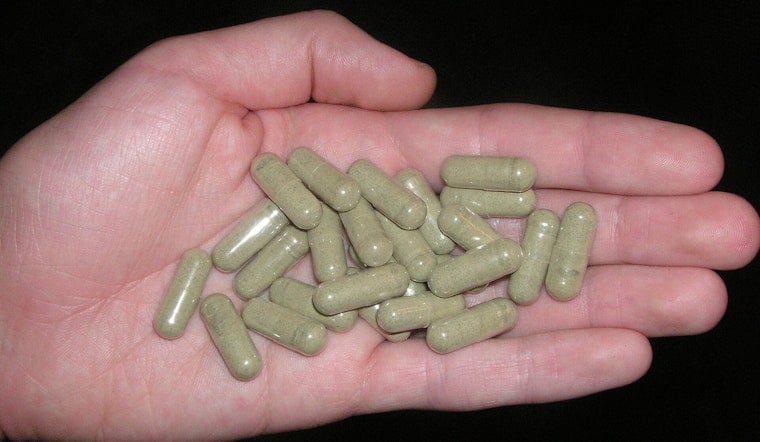
Naperville's city council voted 8-0 to ban the retail sale of kratom, a decision that came after local police reported four kratom-related overdoses and one death in the city this year. The vote makes Naperville the latest Chicago-area suburb to strip kratom products off store shelves entirely, even as adults 18 and older remain free to possess and use it.
Naperville Mayor Scott Wehrli disclosed the overdose and death figures in a video update ahead of the vote, saying local police tracked the incidents in the lead-up to a July 9 recommendation from the city's Liquor Commission that retail sales be prohibited, according to a Facebook video posted by Wehrli. The Liquor Commission's recommendation was unanimous. As reported by ABC7 Chicago, the council's 8-0 vote bans the sale of both natural and synthetic kratom, though the ordinance still permits adults to possess and consume it.
Kratom is made from the leaves of a tropical plant native to Southeast Asia and is commonly sold as powders, drinks, and capsules at smoke shops and gas stations, per ABC7's report. The U.S. Food and Drug Administration has not approved kratom for any medical use, and kratom-related exposure reports to U.S. poison control centers increased 1,200% between 2015 and 2025, the outlet noted.
A Naperville Woman's Near-Fatal Addiction
Among those who testified was Ashley Ware of Naperville, who told ABC7 she first learned about a kratom-infused drink through a podcast that marketed it as an herbal-like energy beverage. Ware said she became addicted to the synthetic kratom-infused drink, which she said nearly killed her and caused heart palpitations and green-tinted skin. She eventually entered detox treatment to break the addiction.
Ware's account stood in contrast to testimony from Heidi Sykora, who said she uses natural kratom for pain relief. Sykora told the outlet that unadulterated kratom does not intoxicate or impair her and reduces her pain enough that she can exercise and stretch. Critics of the ban argued during public testimony that unadulterated leaf products should be treated differently than synthetic formulations, according to the Daily Herald, which also reported that a local resident needed hospital detox in April 2025 after becoming addicted to kratom-infused wellness drinks, while a 93-year-old resident said she relies on non-synthetic kratom for severe pain.
Public Safety Concerns Drove Council Support
Council member Benjamin White said public safety concerns played a key role in his support for the ban, according to ABC7. Critics of unregulated kratom sales more broadly say synthetic kratom products have contributed to addiction, health problems, and overdose deaths, while supporters maintain that kratom can help relieve pain when used in its natural form.
Naperville's new ordinance, which amends Sections 3-3 and 3-6 of the municipal code, removes kratom products from Naperville store shelves and gas stations while leaving individual adult possession and consumption legal, per city legislative records. The move builds on a 2019 city ordinance that had already barred retail kratom sales to anyone under 21 and possession by minors under 18, a stricter local standard than state law required at the time.
Illinois Suburbs Join a Statewide Patchwork
Naperville now joins a growing list of Chicago suburbs, as well as the state of Indiana, in banning kratom sales, ABC7 reported. City records show Naperville is following other Illinois home-rule communities including Winnetka, Plainfield, Bloomington, Seneca, and Ottawa, which have all enacted local retail bans, while Rockford has banned synthetic 7-hydroxymitragynine products specifically. Hoodline reported last month that nurses in Streator pushed for a similar ban after describing ER surges and a suicide tied to kratom addiction, with Naperville's proposal already on the table at the time alongside pending bans in Minooka, Seneca, and Ottawa.
The patchwork of local bans exists because Illinois' 2014 Kratom Control Act permits sales to adults 18 and older without requiring product testing or alkaloid limits, leaving municipalities to fill the gap with home-rule authority. A state bill, House Bill 4737, would raise the minimum age to 21 and ban synthetic analogs statewide, but it has remained stalled in the Illinois General Assembly's Rules Committee since being introduced in March.
Federal Regulators Move Against Synthetic Compounds
The Naperville vote comes just days after federal regulators escalated their own response to synthetic kratom derivatives. On August 26, the U.S. Drug Enforcement Administration placed three synthetic kratom-related compounds — mitragynine pseudoindoxyl, MGM-15, and MGM-16 — into Schedule I of the Controlled Substances Act, citing imminent public safety hazards, according to the Federal Register. That designation imposes strict federal criminal penalties and bans all commercial manufacturing and sales of those compounds.
Federal records reviewed by MedPage Today show that between February 2025 and May 2026, mitragynine pseudoindoxyl was linked to at least 56 overdose cases nationwide, including 48 deaths. Federal officials noted that these lab-modified products are frequently marketed deceptively as natural kratom, obscuring their far greater potency.
The FDA has explained that 7-hydroxymitragynine, or 7-OH, makes up less than 2% of the natural alkaloid content in raw kratom leaves, but concentrated synthetic 7-OH formulations carry mu-opioid receptor potency significantly higher than morphine or mitragynine, the plant's primary leaf alkaloid. FDA scientists have warned that concentrated 7-OH creates heightened risks of addiction, seizures, and overdose. An estimated 1.7 million Americans aged 12 and older used kratom in 2021, according to SAMHSA's National Survey on Drug Use and Health cited by the agency, even though no kratom products are FDA-approved for medical treatment.





