

























































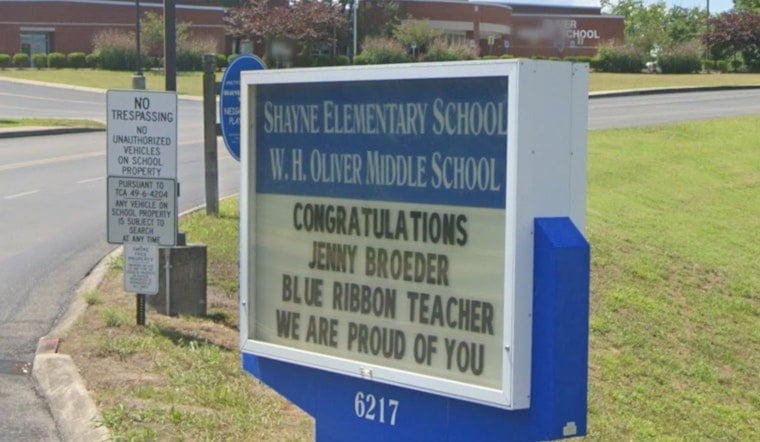
Inside May Werthan Shayne Elementary School in South Nashville, two classrooms and the school gym are running on portable air-conditioning units and large fans this week as Middle Tennessee bakes under a heat advisory pushing heat index values toward 110 degrees. Metro Nashville Public Schools says permanent air-conditioning systems in those two classrooms are beyond repair, and the gym's HVAC unit also needs replacing, leaving the district to lean on temporary equipment until new parts arrive.
According to WSMV, MNPS placed temporary cooling units and large fans in the school gym and sent an additional portable unit to each of the two affected classrooms after the initial units proved insufficient, according to an after-school report. The district's facilities and maintenance team assesses reported HVAC problems and provides portable cooling as needed while repairs or full equipment replacement are completed, the station reports. MNPS says it will keep school leaders at May Werthan Shayne Elementary updated as it awaits delivery and installation of the replacement HVAC equipment.
A Heat Wave Squeezing an Aging Building
May Werthan Shayne Elementary, built in 2004 at 6217 Nolensville Road, serves roughly 740 to 800 Pre-K through 4th grade students representing 24 languages and more than 30 countries of origin, according to background maintained by the Scarlett Family Foundation. The school's cooling troubles are unfolding as the National Weather Service has a Heat Advisory in effect across Davidson County through Saturday, with ambient temperatures forecast to reach 100 degrees and heat index values climbing between 105 and 110 degrees. Per MNPS, heat indexes at the school itself may reach 110 degrees, a figure that matches the advisory's upper range.
The heat isn't the only environmental factor limiting options for kids this week. The Tennessee Department of Environment and Conservation issued a Code Orange Air Quality Alert for ground-level ozone across the Metro Nashville area on Thursday, advising that active children should limit outdoor physical exertion — meaning students at Shayne Elementary can't simply be sent outside to escape a warm gym or classroom.
Not an Isolated Problem in Middle Tennessee
HVAC problems tend to become more common during periods of extreme heat, and Shayne Elementary is far from alone this season. Hoodline previously reported on broken AC forcing Sumner County students to eat lunch in their classrooms as temperatures neared 100 degrees, and on cooling failures at Robertson County's Greenbrier Middle School as the heat index hit 105 degrees. Those breakdowns, paired with Shayne Elementary's own equipment failures, point to a regional pattern of school HVAC systems struggling to keep pace with back-to-back heat waves.
A Systemwide Maintenance Gap
The strain isn't confined to one campus. An infrastructure evaluation by energy management firm SitelogIQ found that MNPS maintains more than 150 school facilities with a wide range of HVAC equipment on a fraction of the capital maintenance budget typically required for a district serving 80,000 students. Metro Nashville's FY2024 Capital Spending Plan set aside $47.5 million districtwide for deferred maintenance and general school repairs, including $5 million earmarked specifically for emergency construction contingencies, though that funding must compete with needs across the entire district's aging building stock.
Records reviewed by HigherGov show MNPS issued a supplemental procurement solicitation on August 31 seeking contractors for districtwide HVAC repair and replacement work under a multi-year contract pool capped at $6 million. The timing, just days before the current heat advisory, suggests district administrators were already working to expand contractor capacity for both routine repairs and larger equipment swaps before this week's failures added new urgency.
What the Research Says About Heat and Learning
The stakes go beyond comfort. Research published by the American Economic Association found that each 1-degree increase in school-year temperature without air conditioning reduces student learning by roughly 1 percent over a school year, with heat-related disruption estimated to account for about 5 percent of the racial achievement gap nationally. A more recent study from NWEA, which analyzed 3 million student assessment scores, found that test-day temperatures above 80 degrees significantly depress math scores, with extreme heat above 101 degrees erasing up to 10 percent of a student's annual learning progress — effects the study found were twice as severe in high-poverty schools lacking functional climate control.
Nashville's predicament also mirrors a nationwide pattern. A U.S. Government Accountability Office investigation found that an estimated 41 percent of public school districts need to update or replace HVAC systems in at least half of their buildings, representing roughly 36,000 school buildings across the country. For now, MNPS says its facilities team will continue monitoring the portable units at May Werthan Shayne Elementary while it awaits delivery and installation of the permanent replacement equipment.




