

























































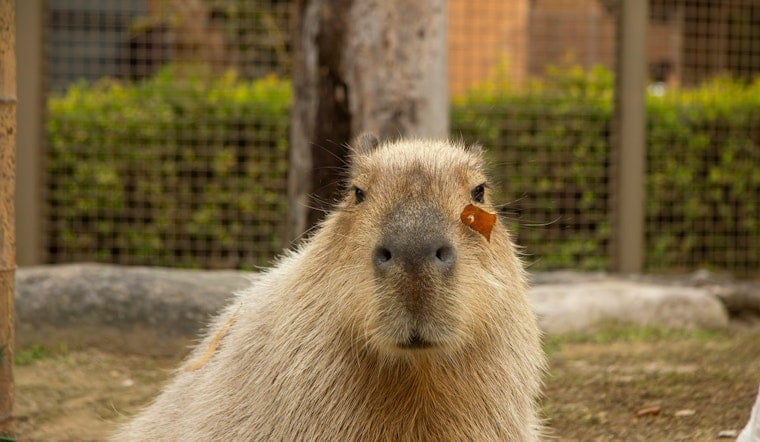
Nashville Zoo opens a new multi-species South American habitat on Friday, bringing together two capybaras, a giant anteater and several rare bird species in a converted exhibit space just beyond the Flamingo Lagoon. The pairing marks the zoo's first capybaras ever and the first time in more than 15 years that its giant anteaters have been on public view rather than tucked away for backstage tours only.
The habitat's capybaras, Brie and Andouille, were acquired this past March, according to Axios, which first reported on the exhibit's opening. Brie, a female, came from New Jersey's Cape May County Park & Zoo, while Andouille, a male, was born at California's Sacramento Zoo, according to Rutherford Source. The pair were first housed together in the zoo's veterinary center nursery before officials began preparing them for their new, more public home.
The space itself has a history: it was previously the zoo's tapir exhibit, re-engineered to support both semi-aquatic rodents and terrestrial anteaters, per the same outlet's reporting. Alongside Brie and Andouille, capybara pups now live in the space too, and Axios reports zookeepers built an artificial termite mound that supports the resident giant anteater and other animals sharing the enclosure.
A Long-Awaited Return to Public View for Anteaters
Nashville Zoo has quietly maintained giant anteaters behind the scenes for years, but visitors previously needed a specialized Backstage Pass tour ticket just to catch a glimpse. That changes with this habitat, which Axios notes ends a streak of more than 15 years since the species last appeared in a general-admission exhibit. Giant anteaters weigh between 70 and 100 pounds and are considered vulnerable to extinction, per Axios's reporting.
The zoo has built a reputation as a national leader in giant anteater conservation. Axios reports that Nashville Zoo holds the largest collection of captive giant anteaters in the United States, and that its breeding facility has produced 19 giant anteaters since 2001. That breeding legacy extends beyond Middle Tennessee: the zoo transferred Tupi, a 7-year-old male giant anteater born at Connecticut's Beardsley Zoo, to the Buffalo Zoo in October 2025 under an Association of Zoos and Aquariums Species Survival Plan recommendation, according to the Buffalo Zoo. Zookeepers at Nashville Zoo plan to introduce the anteater in the new habitat alongside three common rheas, per Axios.
Why the Species Matters in the Wild
The International Union for Conservation of Nature estimates that around 5,000 giant anteaters remain in the wild, with populations continuing to decline due to habitat loss, fires, and highway traffic collisions, according to the Buffalo Zoo. Giant anteaters are particularly vulnerable to being struck by vehicles because of their slow movement and poor vision. That vulnerability underscores the stakes behind accredited breeding programs like the one Nashville Zoo has run since 2001.
The new habitat also introduces visitors to birds unique to South America. Common rheas are the largest birds on the continent, per Axios, while crested screamers — large gray wetland birds also featured in the exhibit — round out the mix. Animal care specialists spent months this year gradually introducing the capybaras to one of the habitat's crested screamers, a bird named Louie, according to a report from WZTV FOX 17 News shared via Facebook. That slow introduction process is meant to prevent territorial stress between the birds and the large rodents before they share space full-time.
A Growing Zoo Feeding Growing Crowds
Adult capybaras are not small guests to feed: they require six to eight pounds of fresh grass and aquatic plants daily, along with reeds, grains and fruits, to sustain body weights that can exceed 100 pounds, per Rutherford Source. The new habitat arrives less than a year and a half after Nashville Zoo opened its decade-in-the-making Leopard Forest exhibit in June 2025, which brought critically endangered Amur leopards, colobus monkeys and Masai giraffes to the grounds, as reported by Williamson Source.
The zoo's expansion tracks with surging attendance. Nashville Zoo welcomed 1.39 million visitors in 2024 and counted 43,492 member households, making it Middle Tennessee's top paid family attraction, according to Cause IQ. To manage the crowds pouring in along Nolensville Pike, the zoo built a new two-story parking garage on its Grassmere property between 2023 and 2024, per Charter Construction.
For at least one young visitor, the new exhibit hits close to home. Axios reports that a boy named Everett counts capybaras as his favorite animal, while Axios reporter Nate Rau, who wrote the original account of the habitat's opening, said anteaters are his own favorite. The new South American habitat opens to the public on Friday.





